A fence is only as strong as the posts holding it up, and choosing the right cattle fence post determines whether your fence contains a 1,200-pound steer for decades or sags and fails in a few seasons. Because cattle lean, push, and rub against fencing constantly, the cattle fence post you select and how deeply you set it matters far more than the wire itself. This guide walks through post types, spacing, setting depth, and construction tips so you can build a fence that stands up to real livestock pressure.
Part of our Decks & Outdoor guide — explore the full guide →
- Why Post Choice Matters for Cattle
- Types of Cattle Fence Posts
- Corner and Brace Posts Come First
- How Deep to Set Posts
- Post Spacing for Cattle
- Barbed Wire, Woven Wire, or Electric
- Setting Wood Posts Properly
- Driving Steel T-Posts
- Cost Expectations
- Maintenance and Common Problems
- Terrain and Soil Considerations
- Final Thoughts
Why Post Choice Matters for Cattle
Cattle are large, heavy, and hard on fences. They rub to scratch, reach through for grass on the other side, and lean against anything that will hold them. A fence that would easily contain sheep or goats can be flattened by cattle if the posts are undersized or set too shallow. The posts, especially the corner and brace posts, carry the load and set the tension for the entire fence.
Get the posts right and the fence practically maintains itself. Get them wrong and you will be resetting leaners and restretching wire every year.
Types of Cattle Fence Posts
There are three main post materials, each with a role to play.
- Wood posts: The traditional choice for corners, gates, and braces. Pressure-treated pine, cedar, or locust resist rot. Corner posts should be 6 to 8 inches in diameter; line posts 4 to 5 inches. Strong and long-lasting when treated, but pricier and heavier.
- Steel T-posts: The workhorse line post. Studded steel posts drive quickly, resist fire and rot, and cost less. Common weights are 1.25 to 1.33 pounds per foot; heavier posts hold up far better under cattle pressure.
- Steel pipe posts: Extremely durable and often used for corners, gates, and heavy-duty corrals. Repurposed oilfield pipe is popular in ranching country. Expensive but nearly indestructible.
Corner and Brace Posts Come First
The corners and ends do the heavy lifting, holding the full tension of the stretched wire. A weak corner dooms the whole fence. Corner posts should be large-diameter wood (6 to 8 inches) or steel pipe, set deep in concrete or tamped firmly, at least 3 1/2 to 4 feet into the ground.
Every corner and end needs bracing. The most reliable is the H-brace or double H-brace: two vertical posts connected by a horizontal rail near the top, with a diagonal tension wire twisted tight. This assembly resists the pull of the wire and keeps the corner from leaning. Skimping on bracing is the most common reason cattle fences fail over time.
How Deep to Set Posts
Depth is where many fences go wrong. A general rule is to set posts at least one-third of their length in the ground, and deeper in soft or sandy soil. For line T-posts, drive them 18 to 24 inches deep. Corner and brace posts should go 3 1/2 to 4 feet deep to anchor against tension and cattle pressure.
In areas with frost, set wood corner posts below the frost line so they do not heave with freeze-thaw cycles. Deeper is almost always better for cattle fencing, because the leverage of a leaning steer against a shallow post is enormous.
Post Spacing for Cattle
Line post spacing balances cost against strength. For barbed wire or woven wire cattle fence, space line posts 12 to 16 feet apart, with stays or droppers between posts if you want to keep wire spacing consistent without adding full posts. Closer spacing (10 to 12 feet) makes a stronger fence for high-pressure areas, corrals, and rough terrain.
For high-tensile electric fence, posts can be spaced much farther, 30 to 50 feet or more, with the wire’s tension and the electric charge doing much of the work. On uneven ground, add posts at every rise and dip so the wire follows the contour and cannot be pushed over.
Barbed Wire, Woven Wire, or Electric
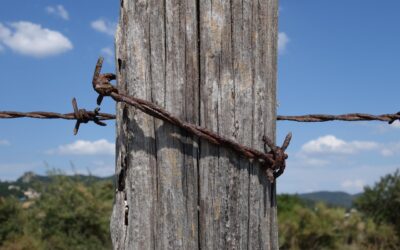
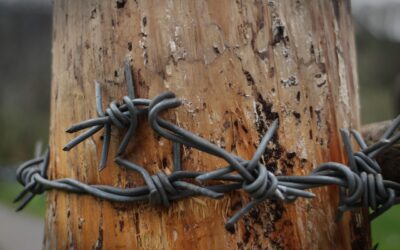
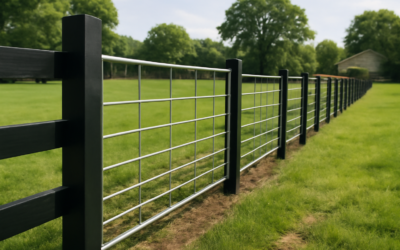
The fence type influences the posts you need. Barbed wire, typically four to five strands, is the classic cattle fence and relies on solid wood or heavy steel posts under tension. Woven or field fence provides a solid barrier and pairs well with a barbed strand on top; it demands strong corners because the whole panel carries tension.
High-tensile electric fence is increasingly popular for cattle because it is cheaper per foot, easier on the animals, and forgiving on posts, since the psychological barrier of the shock does much of the containment. Even so, the corners still need to be braced to hold the wire tension.
Setting Wood Posts Properly
Dig or auger the hole to the correct depth and a few inches wider than the post. Set the post plumb, then backfill. You have two options: tamp the soil in thin layers with a tamping bar, packing each layer hard, or set the post in concrete for corners and gates that take the most abuse. For line posts, well-tamped soil often holds better than a small concrete collar that can heave.
When using concrete, crown the top so water sheds away from the post to slow rot. Let concrete cure a day or two before stretching wire against the post.
Driving Steel T-Posts
T-posts install fast with a manual or hydraulic post driver. Orient the studded face toward the fence line so the wire clips sit correctly and the anchor plate near the bottom faces the pull of the wire, adding holding power. Drive the post until the anchor plate is fully buried, 18 to 24 inches down. Attach wire with the proper T-post clips, and cap the tops with safety caps, which protect both cattle and people from the sharp studded edge.
Cost Expectations
Budgeting helps you plan a long fence line. Steel T-posts run about $5 to $9 each. Pressure-treated wood line posts cost $8 to $20, and large corner posts $20 to $50 or more. Steel pipe posts vary widely with the metal market. A complete cattle fence, including wire and labor, typically costs $3 to $10 per linear foot depending on the fence type and terrain, with woven wire and pipe corners at the higher end.
Maintenance and Common Problems
Even a well-built cattle fence needs occasional attention. Walk the fence line a few times a year, especially after storms, and look for leaning posts, loose wire, and broken clips. Cattle rubbing on a single spot can loosen a post over time, so reset any that start to tip before they pull the wire out of line. Retension high-tensile wire as needed using in-line strainers, which let you tighten a run without restretching the whole fence.
Watch wood posts for rot at the ground line, where moisture and soil contact do the most damage. A post that is solid above ground can be rotted through right at grade, so probe suspect posts with a screwdriver. Replace failing posts promptly, because one weak corner can let cattle test and eventually breach the fence.
Terrain and Soil Considerations
Your ground conditions change how you set posts. In rocky soil, augering is difficult and you may need to drive steel posts or use a rock drill for corners. In sandy or loose soil, set posts deeper and consider concrete for corners, since loose ground offers little holding power against tension and cattle pressure.
Wet or boggy areas call for extra depth and rot-resistant materials like locust or heavily treated posts, or steel pipe that ignores moisture entirely. On slopes and rolling ground, add posts at the top of each rise and the bottom of each dip so the wire hugs the contour; a fence pulled straight across uneven ground leaves gaps at the low points where calves can slip under. Matching your post plan to the actual terrain is what keeps the fence tight and stock-safe across the whole property.
Final Thoughts
A durable cattle fence starts with the right posts set deep and braced hard at every corner. Use heavy wood or pipe for corners and gates, quality steel T-posts for the line, and set everything deeper than you think you need to. Space posts closer in high-pressure areas, brace every end with an H-brace, and match the post type to your chosen wire. Build it right the first time, and your fence will hold your cattle securely for decades with little upkeep.