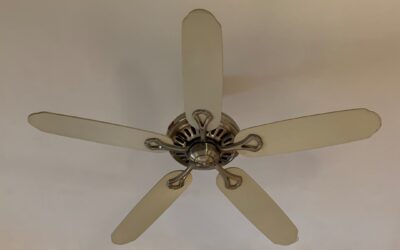
Ceiling fan electricity consumption is one of the most misunderstood numbers in home energy use. Many people assume running a fan all day is expensive, when in reality a ceiling fan is one of the cheapest appliances in the house to operate—often costing just pennies per hour. Understanding exactly how much power a fan draws, how that translates to your monthly bill, and how fans can actually lower your air conditioning costs helps you use them smartly. This guide breaks down the real watts, the true cost, and the factors that make one fan cheaper to run than another.
- How Much Power a Ceiling Fan Uses
- Calculating the Cost to Run a Ceiling Fan
- DC vs. AC Motors: The Efficiency Difference
- How Ceiling Fans Save on Cooling Costs
- What Affects a Fan's Consumption
- Tips to Minimize Ceiling Fan Energy Use
- Comparing a Fan to Other Cooling Options
- Winter Use and Year-Round Value
- Frequently Asked Questions
How Much Power a Ceiling Fan Uses
A ceiling fan’s electricity use is measured in watts. Most household ceiling fans draw between 15 and 90 watts depending on the motor, size, and speed. For comparison:
- Small or efficient fans on low: around 15 to 30 watts.
- Standard 52-inch fans on medium to high: around 50 to 75 watts.
- Large or older fans on high: up to 90 watts or more.
- Light kit (if used): adds the wattage of the bulbs on top of the motor.
To put that in perspective, a central air conditioner draws roughly 3,000 to 5,000 watts. A ceiling fan uses a tiny fraction of that—which is exactly why fans are so cheap to run and why pairing them with AC saves money.
Calculating the Cost to Run a Ceiling Fan
The math is simple. Electricity is billed in kilowatt-hours (kWh), where 1 kWh equals 1,000 watts running for one hour. The U.S. average residential rate is roughly $0.16 per kWh (it varies by state). Here is how a typical 60-watt fan pencils out:
- Per hour: 60 watts ÷ 1,000 = 0.06 kWh × $0.16 = about $0.01 per hour.
- Per day (running 12 hours): about $0.12.
- Per month (12 hours a day): roughly $3.50.
- Running 24/7 for a month: roughly $7.
Even a large fan run around the clock costs only a few dollars a month. That is dramatically less than the cost of lowering your thermostat a few degrees on the AC.
DC vs. AC Motors: The Efficiency Difference
Not all fan motors are equal. The type of motor is the biggest factor in how much electricity a fan consumes:
- AC motor fans are the traditional, less expensive design. They work fine but use more power for the same airflow.
- DC motor fans use a newer, more efficient motor that can move the same amount of air using up to 60 to 70% less electricity. A DC fan might draw just 5 to 35 watts across its speed range.
DC fans cost more upfront but run cheaper, start and stop more smoothly, are usually quieter, and often offer more speed settings and remote or app control. If you run a fan for many hours a day, a DC motor pays back its price premium over time in lower electricity consumption.
How Ceiling Fans Save on Cooling Costs
Here is the key point people miss: a ceiling fan does not cool the air—it cools you, by moving air across your skin so sweat evaporates faster (the wind-chill effect). Because you feel cooler, you can raise your thermostat by about 4°F with no loss of comfort while a fan is running, and each degree of setback trims meaningful money off your AC bill. The fan uses pennies of electricity while letting the far more expensive air conditioner run less. Used this way, a fan is a net money-saver in summer.
One important habit: turn fans off when you leave the room. Since a fan cools people, not the space, running it in an empty room wastes electricity with no benefit.
What Affects a Fan’s Consumption
Several factors determine how much a given fan costs to run:
- Motor type: DC fans use far less power than AC fans.
- Speed setting: higher speeds draw more watts; running on low or medium cuts consumption.
- Fan size: larger blades move more air and typically draw more power, though efficient large fans can be very economical per unit of airflow.
- The light kit: using efficient LED bulbs keeps the lighting portion of the fan’s draw minimal.
- Age and condition: old motors and dirty, unbalanced blades work harder and use more energy.
- Your local electricity rate: the same fan costs more to run in a high-rate state than a low-rate one.
Tips to Minimize Ceiling Fan Energy Use
- Run fans only in occupied rooms—they cool people, not empty spaces.
- Use medium or low speed when it is comfortable; you rarely need high.
- Choose ENERGY STAR or DC-motor fans for the lowest consumption.
- Switch to LED bulbs in the light kit.
- Reverse the fan in winter (clockwise, low speed) to push warm air down and ease heating costs.
- Keep blades clean and balanced so the motor runs efficiently.
Comparing a Fan to Other Cooling Options
Putting a ceiling fan’s consumption next to your other cooling appliances shows just how economical it is. Consider the rough hourly running costs at the U.S. average rate:
- Ceiling fan (60W): about $0.01 per hour.
- Box or pedestal fan (50-100W): about $0.01 to $0.02 per hour.
- Window air conditioner (500-1,400W): about $0.08 to $0.22 per hour.
- Central air conditioner (3,000-5,000W): about $0.48 to $0.80 per hour.
A ceiling fan costs roughly one-fiftieth of what a central AC costs to run. That is precisely why the smartest summer strategy is not to choose one or the other, but to run fans alongside the AC so you can set the thermostat higher and let the cheap appliance do more of the comfort work.
Winter Use and Year-Round Value
Ceiling fans are not just a summer appliance. Most fans have a reverse switch that runs the blades clockwise on low speed in winter. This gentle updraft pulls cooler air up and pushes the warm air that collects near the ceiling back down along the walls into the living space, without creating a chilling breeze. In rooms with high or vaulted ceilings, where heat stratifies dramatically, this can let you lower the thermostat a degree or two and still feel comfortable, trimming heating costs. Because the fan itself uses only a few watts, running it in reverse during the heating season is essentially free comfort that helps your furnace work less. Used correctly in both seasons—cooling you in summer at pennies an hour, redistributing heat in winter—a ceiling fan is one of the best returns on electricity in the whole house.
Frequently Asked Questions
How much does it cost to run a ceiling fan?
A typical 60-watt fan costs about a penny per hour, roughly $3 to $7 per month depending on how many hours a day it runs and your local electricity rate. It is one of the cheapest appliances to operate.
Do ceiling fans use a lot of electricity?
No. Most draw just 15 to 90 watts—a tiny fraction of an air conditioner’s 3,000 to 5,000 watts. Running a fan is far cheaper than lowering the thermostat.
Are DC ceiling fans worth it?
If you run fans for many hours a day, yes. DC motors use up to 60 to 70% less electricity than AC motors, run quieter, and offer more speeds—paying back the higher purchase price over time.
Should I leave a ceiling fan on all day?
Only in rooms people are using. A fan cools skin, not air, so running it in an empty room wastes electricity. Turn it off when you leave.
Can a ceiling fan lower my electric bill?
Yes, indirectly. By making you feel cooler, a fan lets you raise the AC thermostat about 4°F without discomfort, so the far more expensive air conditioner runs less. Turn fans off in empty rooms to keep the savings.
Does using the light kit add much cost?
The lights add the wattage of the bulbs to the fan’s draw. With efficient LED bulbs, that addition is small—typically just a few extra watts per bulb.