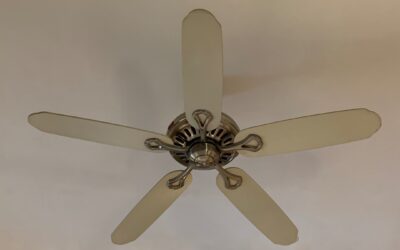
Here’s a fact that surprises most people: your ceiling fan has a switch that reverses which way the blades spin, and using it correctly can shave real money off both your summer cooling and your winter heating bills. Getting the ceiling fan rotation direction right in each season is the difference between a fan that actually helps regulate your comfort and one that’s fighting you half the year. It takes ten seconds to change and costs nothing, yet a huge share of homeowners never touch the little switch on the motor housing.
The Simple Rule: Summer Down, Winter Up
The whole concept boils down to which direction the airflow moves. In summer, you want the fan to push air straight down, creating a breeze that evaporates moisture off your skin and makes you feel cooler. In winter, you want it to pull air up gently, which nudges the warm air trapped near the ceiling back down along the walls without creating a chill.
To remember it: counterclockwise in summer, clockwise in winter (viewed from below, looking up at the fan). Down for cooling, up for warming. That one distinction is all you really need to operate the fan correctly year-round.
Summer: Counterclockwise for a Wind-Chill Effect
Run the blades counterclockwise in warm months so they drive a column of air downward. This doesn’t actually lower the room’s temperature, a fan cools people, not rooms, but the moving air over your skin can make you feel 4°F cooler. That perceived drop lets you raise your thermostat by about the same amount and still feel comfortable.
The savings are real. Bumping the AC up 4 degrees while running a fan can trim cooling costs by up to 10 to 15 percent over a season. Just remember to switch the fan off when you leave the room; since it cools people rather than air, running it in an empty room only wastes electricity.
Winter: Clockwise to Recirculate Heat
Warm air rises and stacks up against the ceiling, which is wasted heat, especially in rooms with high or vaulted ceilings. Set the fan clockwise on its lowest speed and it draws room air up through the center and pushes the warm ceiling air gently down the walls, mixing it back into the living space.
Run it slow. The goal is quiet circulation, not a breeze, because any noticeable draft in winter defeats the purpose by making you feel cooler. Done right, this trick can let you lower your thermostat a couple of degrees and cut heating costs, with the biggest payoff in rooms with ceilings above 8 feet.
How to Change the Direction
There are three common ways to reverse a fan, depending on its age and features:
- Manual switch: Most fans have a small toggle switch on the side of the motor housing. Stop the blades completely, then flip it.
- Remote control: Many modern fans include a reverse button on the handheld or wall remote, no ladder required.
- Smart/app control: Wi-Fi fans let you reverse direction and set seasonal schedules from a phone or by voice.
Always bring the blades to a full stop before flipping a physical switch. Reversing a spinning fan can strain the motor.
How to Tell Which Way It’s Spinning
Not sure if the direction is right? Stand directly under the running fan and look up. If you feel a distinct breeze pushing down on you, it’s spinning counterclockwise, the summer setting. If you feel little to no direct airflow while standing beneath it, it’s in the clockwise winter mode, circulating air upward.
Another quick check: watch the leading edge of the blades. In summer (counterclockwise), the higher edge of each angled blade leads the way. It’s easier, though, to just feel for the breeze, which is the whole point of the setting.
Does It Really Save Money?
The savings are modest per fan but genuine, and they add up across a house and a full year. The mechanism is straightforward: fans let you widen the comfortable thermostat range in both directions, so your heating and cooling systems run less. A ceiling fan uses roughly the same power as a 60-watt bulb, a fraction of what an air conditioner or furnace draws.
The catch is discipline. The fan only helps a room with people in it during summer, and only helps at low speed during winter. Leave a fan running counterclockwise at high speed all winter and you’ll actually feel colder and possibly turn the heat up, erasing the benefit.
Room-by-Room Considerations
The ideal setting shifts a little depending on the space. In a bedroom, the summer counterclockwise breeze is welcome for sleeping, but keep the speed moderate so it doesn’t dry your eyes or scatter papers. In a kitchen, a fan on summer mode helps clear cooking heat, though run it on low near a gas cooktop so it doesn’t disturb the flame or pull heat off the burners.
Rooms with tall or vaulted ceilings benefit most from the winter clockwise setting, since that’s where the most warm air stacks up out of reach. In a nursery or a room with a baby, favor gentle circulation over a strong draft in both seasons. And on a covered porch, a fan set counterclockwise all summer keeps the air moving and, as a bonus, helps keep flying insects from settling.
A Twice-a-Year Habit Worth Building
Tie the switch to a calendar cue you already have. When you change the clocks in spring, set fans counterclockwise; when you change them again in fall, flip them clockwise. Pair it with swapping your HVAC filter and you’ve built a simple seasonal routine that keeps the whole system efficient.
It costs nothing and takes seconds, yet dialing in your ceiling fan rotation direction twice a year is one of the easiest ways to squeeze more comfort and lower bills out of equipment you already own. Once you know down means cool and up means warm, you’ll never look at that little switch the same way again.