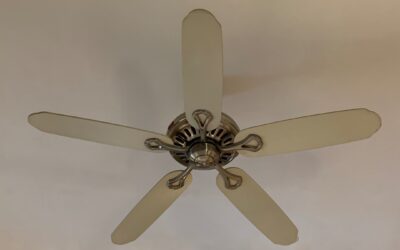
Most people set a ceiling fan once and never touch the direction again, which means half the year it is working against them. So which way is clockwise on a fan, and why should you care? Clockwise is the same direction the hands of a clock move, when you stand directly beneath the fan and look up, the blades rotate from the 12 position toward 3, then 6, then 9. That single setting, reversed seasonally, can make a room feel several degrees warmer or cooler and trim both your heating and cooling bills. Getting it right is free and takes thirty seconds.
Defining Clockwise on a Ceiling Fan
Direction descriptions confuse people because the answer depends on where you are looking from. The standard reference is always from below, looking up at the fan. From that vantage point:
- Clockwise means the blades sweep to the right, the way clock hands move (12 to 3 to 6 to 9).
- Counterclockwise means the blades sweep to the left (12 to 9 to 6 to 3).
If you describe it from above, the directions flip, which is why so many people get it backward. Always judge it standing under the fan and looking up.
The Simple Rule: Summer vs. Winter
Here is the part worth memorizing, because it is the whole point of fan direction.
Summer: Counterclockwise (Down)
In warm months, you want the fan spinning counterclockwise. This pushes air straight down, creating a breeze you feel on your skin. That wind-chill effect makes a room feel about 4 degrees cooler, so you can raise the thermostat a few degrees and still feel comfortable, cutting air conditioning costs.
Winter: Clockwise (Up)
In cold months, switch to clockwise on a low speed. The blades pull air upward, gently pushing the warm air that collects at the ceiling back down along the walls and into the living space, without creating a chilling draft. This redistributes heat and lets you lower the thermostat slightly.
An easy memory aid: “counterclockwise for cool, clockwise for cozy.” Summer down, winter up.
How to Tell Which Way Your Fan Is Spinning
You do not need to guess. Stand directly under the running fan and look up at the blades, then watch their direction of travel. For an even clearer test, set the fan to medium or high and stand beneath it: if you feel a strong, direct breeze, it is spinning counterclockwise (summer mode, pushing air down). If you feel little to no direct draft even on a higher speed, it is in clockwise (winter mode, pulling air up). The breeze test is the fastest real-world check.
How to Change the Direction
Reversing a fan is simple, but the method depends on your model. Always make sure the fan has come to a complete stop before changing direction.
- Manual switch (most common). Look for a small horizontal toggle switch on the side of the motor housing, between the blades and the ceiling. Turn the fan off, wait for the blades to stop, flip the switch, and turn it back on. The blades will now spin the opposite way.
- Remote control. Many newer fans have a direction or reverse button on the handheld remote. Press it with the fan stopped or running, depending on the model’s instructions.
- Wall control or smart app. Smart fans and some wall-mounted controls let you reverse direction with a dedicated button or in a companion app.
- Pull-chain only fans. A few basic fans require reaching the motor housing switch on a ladder; there is no chain shortcut for direction.
If you cannot find a switch and there is no remote function, check the manufacturer’s manual; a small number of older fans are not reversible at all.
Why the Right Direction Saves Money
A ceiling fan does not actually change a room’s temperature, it changes how the air feels and moves. In summer, the downward breeze lets you set the thermostat 2 to 4 degrees higher while staying comfortable, which can noticeably reduce cooling costs over a season. In winter, redistributing the warm air trapped near the ceiling means your furnace cycles less to keep the lived-in zone comfortable. Because a fan uses a tiny fraction of the energy of a heating or cooling system, using it correctly is one of the cheapest efficiency upgrades in any home. Just remember to turn fans off when you leave a room; they cool people, not empty spaces.
Choosing the Right Speed for Each Season
Direction is only half the equation; speed matters too. In summer, run the fan on medium or high to maximize the cooling breeze. In winter, run it on the lowest speed, because the goal is gentle air circulation, not a draft, and a high speed in winter would create the very wind-chill you are trying to avoid. Match low-and-clockwise for heating season, and faster-and-counterclockwise for cooling season.
Does Direction Change for Different Rooms?
The clockwise-for-winter, counterclockwise-for-summer rule applies to standard living spaces, but a few situations deserve a tweak. In a room with very high or vaulted ceilings, where warm air pools far overhead, the winter clockwise setting is especially valuable because there’s more stratified heat to push back down. In a kitchen, you may prefer the summer downward breeze year-round simply to clear cooking heat and odors. For outdoor-rated porch and patio fans, you’ll almost always want counterclockwise on a higher speed to maximize the cooling, bug-deterring breeze, since you’re rarely running them for heat. And in a child’s nursery or over a bed, keep speeds gentle so the airflow soothes rather than chills. The underlying physics never changes, down for cooling, up for heating, but how aggressively you apply it depends on the room and how you use it.
Common Mistakes to Avoid
A few errors keep fans from doing their job:
- Judging direction from above. Always look up from underneath; the directions reverse from the other side.
- Forgetting to switch seasonally. Set a reminder twice a year, when you change clocks or swap your HVAC mode.
- Running winter mode too fast. Keep it low and clockwise so you do not create a chilling draft.
- Leaving fans on in empty rooms. A fan cools skin, not air, so it only helps when someone is present.
- Changing direction while spinning on fans not designed for it, which can stress the motor; let it stop first.
Once you know that clockwise on a fan means blades moving like a clock’s hands when viewed from below, the rest falls into place: clockwise and slow for winter warmth, counterclockwise and brisk for summer cooling. Make the switch twice a year and your fan will earn its keep in every season.