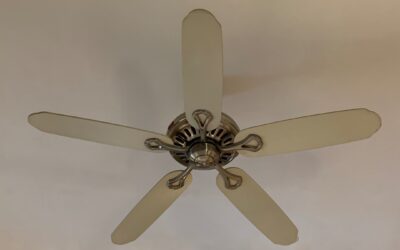
Half the ceiling fans in America are spinning the wrong way for the season, quietly working against the heating or cooling bill instead of for it. The ceiling fan clockwise vs counterclockwise question has a real, physics-backed answer, and getting it right costs you nothing but a flip of a small switch on the motor housing. Run counterclockwise in summer to feel cooler, clockwise in winter to push warm air back down, and you can nudge the thermostat several degrees in your favor. Here is exactly which direction does what, why it works, and how to change it on any fan.
- The Short Answer
- Summer: Counterclockwise for a Cooling Breeze
- Winter: Clockwise to Redistribute Warm Heat
- Clockwise vs Counterclockwise: Head to Head
- Why the Blade Angle Makes the Difference
- How to Tell Which Way Your Fan Is Spinning
- How to Change the Direction
- How Much You Actually Save
- Ceiling Height and Room Factors
- Common Myths, Cleared Up
- The Verdict: Which to Use and When
The Short Answer
Two directions, two seasons. In summer, your fan should spin counterclockwise (as you look up at it), which pushes air straight down and creates a cooling breeze on your skin. In winter, it should spin clockwise at a low speed, which pulls cooler air up and gently pushes the warm air trapped near the ceiling back down along the walls. That is the entire rule. Everything else in this guide is about why it works and how to make sure you have it set right, because it is genuinely easy to get backward.
Summer: Counterclockwise for a Cooling Breeze
When the blades turn counterclockwise, their angled pitch drives air downward in a column right beneath the fan. That moving air does not actually lower the room’s temperature — this is the key point — it cools you by accelerating the evaporation of moisture from your skin, the same wind-chill effect you feel on a breezy day. Because you feel cooler, you can raise the thermostat by about 4°F without any loss of comfort, and your air conditioner runs less. That is where the energy savings come from. Set the fan to a medium or high speed in summer for a breeze you can actually feel, and remember it only helps when someone is in the room to feel it.
Winter: Clockwise to Redistribute Warm Heat
Winter flips the logic. Warm air rises and collects near the ceiling, leaving the living zone cooler while your furnace keeps running to heat air that is stuck overhead. Set the fan clockwise at its lowest speed and it does something clever: it pulls the cooler air in the middle of the room straight up, which forces the warm air pooled at the ceiling to spill outward and slide down along the walls back into the space where you live. Done right, you feel no breeze at all — you just feel warmer, because the heat that was wasted at the ceiling is now circulating. That lets you lower the thermostat a couple of degrees and take load off the furnace. Low speed is essential in winter; a fast clockwise spin creates a draft that defeats the purpose.
Clockwise vs Counterclockwise: Head to Head
Here is the comparison at a glance:
- Counterclockwise (summer): pushes air down, creates a wind-chill breeze on your skin, lets you raise the AC thermostat about 4°F, run at medium or high speed.
- Clockwise (winter): pulls air up, redistributes ceiling-trapped warm air down the walls, no direct draft, lets you lower the heat a couple degrees, run at low speed only.
- Why direction matters: the angled blades act like a screw — the same pitch moves air in opposite directions depending on which way it spins.
- Common mistake: leaving it counterclockwise all winter, which creates a chilling draft and makes the room feel colder.
Why the Blade Angle Makes the Difference
The mechanism is simple once you see it. Ceiling fan blades are not flat — each is set at a slight pitch, typically 12 to 15 degrees. That angle makes the blade act like a paddle or a screw thread cutting through the air. Spin it one way and the pitched blade scoops air and drives it down; reverse the spin and the same pitch pulls air up instead. Nothing about the blade changes between seasons — only the direction of rotation does, which is why a single reversing switch is all any fan needs to serve both summer and winter.
How to Tell Which Way Your Fan Is Spinning
Do not trust your memory — check it directly. Turn the fan on at a medium speed and stand directly underneath it. If you feel a distinct breeze pushing down on you, it is spinning counterclockwise, correct for summer. If you feel little or no downward airflow, it is spinning clockwise, correct for winter. Another way: watch the blades and note whether the leading (lower) edge of each blade is moving in the counterclockwise or clockwise direction as you look up. The breeze test is more reliable for most people because you feel the result instead of trying to track fast-moving blades.
How to Change the Direction
Reversing a fan takes seconds, and there are two ways depending on your model:
- Manual switch: Most fans have a small horizontal or vertical toggle switch on the side of the motor housing, below the blades. Turn the fan off and let it stop completely, then flip the switch to the opposite position and turn it back on. Flipping it while the blades spin can damage the motor.
- Remote or wall control: Many newer fans reverse via a button on the handheld remote, a wall control, or a smart-home app — look for a reverse or direction button, no ladder required.
Set a reminder to flip it twice a year, at the same time you change your smoke detector batteries or adjust the thermostat for the season. That habit is all it takes to keep the fan working with your HVAC year-round.
How Much You Actually Save
The energy math is worth spelling out, because the savings are real but often overstated. In summer, running a fan lets you raise the thermostat roughly 4°F while feeling just as comfortable, and since air conditioning is one of the biggest loads in a home, that setback can trim a meaningful slice off your cooling bill over a season. The catch is that a fan cools people, not rooms, so it only saves you money if you turn it off when you leave — a fan running in an empty room is pure waste, adding to your bill while cooling no one. In winter the savings come from letting your furnace work less because the warm air is no longer stranded at the ceiling; the effect is smaller than the summer benefit but still real, especially in rooms with high or vaulted ceilings where the most heat pools up top. A ceiling fan uses very little electricity — far less than an air conditioner or furnace — so the trade almost always nets out in your favor when you use it correctly.
Ceiling Height and Room Factors
The right direction is universal, but how much benefit you get depends on your room. High and vaulted ceilings gain the most from the winter clockwise setting, because that is where warm air pools farthest from you and the fan has the most stranded heat to reclaim — in a room with a 12-foot ceiling, redistributing that trapped warmth makes a genuine difference in comfort. For proper airflow, the fan should hang with the blades about 8 to 9 feet above the floor and at least 18 inches from the nearest wall, so a downrod matters in tall rooms. Blade span should match the room size: a fan that is too small for a large room barely moves the air regardless of direction. In summer, the cooling breeze is strongest directly beneath the fan, so a single fan cools a seating area, not a sprawling open floor plan — large rooms may need more than one fan to feel the effect everywhere.
Common Myths, Cleared Up
A few misconceptions trip people up. The biggest is that a fan lowers the room’s temperature — it does not; it only makes you feel cooler by moving air across your skin, which is exactly why running it in an empty room accomplishes nothing. Another myth is that the winter clockwise setting should run fast; in fact it must run slow, because a fast clockwise spin creates the very draft you are trying to avoid and chills the room instead of warming it. Some people also believe direction does not matter at all — but the pitched blades genuinely move air one way or the other depending on rotation, and getting it backward in winter actively works against your comfort. Finally, not every fan can reverse: a few older or budget models lack a reversing switch, so if yours has no side toggle and no remote reverse button, check the manual before assuming it can do both seasons.
The Verdict: Which to Use and When
There is no “better” direction — each wins its season, and the whole point is to switch between them. Run counterclockwise from spring through fall for a cooling breeze that lets you lean less on the air conditioner, and switch to a slow clockwise spin through the winter to reclaim the warm air stranded at your ceiling and ease the load on the furnace. Used correctly both ways, a ceiling fan is one of the cheapest comfort and energy tools in the house. The mistake to avoid is set-and-forget: a fan left counterclockwise all winter actively chills you, and one left clockwise all summer gives you no breeze at all. Flip the switch with the seasons and the fan pays you back on every utility bill.