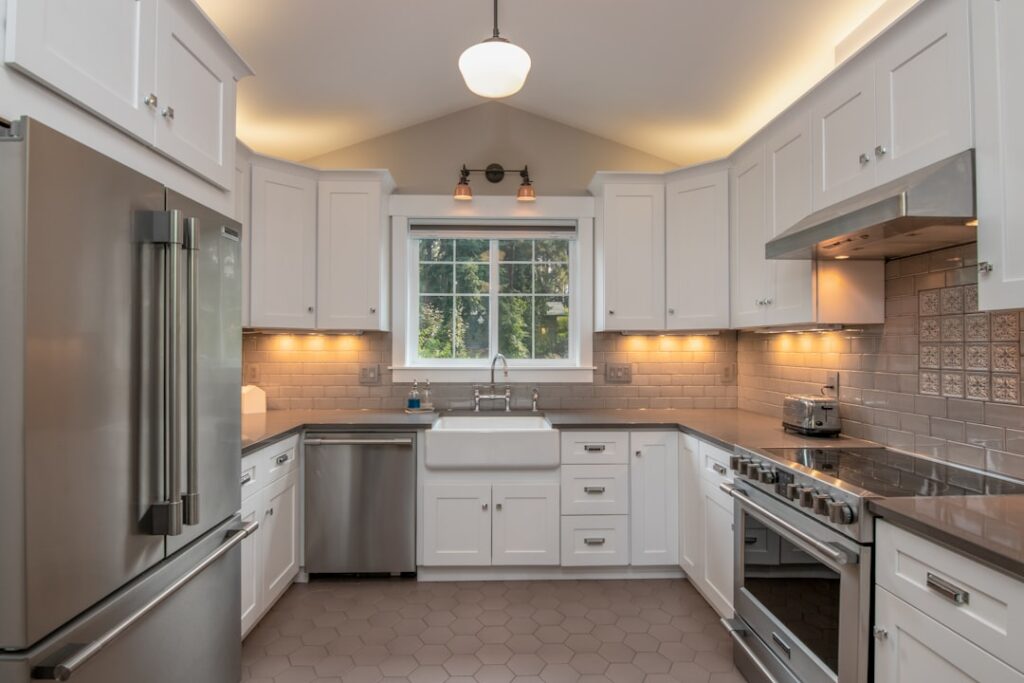
That dusty gap above your kitchen cabinets is prime real estate that most kitchens waste. Ceiling height kitchen cabinets close that gap by running the cabinetry all the way to the ceiling, and they have become one of the most requested features in modern remodels. They look custom, add serious storage, and erase the grease-magnet ledge on top of standard cabinets. But they cost more, require careful planning, and are not the right call for every ceiling height. Here is the honest breakdown.
Part of our Kitchen Remodeling guide — explore the full guide →
- What Counts as Ceiling Height Cabinets
- The Pros of Going to the Ceiling
- The Cons You Should Weigh
- How Much Do They Cost?
- Best Ceiling Heights for This Look
- Design Tips to Get It Right
- What to Store Up High
- Do They Add Resale Value?
- Stock, Semi-Custom, or Custom?
- Ceiling Height vs Standard With a Soffit
- The Bottom Line
What Counts as Ceiling Height Cabinets
Standard upper cabinets are 30, 36, or 42 inches tall and stop short of the ceiling, leaving a gap of anywhere from 12 to 24 inches on a typical 8-foot ceiling. Ceiling height, or floor-to-ceiling, cabinets extend that run to the top, usually by adding a taller cabinet box or a stacked upper unit plus crown molding to close the final inches.
On a 9-foot or 10-foot ceiling, designers often use stacked cabinets, a shorter glass-front unit sitting above the working cabinets, to reach the top without one impractically tall door.
The Pros of Going to the Ceiling
The appeal is real, and the benefits go beyond looks.
- More storage: You gain roughly 15 to 25 percent more cabinet volume, which is enough for seasonal dishes, small appliances, and overflow pantry items.
- No dust ledge: The greasy, dusty top of standard cabinets disappears. That ledge is nearly impossible to keep clean and collects grime for years.
- A custom, high-end look: Cabinets that meet the ceiling read as built-in and intentional, which appeals to buyers and appraisers.
- Taller visual lines: Vertical cabinetry draws the eye up and can make a kitchen feel larger and more architectural.
The Cons You Should Weigh
Full-height cabinets are not free of trade-offs, and some are significant.
- Higher cost: Expect to pay 15 to 30 percent more than standard uppers because of the extra materials, taller boxes, and added labor.
- Hard-to-reach top shelves: The top zone requires a step stool or ladder. It is best for items you use once or twice a year, not daily.
- Installation complexity: Reaching the ceiling demands precise leveling. Uneven ceilings and out-of-square walls make the job harder and are common in older homes.
- Can feel heavy: In a small kitchen with a low 8-foot ceiling, a full wall of cabinetry can feel boxed in without glass fronts or lighter finishes to break it up.
How Much Do They Cost?
Cabinet pricing varies enormously by material and brand, but here is a realistic frame. Stock cabinets run roughly $100 to $300 per linear foot, semi-custom $150 to $650, and fully custom $500 to $1,200-plus. Ceiling height configurations sit at the upper end of each tier and add cost for the taller boxes plus crown molding.
For a typical 20-linear-foot upper run, the ceiling height upgrade might add $1,500 to $4,000 over standard cabinets once you include the taller units, molding, and extra install time. Stacked glass-front toppers add more still.
Best Ceiling Heights for This Look
Ceiling height matters more than almost anything else here. On an 8-foot ceiling, 42-inch cabinets plus crown molding reach the top cleanly and look great. This is the sweet spot and the most common scenario.
On 9-foot ceilings, a single tall cabinet becomes awkward to use and the door gets unwieldy, so stacked cabinets are the smarter design. Above 10 feet, running cabinets all the way up is usually impractical and expensive; many designers stop the cabinets and add a shelf, soffit detail, or dramatic wall feature instead.
Design Tips to Get It Right
A few moves separate a polished result from a clunky one:
- Add glass fronts up top: Glass-door cabinets in the hard-to-reach zone lighten the wall visually and create display space, so you are not stuffing daily dishes where you cannot reach them.
- Light the interiors: Puck or LED strip lighting inside glass cabinets makes the top tier a feature rather than a shadowy void.
- Use crown molding: A crown detail bridges the last inch or two to the ceiling and hides the small gaps that come from imperfect ceilings.
- Keep a step stool handy: A slim folding stool or a toe-kick pull-out step keeps the upper shelves usable.
What to Store Up High
Plan the top zone for infrequent items so the reach is not a daily annoyance. Good candidates include holiday serveware, large platters, spare small appliances, backup pantry goods, and vases. Keep everyday dishes and glasses in the lower, reachable shelves. Thinking through this before install prevents the classic mistake of a beautiful cabinet full of things you never touch.
Do They Add Resale Value?
Kitchens sell homes, and cabinetry is one of the features buyers notice first. Ceiling height cabinets read as a custom, higher-end kitchen, which supports both perceived value and appraisal comparisons against homes with standard uppers. They also solve the storage complaint that shows up constantly in older kitchens. That said, the return depends on execution. Well-finished, level cabinets with quality doors and thoughtful glass-front detailing add value, while a rushed install with visible gaps at the ceiling or mismatched crown molding can actually detract. If resale is a priority, invest in clean installation and a timeless finish rather than a trendy color.
Stock, Semi-Custom, or Custom?
Your cabinet tier shapes how easily you can go full height. Stock cabinets come in fixed heights, so reaching an 8-foot ceiling usually means stacking a standard 42-inch cabinet with crown molding to close the gap. Semi-custom lines offer more height options and door styles, giving you a cleaner fit and better glass-front and lighting choices. Fully custom cabinets are built to your exact ceiling height, eliminating gaps entirely and allowing single tall doors or perfectly proportioned stacked units. For an unusual ceiling height or a truly seamless look, custom is worth the premium; for a standard 8-foot ceiling, semi-custom hits the best balance of cost and fit.
Ceiling Height vs Standard With a Soffit
Many older kitchens have a soffit, the boxed-in bulkhead above the cabinets that hides ductwork or plumbing. Removing a soffit to fit ceiling height cabinets is possible but adds cost and risk if there are utilities inside. Get a contractor to inspect before assuming you can rip it out. If the soffit hides essential mechanicals, taller cabinets that meet the underside of the soffit are a tidy compromise.
Are ceiling height cabinets worth it?
For most 8-foot-ceiling kitchens, yes. You gain storage, lose the dust ledge, and get a custom look for a moderate premium. On very tall ceilings, the top shelves become impractical and the value drops.
How do you reach the top shelves?
A folding step stool or a built-in toe-kick step. Because the top tier is best used for seasonal and rarely needed items, you should not need to climb up more than a few times a year.
Do full-height cabinets make a kitchen look bigger or smaller?
The vertical lines usually make a kitchen feel taller and more custom. In a small kitchen with a low ceiling, break up the mass with glass fronts or lighter finishes so the wall does not feel heavy.
Can I add cabinets on top of my existing ones?
Sometimes. Adding stacked upper cabinets or a shelf above your current uppers can mimic the look for less, but matching finishes and securing them properly to studs is critical. A cabinet installer can advise whether your current run supports it.
The Bottom Line
Ceiling height kitchen cabinets deliver more storage, a cleaner look, and no more grimy ledge, making them a strong upgrade for standard 8-foot ceilings. The trade-offs are a higher price, harder-to-reach top shelves, and a more demanding install. If you plan the top zone for seasonal storage, add glass fronts and lighting, and match the design to your ceiling height, they are one of the most rewarding cabinet decisions you can make.