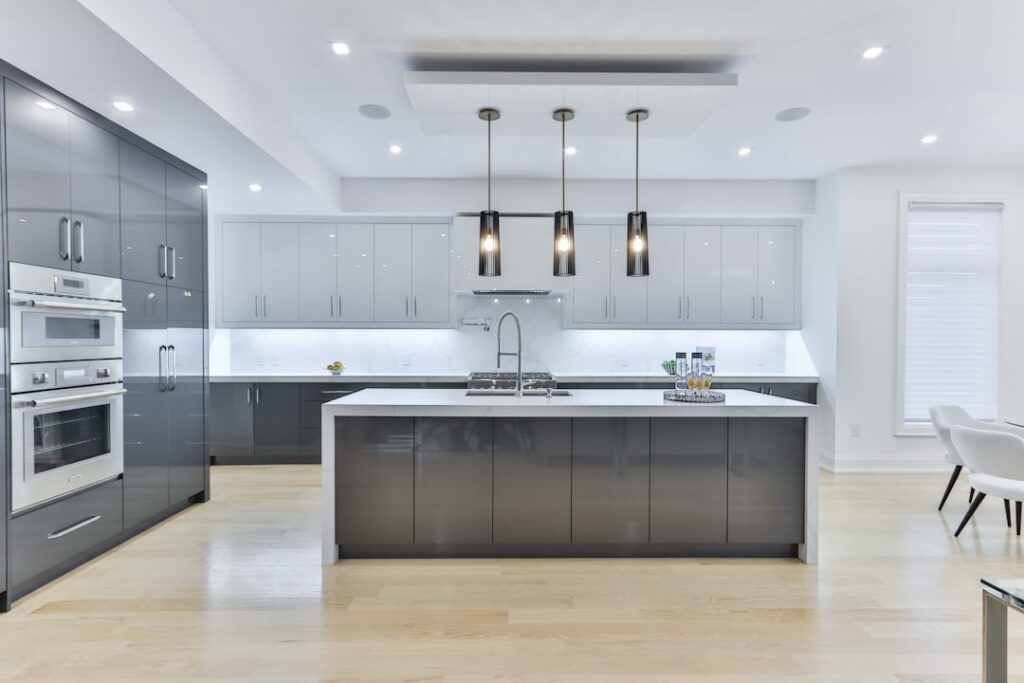
The 18-inch dust trap above standard wall cabinets is one of the worst design holdovers from mid-century construction, and homeowners are finally getting rid of it. Ceiling height cabinets close that gap, add 30 to 60 percent more storage, and instantly modernize a kitchen for less than most full remodels cost. I have installed them in 9-foot, 10-foot, and even 12-foot ceiling spaces, and the design rules change at each height.
Part of our Kitchen Remodeling guide — explore the full guide →
What Counts as Ceiling Height
Ceiling height cabinets run all the way to the ceiling line, either as one continuous tall box (typically 42 to 48 inches) or as a standard 36 to 42-inch wall cabinet stacked with a smaller cabinet above. The stacked approach is more common because most cabinet lines max out at 42 inches per box. The seam between the two boxes hides cleanly with a piece of light rail or a thin band of crown.
For an 8-foot ceiling, a 42-inch tall upper cabinet plus crown often reaches the ceiling without stacking. For 9-foot ceilings, you stack a 36-inch upper with a 12 or 15-inch cabinet on top. For 10-foot or taller, you stack 42 plus 18 to 24-inch boxes and finish with a heavier crown profile to balance the visual weight.
Real Cost Comparison
Going to the ceiling adds material and labor, but the percentage increase is smaller than most homeowners expect:
- Stock cabinets, standard height (8-foot ceiling): $150 to $300 per linear foot installed
- Stock cabinets, ceiling height (9-foot ceiling): $200 to $400 per linear foot installed
- Semi-custom, ceiling height: $350 to $600 per linear foot
- Full custom, ceiling height: $600 to $1,200 per linear foot
- Extra crown molding for tall stacks: $8 to $25 per linear foot
For a typical 18 linear feet of upper cabinets, the upgrade from standard to ceiling height runs roughly $900 to $2,200 extra. That gets you an additional 60 to 80 cubic feet of storage, which is the equivalent of a full pantry closet.
Handling Soffits and Bulkheads
Older homes often have a soffit, also called a bulkhead, that boxes in the space between the cabinet tops and the ceiling. Removing it is the first big question. Sometimes the soffit is purely decorative and demos out in an afternoon. Other times it conceals HVAC ducts, plumbing vents, or wiring that cannot be relocated affordably.
Before you commit, drill a small inspection hole and look inside with a phone camera. If you see ductwork or 3-inch vent stack, plan on $1,500 to $4,500 in rerouting costs. If the soffit is empty framing, removal runs $400 to $900 including drywall patching and paint. Always have the work permitted if HVAC or plumbing moves.
What to Store Up High
The top section of ceiling height cabinets sits 7 to 9 feet off the floor, which puts it out of comfortable reach for most adults. Use that real estate for items you touch once or twice a year:
- Holiday serving platters and turkey roasters
- Punch bowls and large pitchers
- Specialty appliances (waffle iron, dehydrator, fondue pot)
- Bulk paper goods and overflow napkins
- Vases and seasonal centerpieces
- Cookbooks you reference rarely
Skip storing anything heavy that you actually use weekly, because hauling a 12-pound stand mixer down from 8 feet up gets old fast. Keep a sturdy step stool nearby, and consider one that folds flat against a pantry wall or end panel.
Style Considerations
Tall cabinets emphasize vertical lines in a kitchen, which works beautifully in shaker, modern flat-panel, and inset styles. They can overwhelm a small kitchen with heavy ornate doors, so simpler door profiles read better at scale. Painted finishes hide minor seams between stacked boxes better than stained wood, which is why most ceiling-height installations are painted white, off-white, navy, or sage green.
If you stack glass-front upper cabinets above solid lower wall cabinets, the glass section adds light and breaks up the height. Plan for puck or LED strip lighting inside those upper cabinets to highlight the contents at night.
Installation Challenges
Ceilings are rarely level. Over a 12-foot run, expect 1/4 to 5/8 inch of variation, which is invisible against a soffit but obvious against the top of a cabinet. A good installer scribes the top of the cabinet to the ceiling line or uses a slightly oversized crown that absorbs the gap. If you DIY this work, expect to spend an extra 4 to 8 hours on scribing alone for a typical kitchen.
Heavy stacked uppers need solid blocking in the wall. Find the studs, and consider adding a 2×4 horizontal blocking strip behind the drywall at the top mounting line before installation. The extra blocking costs almost nothing if walls are open during a remodel and dramatically reduces cabinet flex over time.
Where Else They Work
Ceiling height cabinets are not just for kitchens. They shine in laundry rooms, mudrooms, home offices, and butler pantries. Anywhere you have a small footprint and need maximum storage, going vertical adds capacity without expanding the room. In a laundry room, ceiling-height cabinets handle bulk detergent, cleaning supplies, and out-of-season decor that would otherwise crowd a basement or garage.
Lighting Solutions for Tall Stacks
Once cabinets reach the ceiling, the soft glow from above disappears, and the upper section can read as a dark band. Counter the effect with two lighting moves. First, run LED strip lighting along the top of the cabinets pointing upward toward the ceiling for indirect ambient glow. Hue Lightstrip Plus or Govee Wi-Fi LED strips run $30 to $80 and install with adhesive in under an hour. Second, install puck lights or strip lights inside any glass-front uppers to highlight contents.
The combination eliminates the cave-like feeling that poorly lit ceiling-height kitchens sometimes have. Pair both circuits with smart switches for whole-room scene control without rewiring.
Resale Impact
Real estate data from 2024 to 2026 shows kitchens with ceiling-height cabinets sell roughly 7 to 12 days faster than identical homes with standard 36-inch uppers and soffits. Appraisers also routinely credit higher value, particularly in markets where new construction sets the buyer expectation. For homes in the $400,000 to $800,000 range, the upgrade typically pays back 70 to 90 percent of its cost at sale, which is one of the better returns among kitchen improvements.