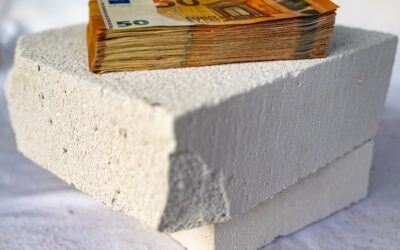
Concrete is the only countertop material where the finished surface looks better with five years of patina than it did on install day. That patina divides homeowners into two camps. Cement kitchen countertops reward people who appreciate craftsmanship and slight imperfection; they frustrate anyone expecting the slick uniformity of quartz. Below I cover what the material actually is, what it costs in 2026, how it gets installed, and where it earns its keep against the polished competition.
Part of our Countertops guide — explore the full guide →
What Cement Countertops Actually Are
The industry uses “cement” and “concrete” interchangeably for countertops, but cement is technically just one ingredient. A countertop slab is a precision concrete mix: white or gray Portland cement, fine aggregates (sand, glass, or crushed stone), water, polymers like acrylic admixtures, fiber reinforcement, and pigment. The polymer is what turns a sidewalk-strength mix into a 6,000-to-9,000 PSI countertop that resists cracking when you lean a 30-pound cast iron Dutch oven across an unsupported overhang.
Most fabricators today use precast designs poured upside down in melamine or HDPE forms. The bottom of the form becomes the polished top of the finished slab, which means the surface inherits the smoothness of the mold rather than requiring days of hand grinding. A few fabricators still pour in place on top of the cabinets — beautiful results but a four-week mess inside your kitchen.
Real 2026 Pricing per Square Foot
Cement kitchen countertops are not the budget option homeowners often expect. Custom precast slabs from a regional fabricator run $80 to $135 per sq ft installed in most US markets, and $140 to $200 per sq ft for high-end specialty finishes from shops like Get Real Surfaces in New York or Concreteworks in Oakland. A typical 50 sq ft L-shaped kitchen lands between $4,000 and $7,500 installed.
- DIY pour-in-place — $15 to $30 per sq ft in materials, plus 40 to 60 hours of labor
- Local fabricator, standard finish — $80 to $110 per sq ft installed
- Premium fabricator, integral sink, custom edge — $135 to $185 per sq ft installed
- Add-ons — integral drainboards $300 to $600 each, integral sink $500 to $1,200, embedded objects $50 to $200
That places cement firmly above standard quartz ($55 to $90 per sq ft installed) and granite ($45 to $85), and roughly even with high-end marble.
The Sealer Question Is Everything
Untreated concrete is porous. Lemon juice will etch it in 30 seconds, red wine will stain it overnight, and a hot pan will leave a permanent thermal mark. The sealer system you choose determines almost everything about how the counter performs in real-world use.
- Penetrating densifier (lithium silicate) — preserves the raw concrete look but offers minimal stain resistance. Best for bar tops, terrible for active cooking
- Penetrating sealer + wax topcoat — the traditional artisan approach. Looks gorgeous, requires re-waxing every 3 to 6 months
- Two-part epoxy or polyurethane — the modern professional finish. Food-safe, heat-tolerant to about 300°F, resists almost all kitchen stains. Looks slightly plasticky and cannot be spot-repaired
- Hybrid systems like Cheng ConcreteSealer Pro — newer reactive sealers that penetrate and densify, offering near-epoxy stain resistance without the plastic sheen
For an active family kitchen, the hybrid reactive sealers are now the right answer. Expect to reseal lightly every 12 to 18 months — a $40 bottle and 90 minutes of work.
Pros That Make People Choose Concrete
Three properties drive buyers to concrete despite the price and maintenance. First, the design freedom is unmatched. You can integrate a drainboard with chiseled grooves, embed family heirlooms in the surface, cast an apron-front sink as one continuous piece, or pour a single 14-foot slab with no seams. No other countertop material offers that range.
Second, the look is genuinely warm. The slight color variation, the tiny imperfections at the edge where the form pulled away, and the way the surface accepts light — these create a kitchen that feels handmade rather than installed. Third, with proper sealing concrete handles real heat. I have set a 425°F sheet pan straight from the oven onto a properly sealed concrete counter with no damage, something quartz absolutely cannot tolerate.
Cons You Need to Accept Going In
Concrete moves. It will develop hairline cracks within the first two years on almost every installation — usually at stress points near sink cutouts or unsupported overhangs longer than 10 inches. These cracks are cosmetic, not structural, and most owners learn to accept them as part of the character. If you cannot accept them, do not buy concrete.
The weight is also serious. A 1.5-inch-thick slab weighs about 18 pounds per sq ft, meaning a 50 sq ft kitchen carries 900 pounds of countertop. Cabinets and floor framing need to be inspected before install — older homes with 2×8 floor joists on 16-inch centers may need a sister joist added below. Finally, the porosity issue means you cannot leave cooking oil, red wine, beet juice, or turmeric on the surface and walk away. Wipe spills within a few minutes or accept the stain.
Cement vs Quartz: The Honest Comparison
Most kitchen shoppers cross-shop cement against quartz. The decision usually comes down to maintenance tolerance versus aesthetic goals. Quartz wins on day-to-day ease — non-porous, no sealing, lifetime warranty against staining, and reliable uniform color from sample to slab. Cement wins on character, customization, and heat resistance.
Resale is mixed. In urban markets with design-forward buyers (Brooklyn, Portland, Austin, parts of LA), concrete counters add value or at least don’t hurt. In suburban markets where buyers expect quartz or granite, cement can scare off offers or get flagged on inspection reports as “unusual finish.” Talk to a local agent before committing if resale matters within 5 years.
Should You DIY a Cement Counter?
DIY pour-in-place is achievable for handy homeowners with a free weekend and realistic expectations. Cheng Design and Buddy Rhodes both sell concrete countertop mixes that bag-and-go for about $1.20 per pound, with a 50 sq ft kitchen needing roughly 900 pounds of mix at $1,100 in materials. Add forms, mesh reinforcement, polishing pads, and sealer and total materials hit $1,500 to $2,000. The labor is roughly 50 hours spread across two weekends including the 7-day cure.
The honest catch: first-time pours rarely turn out evenly. Color variation, surface voids (“bug holes”), and uneven edges are common. If your goal is a rustic mountain cabin or a workshop kitchen, DIY can deliver charming results. If your goal is a polished modern kitchen with hairline-tight seams, hire a professional fabricator and budget accordingly.