You can set a 500°F pan straight from the oven onto it without a trivet, and it will not scorch, scratch, or stain. Porcelain kitchen countertops have quietly become one of the toughest surfaces you can install, and they cost less than many natural stones. Made from refined clay fired at temperatures above 2,200°F, porcelain slabs are dense, nonporous, and surprisingly thin. If you have only considered quartz or granite, this surface deserves a serious look before you sign a contract.
Part of our Countertops guide — explore the full guide →
What Porcelain Slabs Actually Are
Porcelain is a ceramic material, but not the same fragile stuff your coffee mug is made from. Manufacturers press fine clay, feldspar, and silica under enormous pressure, then fire it until the particles fuse into a glass-hard sheet. The result is a slab that is nearly impervious to water, with absorption rates below 0.5 percent.
Large-format slabs typically measure around 126 by 63 inches and come in thicknesses of 6, 12, and 20 millimeters. Pigments and a printed design layer are added before firing, which means a single slab can convincingly mimic Calacatta marble, concrete, or aged wood while keeping the strength of fired ceramic underneath.
The Real Advantages
Heat resistance is the headline feature. Unlike quartz, which has resin binders that can yellow or scorch around 300°F, porcelain handles direct contact with hot cookware without flinching. That alone wins over a lot of serious home cooks. You skip the trivets, the cooling racks, and the worry about a forgotten hot pad scorching your investment.
- Scratch resistance: Porcelain sits around 7 on the Mohs hardness scale, so knives and dropped pans rarely leave a mark.
- Stain proof: Wine, coffee, citrus, and oil sit on the surface instead of soaking in. A nonporous top means no sealing, ever.
- UV stable: The color will not fade in a sunny kitchen or an outdoor cooking station, which is why porcelain is popular for patios.
- Hygienic: With nowhere for bacteria to hide, it wipes clean with soap and water.
- Lightweight: A 6mm slab weighs far less than granite, making it suitable for overlays on existing counters.
The Honest Drawbacks
No surface is perfect, and porcelain has two weaknesses worth understanding. First, it can chip on a hard impact at the edges, particularly on thinner slabs. A dropped cast-iron skillet hitting a corner can take a small bite out of it, and chips are difficult to repair invisibly because the color runs only through the printed layer on many products.
Second, fabrication is demanding. Cutting and edging porcelain requires specialized blades and a fabricator who knows the material, so your installer pool is smaller than it is for granite or quartz. A shop without porcelain experience can crack a slab during cutting, which drives up your cost and your wait time.
How Much Porcelain Countertops Cost
Installed pricing for porcelain kitchen countertops generally lands between $55 and $120 per square foot, putting it roughly in line with mid-grade quartz. A typical 40-square-foot kitchen therefore runs about $2,200 to $4,800 installed, depending on slab brand, thickness, and edge detail.
Several factors push you toward the higher end:
- Thicker 20mm slabs or a built-up “mitered” edge that mimics a thick stone profile.
- Full-height backsplashes cut from the same slab for a seamless look.
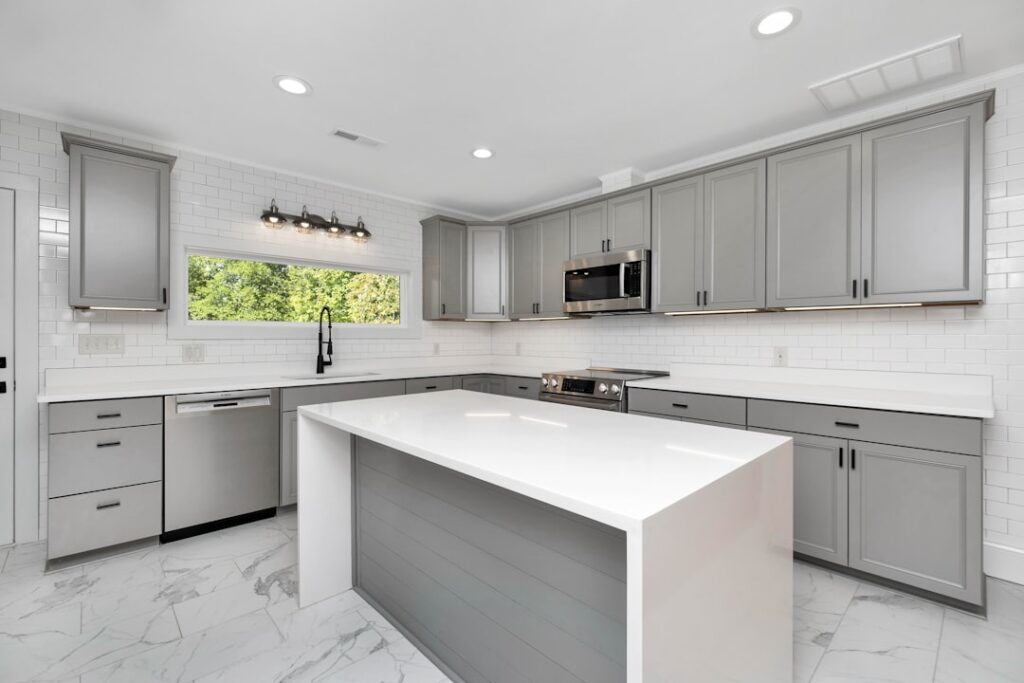
- Waterfall island ends, which require precise mitered corners.
- Integrated or undermount sink cutouts in the harder material.
Because the slabs are thin, fabricators sometimes laminate two pieces or add a backer to build up exposed edges, and that labor adds to the bill.
Porcelain Versus Quartz and Granite
Shoppers almost always cross-shop these three. Quartz offers a consistent, engineered look and slightly better impact resistance, but it can stain from heat and fades in sunlight. Granite brings unique natural patterns and excellent durability, yet it needs periodic sealing and weighs a ton.
Porcelain splits the difference: it matches granite’s hardness, beats quartz on heat and UV, and never needs sealing. The trade-off is edge fragility and a thinner profile that some homeowners feel looks less substantial unless you pay for a built-up edge. If your priority is a cook-heavy kitchen or an outdoor counter, porcelain often wins.
Daily Care and Cleaning
Maintenance is about as easy as it gets. For everyday cleanup, warm water with a few drops of dish soap and a microfiber cloth handles spills and crumbs. There is no sealer to reapply and no special stone cleaner required.
- Wipe spills when convenient rather than urgently, since nothing soaks in.
- For dried-on food, lay a damp cloth over it for a few minutes, then wipe away.
- Skip abrasive scouring pads on matte finishes, which can dull the surface texture.
- Use a cutting board anyway; it protects your knife edges even though the counter can take it.
For a deeper clean once a month, a non-abrasive surface spray and a soft sponge restore the original sheen on polished finishes. If hard water leaves a cloudy film near the faucet, a 50-50 mix of white vinegar and water dissolves the mineral deposits without harming the porcelain. Always rinse with clean water afterward so no residue dulls the shine.
Is Porcelain Right for Your Kitchen?
Choose porcelain if you cook hard, want a maintenance-free top, or are designing an indoor-outdoor space where UV fading matters. The combination of heat resistance, zero sealing, and competitive pricing makes it one of the smartest surfaces on the market right now.
Hold off if your budget only stretches to the cheapest option, or if you have not found a fabricator with proven porcelain experience nearby. The material is excellent, but installation skill makes or breaks the result. Ask any prospective installer how many porcelain jobs they complete each month, request photos of their seam work, and you will quickly separate the specialists from the shops still learning. Done right, a porcelain counter will look the same in fifteen years as it does the day it goes in. Bring slab samples home, set them under your actual kitchen lighting, and live with the color for a few days before committing, because a finish that looks crisp in a showroom can read very differently against your cabinets and backsplash.