These three terms get used interchangeably at the lumber yard, and the mistake costs homeowners thousands of dollars when they buy the wrong product for the job. Cement vs concrete vs mortar are not different names for the same thing — they’re three distinct building materials with different compositions, strengths, and applications. Cement is an ingredient; concrete and mortar are products that contain cement plus other materials. Buying mortar mix when you needed concrete will fail under load. Pouring concrete where you needed mortar leaves you with a slab that should have been brickwork.
Cement: The Powdered Binder, Not a Final Product
Cement is a fine gray powder made from limestone, clay, shells, and silica burned at 2,500°F in a rotary kiln. The resulting clinker is ground with gypsum to produce Portland cement — the binding agent in virtually all modern construction. By itself, cement is rarely used as a finished material. It needs aggregate (sand, gravel) and water to become a structural product.
- Composition — limestone, clay, iron ore, silica sand, gypsum
- Strength alone — minimal; cracks easily when used pure
- Common uses — ingredient in concrete, mortar, stucco, grout, parging
- Cost — $12 to $16 per 94-pound bag of Portland cement at Home Depot or Lowe’s
The main types you’ll encounter: Type I Portland cement (general purpose), Type II (sulfate-resistant for foundations), Type III (high-early-strength for cold weather), and Type V (severe sulfate environments). For most DIY projects, Type I is what you’ll buy.
Concrete: Heavy-Duty Structural Mix
Concrete combines cement (10% to 15%), water (15% to 20%), and aggregate (60% to 75%) — sand and gravel. The aggregate provides bulk and compressive strength; the cement and water create the binding paste that hardens into stone. Concrete is the most-used building material on Earth, behind only water.
- Compressive strength — 2,500 to 5,000 PSI for residential, up to 10,000+ PSI for commercial
- Composition — Portland cement + sand + coarse aggregate (3/8 to 1.5 inch gravel) + water
- Common uses — foundations, slabs, sidewalks, driveways, patios, pool decks, columns
- Cost — $5 to $7 per 80-pound bag of pre-mixed Quikrete, or $150 to $200 per cubic yard delivered
Concrete contains large aggregate (gravel) that makes it impossible to spread into thin layers. The minimum practical pour depth for concrete is 2 inches; below that the aggregate doesn’t have room to settle properly.
Mortar: The Bonding Agent for Masonry
Mortar combines cement, sand (no gravel), water, and often lime — creating a thick paste that bonds masonry units like bricks, blocks, and stones together. Without the coarse aggregate found in concrete, mortar can be spread in 3/8 to 1/2 inch joints and tooled into specific shapes.
- Composition — Portland cement + masonry sand + lime (in most types) + water
- Compressive strength — 350 to 2,500 PSI depending on type
- Common uses — laying brick, block, stone, tile, repointing, parging
- Cost — $7 to $14 per 80-pound bag depending on type
Mortar types are classified by ASTM C270:
- Type M — 2,500 PSI, for below-grade foundation work and load-bearing exterior walls
- Type S — 1,800 PSI, for above-grade exterior masonry, soft enough to allow brick movement
- Type N — 750 PSI, general above-grade interior and exterior, most common
- Type O — 350 PSI, interior non-load-bearing only, used for historic restoration
- Type K — 75 PSI, rarely used, historic preservation only
Choosing the wrong mortar type compromises the structure. Type M used on soft historic brick will crack the brick before the joint fails (mortar should always be weaker than the masonry units around it).
Visual and Texture Differences
These materials look noticeably different once mixed:
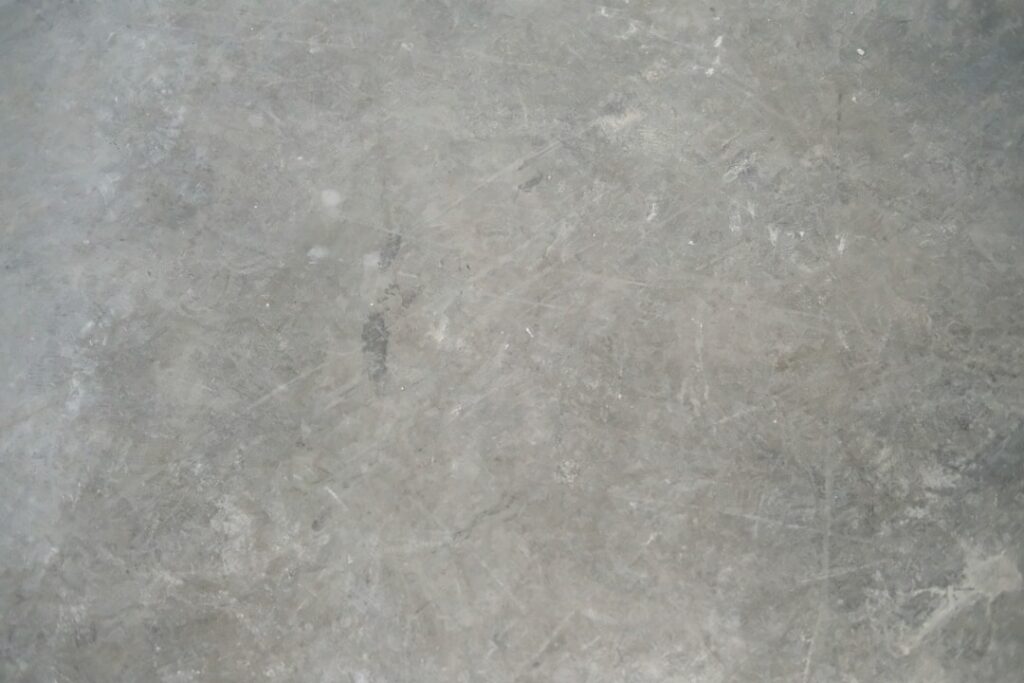
Concrete has visible chunks of gravel embedded in the mix — rough texture, gritty feel, light to medium gray. Mortar is smooth, almost like cake batter when fresh, fine-textured because sand is the only aggregate. Pure cement paste is the smoothest and finest of all but rarely used alone. Stand at a job site and you can tell which is which from 20 feet away by texture alone.
When to Use Concrete
Concrete is for structural applications where compressive strength and bulk matter:
- Foundations, footings, and stem walls
- Driveways, sidewalks, and patios over 2 inches thick
- Pool surrounds and pool shells
- Garage floors and basement slabs
- Structural columns and piers
- Concrete countertops (specially formulated mix)
- Fence post setting (use fast-setting Sakrete or Quikrete)
For most residential pours, 3,000 to 3,500 PSI concrete delivers more than enough strength. The Quikrete 5000 series is the go-to high-strength option for driveways and garage slabs in cold climates.
When to Use Mortar
Mortar is for joining masonry units or applying thin protective coatings:
- Laying brick walls, fireplaces, and chimneys
- Setting concrete block (CMU) walls
- Stone veneer installation
- Tile installation (technically thinset, which is modified mortar)
- Repointing existing brick or stone walls
- Parging foundation walls (a thin protective coating)
- Setting glass block
For most DIY masonry repair, Quikrete Type N Mortar Mix ($7 per 80-pound bag) handles repointing, small brick repairs, and minor stone veneer work. Choose Type S if you’re working below grade or in a structural wall.
Common Specialty Products You’ll Encounter
Beyond the three basics, you’ll see specialty products at the hardware store:
- Quikrete Fast-Setting Concrete Mix — sets in 20-40 minutes, perfect for fence posts
- Sakrete High Strength Concrete Mix — 4,000 PSI, sidewalks and slabs
- Thinset Mortar (Modified or Unmodified) — for tile installation
- Grout (sanded or unsanded) — fills joints between tiles, smaller aggregate than mortar
- Stucco — exterior wall finish, similar to mortar with added fibers
- Hydraulic Cement (Quikrete Hydraulic Water-Stop) — sets underwater, plug leaks
- Concrete Patch — pre-mixed for small repairs, contains fine aggregate
Reading the label carefully prevents using the wrong product. The bag tells you the compressive strength, set time, and intended applications.
Mixing Ratios and Water Amounts
For mixing from scratch with Portland cement, sand, and gravel:
- Standard concrete: 1 part cement, 2 parts sand, 3 parts gravel, water as needed
- High-strength concrete: 1 part cement, 2 parts sand, 2 parts gravel
- Type N mortar: 1 part cement, 1 part hydrated lime, 6 parts masonry sand
- Type S mortar: 2 parts cement, 1 part hydrated lime, 9 parts masonry sand
For pre-mixed products from Quikrete or Sakrete, just add water per the bag instructions. Too much water is the most common DIY mistake — it weakens cured concrete dramatically. Use the minimum water needed to achieve a thick oatmeal consistency.
Tools You’ll Need for Each
For concrete work: wheelbarrow or mortar mixer, square-point shovel, screed board, bull float, edger, mag float, and rubber gloves. A DeWalt 20V cordless mixer attachment ($199) on a 1/2-inch chuck drill saves your back on bagged mixes.
For mortar work: brick trowel (Marshalltown 11-inch), jointer for tooling joints, pointing trowel for cleanup, mason’s line, level, and a mortar tub for mixing. Use a Husky bucket and a hoe-style mortar mixing tool for small batches.
Understanding cement vs concrete vs mortar — and which one your project actually needs — is the difference between a finished job that lasts 50+ years and one that fails the first winter. Match the material to the application, follow mix ratios precisely, and the products themselves do the work.