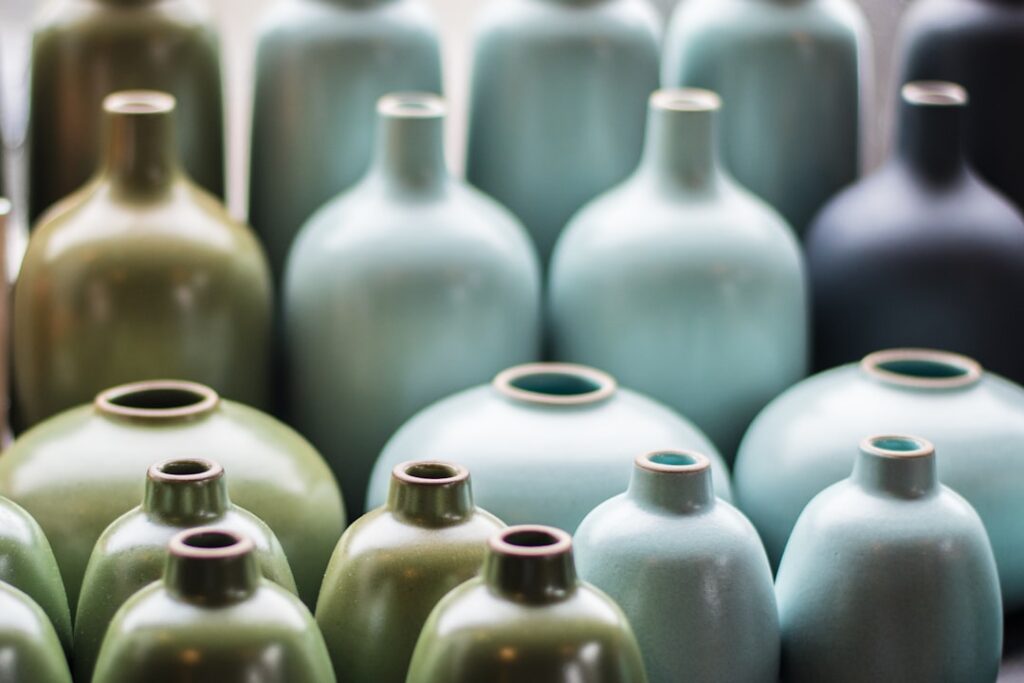
Ceramic decor spans everything from vases and bowls to figurines, planters, and sculptural objects, and it remains one of the most enduring ways to add texture, color, and handcrafted warmth to a home. Few materials offer the same range, since ceramics can read sleek and modern, rustic and organic, or ornate and traditional depending on the glaze and form. That versatility makes it a staple for stylists and everyday homeowners alike.
Part of our Tile & Grout guide — explore the full guide →
This guide walks through the main types of ceramic pieces, how to style them so they look curated rather than cluttered, and how to keep them looking their best.
What Counts as Ceramic Decor
The category is broad. It covers any decorative object made from fired clay, including earthenware, stoneware, and porcelain, each with a slightly different look and durability. Earthenware tends to be more rustic and porous, stoneware is denser and tougher, and porcelain is the finest and most refined. Glazes then transform the surface, from high-gloss and crackled to matte and earthy.
Understanding the body and glaze helps you judge quality and suitability. A delicate porcelain figurine belongs on a shelf, while a sturdy stoneware bowl can hold fruit on a kitchen counter.
Popular Types of Ceramic Pieces
- Vases: The workhorse of ceramic decor, from tall floor vases to small bud vases, ideal for fresh or dried stems or standing alone.
- Bowls and trays: Both functional and decorative, perfect on coffee tables, entryways, and counters as catchalls.
- Figurines and sculptures: Add personality and an artisanal touch to shelves and mantels.
- Planters and pots: Bring greenery indoors with style and protect surfaces.
- Jars and canisters: Lidded vessels that combine storage with display.
- Wall pieces: Ceramic plates or hangings that add dimension to gallery walls.
How to Style Ceramic Decor
The secret to ceramics looking intentional is grouping and contrast. A single piece can anchor a surface, but collections shine when you vary height, shape, and finish. Cluster odd numbers, three or five, at staggered heights for a natural, balanced arrangement rather than a stiff line.
Mix textures and finishes too. Pair a glossy glazed vase with a matte stoneware bowl and a textured planter so the eye has variety. Keep a loose color story, perhaps neutrals with one accent tone, so the grouping feels cohesive instead of random. Negative space matters as much as the objects, so resist crowding every surface.
Choosing a Color and Style Direction
Let your room guide the palette. In a neutral, minimal space, sculptural white, cream, and sand ceramics add quiet texture without competing. For a bolder room, a single vibrant glazed piece in cobalt, terracotta, or emerald becomes a focal point. Earthy, handmade pieces with visible throwing marks suit organic and modern-rustic interiors, while crisp porcelain and metallic glazes lean glam or contemporary.
- Decide whether ceramics will blend in as texture or stand out as accents.
- Pull one or two colors from your existing decor to tie pieces together.
- Vary form, tall and slim against low and round, for visual rhythm.
- Mix handmade and refined pieces for depth and authenticity.
Where to Display Ceramics
Ceramics work nearly everywhere. On open shelving, alternate them with books and greenery for a layered look. On a coffee table, a low bowl or small grouping adds interest without blocking sightlines. Mantels and console tables welcome a taller vase as an anchor, and kitchen counters benefit from functional ceramic canisters and utensil crocks that double as decor.
Place fragile or valuable pieces away from high-traffic edges and out of reach of children and pets. Heavier ceramics can also help anchor a vignette so it does not feel like it might tip.
Care and Cleaning
Most ceramic decor is easy to maintain. Dust regularly with a soft, dry cloth or a microfiber duster, getting into crevices on textured or sculptural pieces. For glazed items, a damp cloth with mild soap removes grime; rinse and dry thoroughly. Be gentle with unglazed or porous earthenware, which can absorb water and stains, and avoid soaking it.
Handle pieces by the body, not delicate handles or rims, and store seasonal items wrapped in soft material to prevent chips. If a glazed piece develops fine crackling, that is often an intentional decorative effect rather than damage, though it can make the surface more prone to staining if used functionally.
Building a Collection Over Time
The best ceramic displays grow gradually. Rather than buying a matched set all at once, collect pieces that speak to you from different makers and trips, which gives a room a personal, gathered-over-time character. Handmade and artisan ceramics in particular carry a uniqueness that mass-produced decor lacks, and they age beautifully.
Handmade vs. Mass-Produced Ceramics
One of the biggest decisions is whether to buy artisan pieces or affordable mass-produced ones, and both have a place. Handmade ceramics carry visible marks of the maker, slight asymmetries, throwing rings, and one-of-a-kind glaze variations, that give a room authenticity and soul. They tend to cost more and reward you with character no factory piece can replicate.
Mass-produced ceramics, by contrast, offer consistency, availability, and value, which is ideal when you need a matched pair or a specific color on a budget. A smart approach mixes the two: anchor a vignette with one special handmade piece and round it out with affordable supporting items. The handmade focal point elevates the whole grouping while the budget pieces keep the look attainable.
Seasonal and Functional Ceramics
Ceramic decor does not have to be purely ornamental. Functional pieces earn double duty, a stoneware bowl holds fruit, a canister stores coffee, a pitcher serves drinks and looks lovely on a shelf between uses. Choosing items that work as well as they look means your decor pulls its weight in daily life rather than just collecting dust.
Ceramics also rotate well with the seasons. Swap in warm terracotta and earthy tones for fall, cool blues and whites for summer, or richer glazes for winter, refreshing a room without buying furniture. Because individual pieces are relatively affordable and easy to store, building a small rotating collection lets you keep a space feeling current and intentional year-round.
Final Thoughts
Versatile, tactile, and endlessly varied, ceramic decor is one of the easiest ways to add warmth and personality to a home. Mix finishes, vary heights, keep a loose color story, and leave breathing room so collections feel curated. Dust gently, handle with care, and let your pieces accumulate over time. The result is a space that feels layered, lived-in, and entirely your own.
Prefer to explore on your own?
See how new flooring looks in your actual room in seconds — free, no signup.
Try the free Floor Studio →