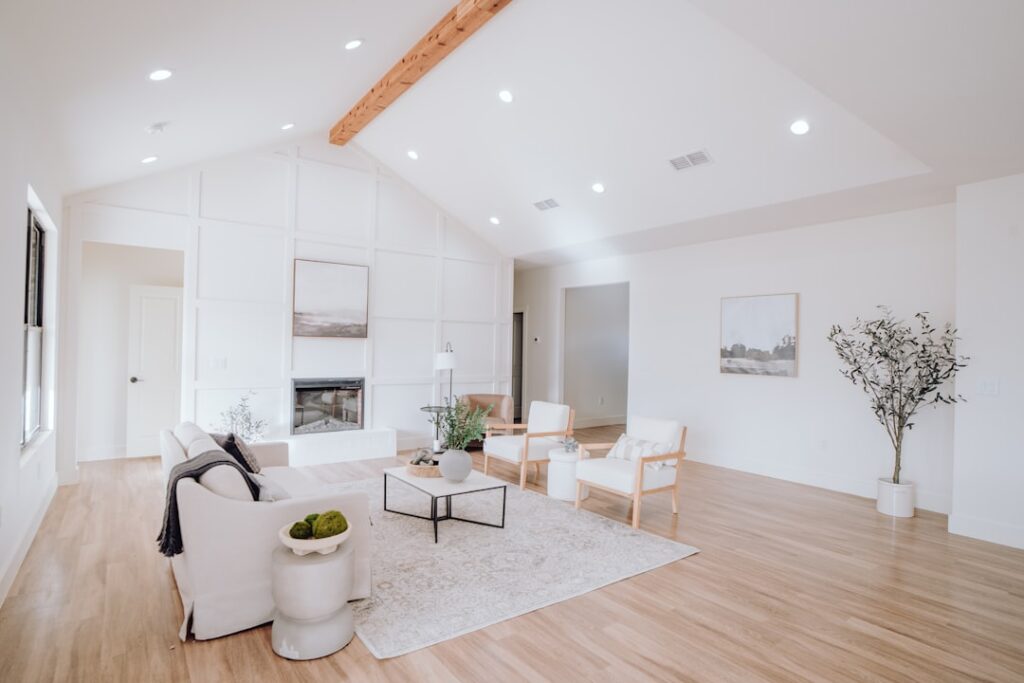
The floor is the largest single surface in your living room, yet most people treat it as an afterthought and wonder why the space never feels finished. Thoughtful living room floor decor ties together your furniture, walls, and light into one cohesive room, and it does far more heavy lifting than a gallery wall or a new throw pillow. Whether you are starting with bare subfloor or dressing up an existing floor with rugs and layering, the right moves make a room feel intentional. This guide covers materials, rugs, layering, transitions, and real costs so you can build a floor you love.
- Choose the Right Base Flooring
- Anchor the Room With an Area Rug
- Master the Art of Layering
- Play With Pattern and Direction
- Handle Transitions Between Rooms
- Add Texture and Warmth
- Budget Your Floor Decor
- Coordinate Floor Color With Your Room
- Use a Rug Pad and Protect the Floor
- Frequently Asked Questions
- The Bottom Line
Choose the Right Base Flooring
Everything starts with the flooring itself. Your base material sets the tone, and each option carries a different look, feel, and price.
- Hardwood — Warm, timeless, and the strongest for resale. Expect $6 to $18 per square foot installed. Mid-tone oak flatters nearly any decor.
- Luxury vinyl plank — Waterproof, pet-friendly, and convincing wood looks for $2 to $7 per square foot. Ideal for busy households.
- Engineered wood — Real wood veneer over a stable core, $4 to $12 per square foot, better in humidity than solid wood.
- Carpet — Soft and quiet for cozy, casual rooms, $2 to $6 per square foot installed.
- Tile — Durable and cool, better in warm climates, $5 to $15 per square foot installed.
For open-concept homes, run the same flooring throughout to make the whole level feel larger and more intentional.
Anchor the Room With an Area Rug
A well-chosen area rug defines the seating area and adds warmth, color, and texture in one move. The most common mistake is going too small. A rug that floats in the middle with furniture stranded around it makes the whole room feel disjointed.
Follow a simple sizing rule: at minimum, the front legs of every seating piece should sit on the rug. For a more luxurious look, size the rug so all furniture legs land on it, leaving 8 to 18 inches of floor visible around the perimeter. In most living rooms that means an 8-by-10-foot or 9-by-12-foot rug.
Master the Art of Layering
Layering rugs adds depth and a collected, designer feel that a single rug cannot match. The classic approach is a large neutral base rug, often natural jute or sisal, with a smaller patterned or textured rug layered on top to add personality.
- Base layer — Neutral, flat, and large. Jute, sisal, or a low-pile solid works best.
- Top layer — Smaller, with color, pattern, or plush texture to draw the eye.
- Contrast — Mix textures rather than matching everything. A soft wool over rough jute reads intentional.
Layering also lets you refresh a room seasonally by swapping only the top rug, which is far cheaper than buying a new large rug.
Play With Pattern and Direction
The direction you lay planks or arrange a rug changes how big a room feels. Running hardwood or vinyl planks along the longest wall stretches the space visually. A herringbone or chevron layout adds a high-end, custom look but costs more in labor and material waste.
For rugs, a striped or directional pattern can elongate a narrow room, while a large-scale medallion centers a square space. Keep bold floor patterns balanced by simpler furniture so the room does not feel busy.
Handle Transitions Between Rooms
Where your living room meets a kitchen, hallway, or entry, the transition either looks polished or sloppy. Use a proper transition strip such as a T-molding between two hard floors of similar height, or a reducer where one floor is thicker than the other. Match the strip color to the flooring for a seamless look.
When two different materials meet, like wood flowing into tile, keep the seam under a doorway or at a natural threshold so the change reads deliberate rather than accidental. A clean transition is one of those details that separates a professional-looking room from a DIY one.
Add Texture and Warmth
Beyond the main flooring and rugs, small floor-level touches complete the decor. A pouf or floor cushion adds casual seating and softens hard corners. A large basket of throw blankets by the sofa reads cozy. Floor lamps with warm 2700K bulbs cast light down onto the floor and highlight its texture in the evening.
In rooms with hard flooring, a plush rug underfoot is the fastest way to add the warmth that bare wood or vinyl lacks. Bare feet on a soft wool rug on a cold morning is a comfort worth designing around.
Budget Your Floor Decor
You can transform a living room floor at almost any budget. A quality area rug runs $150 to $1,500 depending on size and material. A layered jute base adds $80 to $300. Transition strips cost $10 to $40 each. If you are replacing the flooring entirely, a 250-square-foot living room in luxury vinyl might total $1,000 to $2,500 installed, while hardwood could reach $4,500 or more. Start with rugs and layering if the budget is tight; they deliver the biggest visual change per dollar.
Coordinate Floor Color With Your Room
Floor color drives the whole mood, so coordinate it with your light and furniture rather than choosing in isolation. Light floors in oak or pale vinyl brighten small or north-facing rooms and lean modern and airy. Mid-tone browns hide dust and pet hair and flatter almost any furniture. Dark floors deliver drama in large, bright rooms but demand more cleaning and can shrink a small space.
Match the floor’s undertone to your dominant furniture and walls. A warm honey floor pairs with cream and earthy tones, while a cool gray-brown floor suits crisp whites and blue-grays. Getting the undertone right is what makes a room feel cohesive instead of subtly off.
Use a Rug Pad and Protect the Floor
A good rug pad is the unsung hero of floor decor. It keeps rugs from sliding, adds cushioning underfoot, and protects the floor beneath from abrasion and dye transfer. On hardwood and vinyl, choose a felt-and-rubber pad rated safe for your floor type, since some cheap pads can discolor a finish over time. Add felt pads under furniture legs to prevent scratches, and use a chair mat under any rolling chair to spread the load and protect the surface.
Frequently Asked Questions
What size rug should I use in a living room?
In most living rooms an 8-by-10 or 9-by-12-foot rug works. At minimum the front legs of all seating should sit on the rug; ideally all legs land on it with 8 to 18 inches of floor showing around the edges.
Can I put a rug over carpet?
Yes. Layering an area rug over wall-to-wall carpet defines a seating area and adds pattern. Use a low-pile rug and a non-slip pad to keep it from sliding.
What flooring is best for a living room with pets?
Luxury vinyl plank with a 20 mil wear layer resists claw scratches and cleans easily, making it the top pet-friendly choice. Engineered wood and tile also hold up well.
How do I make a small living room feel bigger?
Run planks along the longest wall, use light flooring colors, and choose a large rug that fills the seating area. Consistent flooring across open spaces also expands the sense of size.
Should flooring match throughout the house?
In open-concept homes, running the same flooring throughout makes the space feel larger and more cohesive. Separate, enclosed rooms give you freedom to change materials.
The Bottom Line
Great living room floor decor layers a well-chosen base floor, a properly sized rug, and thoughtful texture and transitions into a room that feels finished. Start with the biggest surface, dress it with layered rugs, and mind the details where floors meet. Whether you are renovating from the subfloor up or refreshing with a new rug, the floor is where a comfortable, cohesive living room truly begins.
Prefer to explore on your own?
See how new flooring looks in your actual room in seconds — free, no signup.
Try the free Floor Studio →