A rug is the fastest way to change the feel of a room, yet it is the piece most people get wrong. The best modern living room rug ideas start with one rule the pros live by: the rug should be large enough for at least the front legs of every major seat to sit on it. Buy too small and even a $900 designer rug looks like a bath mat stranded in the middle of the floor. Get the scale and palette right, and a simple wool flatweave can pull a sofa, chairs, and coffee table into one cohesive conversation area.
Modern design leans on clean lines, restrained color, and texture doing the heavy lifting. That gives you a lot of freedom, but it also means every choice shows. Here is how I help clients choose a rug that reads intentional instead of accidental.
Start With the Right Size
Scale is where most living rooms fail. In an open-plan space, an 8×10 or 9×12 rug is usually the baseline, not the upgrade. Measure your seating group, then add 12 to 18 inches of rug beyond it on all sides so the arrangement feels contained.
Three common layouts work in almost any room:
- All legs on: Every furniture leg sits fully on the rug. This needs a 9×12 or larger and looks the most luxurious.
- Front legs on: The front legs of the sofa and chairs rest on the rug while the back legs sit on bare floor. An 8×10 handles most standard rooms this way.
- Floating coffee table: Only the coffee table sits on the rug, with furniture pulled back. Reserve this for small apartments where a 5×8 is the largest you can fit.
When in doubt, size up. A rug that stops a few inches short of your target is far more forgiving than one that leaves a wide moat of bare floor.
Fresh Modern Living Room Rug Ideas by Style
Modern is a broad umbrella. These modern living room rug ideas break down by the look you are chasing, so you can match the rug to the rest of your furnishings instead of fighting them.
Minimalist and Scandinavian
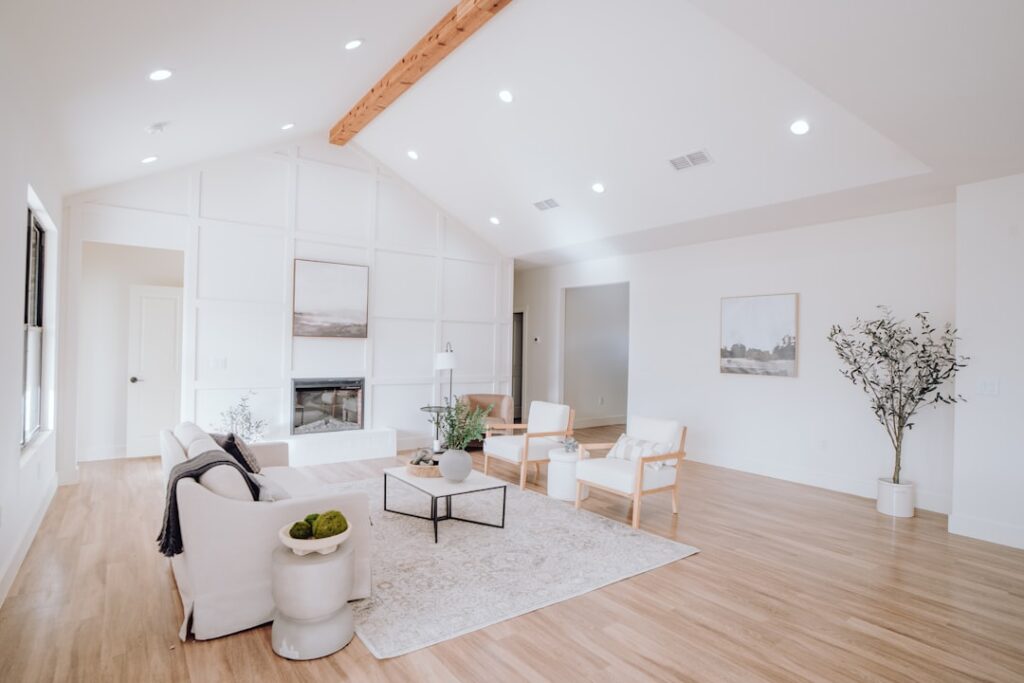
For pale walls and light oak floors, a low-pile wool rug in ivory, oatmeal, or soft gray keeps the room calm. Add a subtle geometric or a faint diamond lattice so the floor is not completely flat. Flatweave and hand-loomed wool in the $300 to $700 range hold up well in these light schemes.
Warm and Organic Modern
Earthy modern rooms want texture over pattern. Think jute, wool-jute blends, or a shaggy Moroccan-style pile in cream with faint charcoal lines. These pair beautifully with rattan, leather, and terracotta accents and hide everyday wear better than a flat solid.
Bold and Graphic
If your sofa is neutral, the rug can be the star. Oversized abstract patterns, painterly color blocks, or a high-contrast black-and-cream geometric anchor a room without wallpaper or gallery walls. Keep the palette to two or three colors so it still reads modern rather than busy.
Choose Color and Pattern With Confidence
Color is where nerves take over. A reliable trick: pull one accent color from something already in the room — a throw pillow, art, or a plant pot — and let the rug echo it at a lower saturation. That creates cohesion without matching everything, which reads dated.
Pattern scale matters as much as color. Large, loose patterns feel current and expand a small room; tight, busy patterns can shrink it and clash with modern furniture. If you have kids or pets, a mid-tone rug with subtle variation hides crumbs and paw prints far better than a solid cream, saving you from constant spot cleaning. For upkeep between deep cleans, our cleaning guides walk through fiber-safe methods for wool, jute, and synthetics.
Play With Texture and Layering
Texture is the secret weapon of modern rooms because it adds depth without color. A cut-and-loop wool rug, a chunky hand-knotted pile, or a subtly ribbed flatweave all catch light differently and make a neutral palette feel intentional.
Layering takes it further. Try a large natural jute base with a smaller patterned or vintage rug centered on top. The jute grounds the space and protects your floor, while the top rug brings personality. This trick also lets you cover a big open area affordably, since a 9×12 jute base runs $200 to $400 and the accent rug can be small.
Match the Rug to Your Flooring
The floor underneath changes how a rug reads. Over wide-plank light wood, cool grays and crisp whites feel airy. Over rich walnut or a dark laminate, warm creams and rust tones prevent the room from feeding too heavy. On tile or polished concrete, a thicker pile adds the softness the hard surface lacks.
Renters and anyone protecting a finished floor should always use a rug pad. A 1/4-inch felt-and-rubber pad, about $40 to $80 for a 9×12, stops slipping, cushions the pile, and prevents dye transfer onto the boards. If you are still choosing what goes under the rug, our flooring guides compare how wood, vinyl, and tile pair with different rug materials.
Set the Rug in Its Place
Placement finishes the look. Center the rug on the primary focal point — usually the sofa or the main window wall — not on the room’s geometric center, which rarely lines up with the furniture. Keep 8 to 18 inches of bare floor between the rug edge and the walls so the room can breathe.
In an open floor plan, use the rug to define the living zone and visually separate it from the dining or kitchen area. A clearly bordered seating rug tells the eye where one room ends and the next begins, which is one of the most useful tricks in modern open-concept homes. For a full room refresh, pair the rug decision with the wider projects covered in our home improvement resources.
Budgeting and Care
Expect to spend $150 to $400 for a good synthetic or wool-blend 8×10, $500 to $1,200 for hand-loomed wool, and $1,500 and up for hand-knotted pieces that last decades. Polypropylene rugs are the value pick for busy households, cleaning up with soap and water and shrugging off spills. Wool costs more but feels better underfoot, resists crushing, and ages gracefully.
Whatever you choose, vacuum weekly without a beater bar on high pile, rotate the rug twice a year so it wears evenly, and blot spills immediately rather than rubbing. A quality rug treated well easily outlives the sofa it sits beneath.
Rug Shapes and Common Mistakes to Avoid
Rectangles dominate modern living rooms because they mirror the lines of sofas and coffee tables, but do not dismiss other shapes. A round rug softens a room full of sharp furniture and works beautifully under a circular table or in a reading nook with a single chair. A runner can bridge the gap between a sectional and a media console when a full rug will not fit.
A few mistakes sink otherwise good rooms, and they are easy to sidestep once you know them:
- Going too small. The single most common error. When in doubt, size up one increment.
- Matching the rug to the wall color exactly. A rug that disappears into the walls flattens the room. Aim for contrast or a shade or two of difference.
- Skipping the pad. Even a heavy rug slides and wears faster without one, and the floor beneath takes the abuse.
- Ignoring pile height near doors. A thick shag can jam a nearby door or trip guests. Check clearances before you buy.
Buy the rug last, after the sofa and main pieces are set, so you can pull its palette from what is already in the room rather than guessing in the store.
Final Thoughts
The strongest modern living room rug ideas all come back to the same fundamentals: size the rug to your furniture, keep the palette restrained, and let texture and placement do the work. Whether you go for a serene oatmeal flatweave, a layered jute-and-vintage combo, or a bold graphic anchor, the right rug quietly ties the entire room together. Measure carefully, add a good pad, and you will land a look that feels designed rather than decorated.