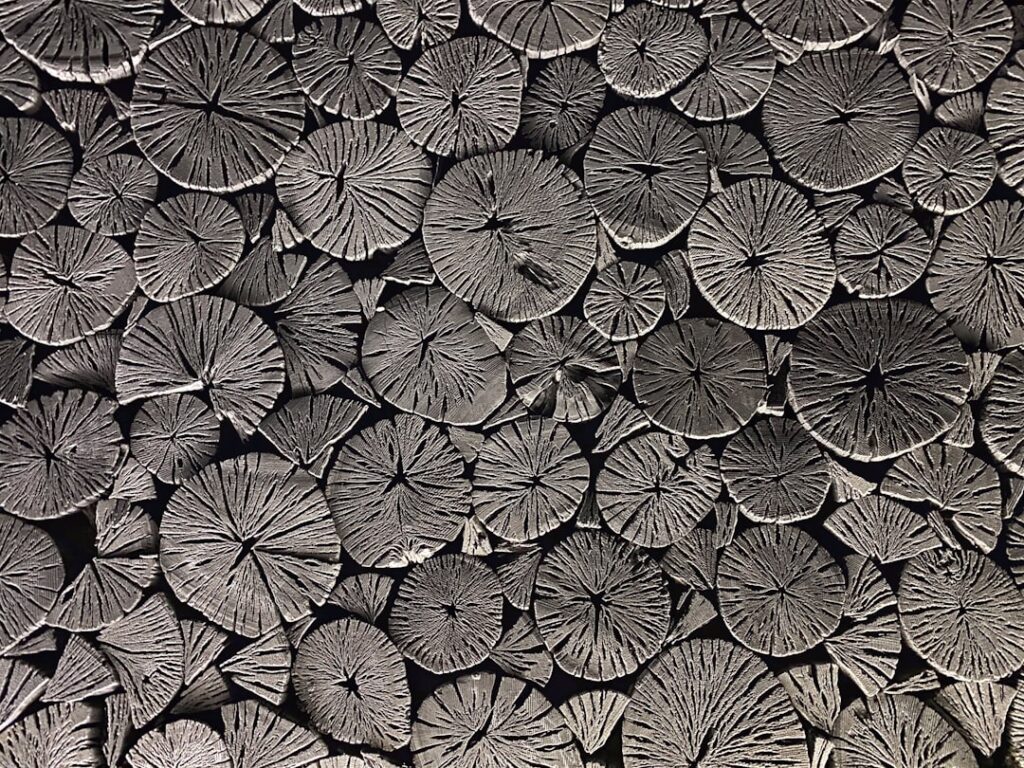
Walk into a showroom and the deepest gray sample on the wall almost always steals the show. Charcoal tile reads as sophisticated and modern, yet it hides scuffs and traffic patterns that would ruin a lighter floor within a season. I’ve installed it in master baths, mudrooms, and kitchen backsplashes, and homeowners are consistently surprised by how much depth a near-black tile adds to a room. Before you commit, though, there are a few trade-offs worth understanding so the finished space looks intentional rather than gloomy.
Part of our Tile & Grout guide — explore the full guide →
- What Counts as Charcoal Tile
- Porcelain vs. Ceramic
- Matte, Polished, or Honed
- The Dust Problem Nobody Warns You About
- Choosing the Right Grout
- Sizes and Layouts
- Cost and Where to Buy
- Best Rooms and Slip Safety
- Pairing Charcoal With the Rest of the Room
- Installation and Maintenance Tips From the Field
What Counts as Charcoal Tile
Charcoal sits in the narrow band between medium gray and true black. Manufacturers label it all sorts of things: graphite, anthracite, slate, iron, or simply “dark gray.” A genuine charcoal has warm or cool undertones layered into it, so the surface never looks like flat paint. Cool charcoals lean blue and pair with white cabinetry, while warm charcoals carry a hint of brown that works with wood tones and brass fixtures.
Most charcoal you’ll see today is manufactured to mimic concrete, slate, or limestone. That means subtle mottling, faint veining, or a fine sandy texture printed into the tile face rather than a single solid color. Solid, uniform charcoal exists too, and it’s popular for feature walls, but it shows every speck of dust, so I steer clients toward tiles with some movement in the pattern.
Porcelain vs. Ceramic
For dark tile, porcelain is almost always the smarter buy. Porcelain is fired at higher temperatures, roughly 2,200 to 2,500 degrees Fahrenheit, which produces a denser body that absorbs less than 0.5 percent water. That density matters with charcoal because chips and cracks in ceramic reveal a pale clay body underneath, and a white nick in a black tile is glaringly obvious.
Through-body porcelain takes this a step further. The color runs all the way through the tile, so even a deep chip stays dark and nearly disappears. Ceramic still has a place on walls and low-traffic backsplashes where impact isn’t a concern and the lower price, often $2 to $5 per square foot, is welcome. On floors and in showers, spend the extra money on porcelain.
Matte, Polished, or Honed
Finish changes the personality of a charcoal tile more than any other single factor. A polished charcoal is dramatic and reflective, bouncing light around a room and reading almost like black glass. It also shows every water spot, fingerprint, and dust bunny, which is why I rarely recommend it for floors that see socks and bare feet all day.
Matte and honed finishes are the workhorses. They mask smudges, offer better traction, and still deliver that rich, saturated color. A lot of my clients land on a matte finish for floors and reserve polished tile for an accent wall or a fireplace surround where it gets admired but not walked on.
The Dust Problem Nobody Warns You About
Here’s the honest downside: dark tile hides dirt but broadcasts dust and lint. A charcoal floor can look spotless one hour and dusty the next, especially in dry winter months or in homes with pets. The fix is not complicated, but it is a habit change. Plan on a quick dry dust-mop every couple of days and a damp mop weekly.
Texture helps enormously. A tile with a slight matte grain scatters light and camouflages fine dust far better than a smooth, glossy face. If a low-maintenance floor is your top priority, choose a textured matte charcoal rather than a mirror-polished slab, and you’ll spend a lot less time chasing lint.
Choosing the Right Grout
Grout color can make or break the installation. You have three real directions to go:
- Matching charcoal grout — creates a seamless, monolithic look where the tile field reads as one continuous surface. Best for large-format tile and modern spaces.
- Medium gray grout — a subtle contrast that defines each tile without shouting. My most common recommendation for floors.
- Light or white grout — high contrast that turns the grid into a graphic feature, popular with subway and hexagon layouts. Be warned: white grout against charcoal shows dirt and needs sealing and regular cleaning.
Whatever color you pick, use a quality epoxy or a stain-resistant cement grout like Mapei Ultracolor Plus FA. Sealing cement grout after 48 to 72 hours of cure time keeps it from soaking up grime and turning blotchy.
Sizes and Layouts
Charcoal comes in nearly every format, and the size you choose shifts the mood. Large-format 24×48 inch and 12×24 inch planks minimize grout lines and make small bathrooms feel bigger and calmer. A 2×2 inch or hexagon mosaic works beautifully on shower floors, where the extra grout lines add slip resistance underfoot.
For backsplashes, 3×12 inch subway and 4×16 inch stacked layouts are trending hard. Herringbone in a charcoal porcelain gives a kitchen a custom, tailored feel without the cost of natural stone. Keep in mind that large-format tile demands a very flat substrate; any dip over 1/8 inch across 10 feet will cause lippage and needs to be corrected before you set a single piece.
Cost and Where to Buy
Budget charcoal ceramic starts around $2 per square foot at big-box stores. Mid-grade porcelain that looks like concrete or slate runs $4 to $8 per square foot, which is where most homeowners land. Designer lines from brands like Daltile, Marazzi, and Emser can reach $10 to $15 per square foot for large-format or textured collections. Installed, with a professional handling substrate prep, thinset, and grout, expect a total of $12 to $25 per square foot depending on your region and tile size.
Best Rooms and Slip Safety
Where does charcoal shine? Powder rooms and master baths look expensive in dark tile. Mudrooms and entryways benefit because charcoal hides the dirt tracked in from outside. Fireplace surrounds and accent walls get instant drama. Kitchens work too, though I’d keep the floor lighter and let a charcoal backsplash or island wall carry the color.
In any wet area, check the slip rating. Look for a Dynamic Coefficient of Friction (DCOF) of 0.42 or higher for floors that get wet, and favor matte or textured finishes in showers and bathroom floors. A polished charcoal shower floor is a fall risk, so save the gloss for the walls and use a textured mosaic underfoot. Handled thoughtfully, charcoal tile delivers a high-end, timeless look that will still feel current a decade from now.
Pairing Charcoal With the Rest of the Room
Dark tile is a powerful anchor, but it needs the right supporting cast or a room can tip into cave-like territory. My rule is to balance a large charcoal surface with lighter elements elsewhere. White or light-gray walls, pale grout, and warm wood tones keep the space from feeling heavy. If you tile a full charcoal floor, bounce plenty of light back into the room with a light ceiling, generous lighting, and a mirror or two in a bathroom.
Metal finishes matter more than people expect against charcoal. Brushed brass and matte gold read as warm and luxurious over a dark tile, while polished chrome and matte black lean sleek and modern. Pick one metal family and carry it through faucets, pulls, and light fixtures so the dark tile feels curated rather than accidental. A single well-chosen accent color, such as a deep green vanity or a natural rattan light, gives the eye somewhere warm to land.
Installation and Maintenance Tips From the Field
Two habits keep a charcoal installation looking sharp for years. First, insist on a spacer and layout dry-run before setting large-format tile, because dark tile magnifies any lippage where one edge sits proud of its neighbor; even 1/16 inch throws a visible shadow line. Second, seal cement grout and reseal it every year or two, since grimy grout is the first thing that dates a dark floor.
For daily care, keep a microfiber dust mop by the door and skip the string mop that just pushes dirty water into the grout. A pH-neutral cleaner protects the finish and any sealer. Steer clear of vinegar and other acids on polished or natural-look charcoal, and buff away water spots with a dry cloth in bathrooms. Follow that routine and the tile keeps the deep, saturated color that made you choose it in the first place.
Prefer to explore on your own?
See how new flooring looks in your actual room in seconds — free, no signup.
Try the free Floor Studio →