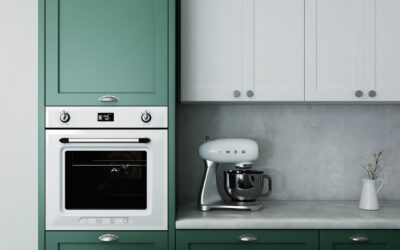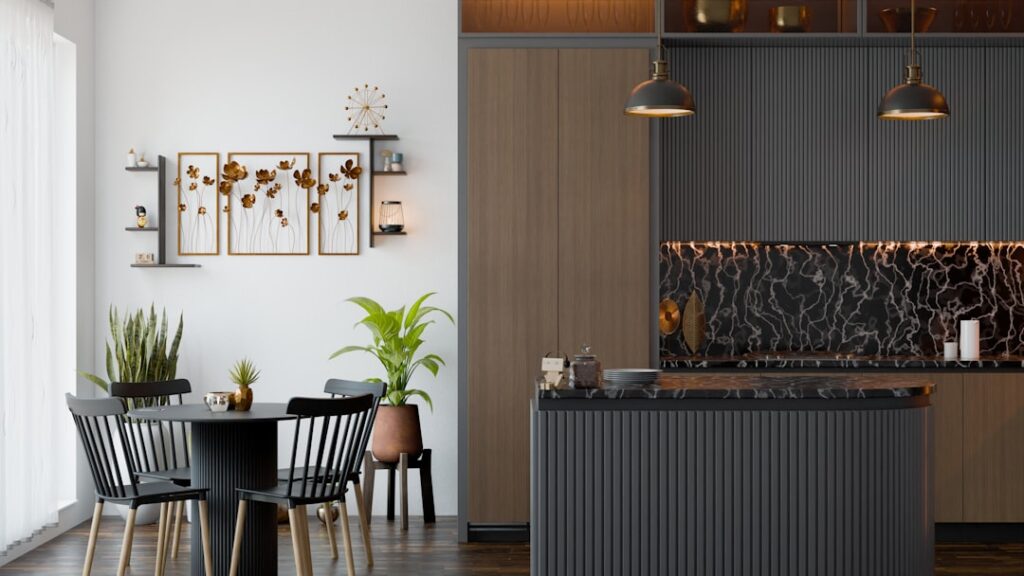
For drama without the risk of going pure black, charcoal kitchen cabinets are the answer. This deep, warm gray reads as sophisticated and grounded, and it hides fingerprints and everyday scuffs far better than the crisp white everyone chased for a decade. The color is easy to love and easy to get wrong. The difference is in the pairings.
Part of our Kitchen Remodeling guide — explore the full guide →
Here’s how to approach paint selection, countertops, hardware, flooring, and lighting so a charcoal kitchen feels rich instead of gloomy.
- What Counts as Charcoal, and Why It Works
- The Paint Colors Worth Specifying
- Countertops That Bring the Contrast
- Hardware, Faucets, and Metal Finishes
- Flooring, Walls, and Lighting
- Honest Pros and Cons
- What It Costs to Go Charcoal
- Two-Tone Layouts With Charcoal
- Choosing Charcoal Gray Cabinets: Undertone, Material, and Finish
What Counts as Charcoal, and Why It Works
Charcoal sits between medium gray and true black on the value scale, usually landing around 15 to 25 percent lightness. The best versions carry a slight warm or greige undertone so they don’t go cold and industrial. Think of the color of a raincloud or wet slate, not battleship gray. That warmth is what keeps the kitchen inviting under evening light.
Because it’s a dark neutral, charcoal behaves like a backdrop. It lets your countertop, backsplash, and hardware do the talking. That’s a gift and a trap: you can build a stunning, layered room, or you can end up with a flat cave if you skip the contrast and the lighting.
The Paint Colors Worth Specifying
If you’re painting existing boxes or ordering a custom finish, these are the charcoals that perform in real kitchens:
- Benjamin Moore Kendall Charcoal (HC-166): a warm, slightly green-gray that’s forgiving in most light.
- Sherwin-Williams Iron Ore (SW 7069): deeper and near-black, dramatic on shaker doors.
- Sherwin-Williams Peppercorn (SW 7674): a true neutral charcoal with a cool edge.
- Benjamin Moore Wrought Iron (2124-10): the darkest of the group, almost a soft black.
For a factory-finished cabinet, always get a large sample door and look at it in your own kitchen morning and night before committing. Dark paint shifts more with light than any pale color, and a chip that looks perfect in the showroom can turn muddy under your under-cabinet LEDs.
Countertops That Bring the Contrast
Contrast is everything with a dark base. The countertop is your biggest lever, and most charcoal kitchens do best with a lighter surface to keep the room from closing in:
- White or off-white quartz: the classic move; a bright counter makes charcoal pop and reflects light back into the room.
- Veined marble-look quartz: soft gray veining ties the counter to the cabinets while staying light overall.
- Butcher block or warm wood: adds warmth and an organic break from all the gray.
- Waterfall quartz on the island: a high-end statement that works beautifully against dark perimeter cabinets.
If you want a moody, all-dark look with black soapstone or leathered granite, commit to serious lighting and light flooring to balance it. The dark-on-dark scheme only works in kitchens with big windows.
Hardware, Faucets, and Metal Finishes
Metal choice is where a charcoal kitchen earns its keep. Dark cabinets are the ideal canvas for warm and mixed metals that would disappear on white:
- Brushed brass or champagne bronze: the top pick; the warm gold reads as luxe against gray.
- Matte black: a tonal, monochrome look for a modern edge, though it can vanish into very dark charcoal.
- Polished nickel or chrome: crisp and cool for a more transitional feel.
- Aged bronze: a rustic, farmhouse-friendly option.
For sizing, a 3- to 4-inch pull on doors and a 5- to 6-inch pull on wide drawers keeps the scale right. Don’t be shy with size here; dark cabinets carry larger hardware gracefully. Brass pulls with a matte black or stainless faucet work well, and the intentional mix looks designed rather than matched.
Flooring, Walls, and Lighting
The surfaces around the cabinets decide whether charcoal feels cozy or claustrophobic. The rules:
- Floors: go lighter. White oak, a warm medium-toned wood, or a light tile keeps the room from feeling heavy. Dark floors with dark cabinets need a very bright counter to survive.
- Walls and backsplash: white, cream, or a soft warm gray backsplash brightens everything and frames the cabinets.
- Lighting: this is non-negotiable. Add under-cabinet LEDs, plenty of recessed cans, and layered pendants over the island. Dark cabinets soak up light, so plan for more lumens than a white kitchen would need.
Warm-white bulbs in the 2700K to 3000K range flatter charcoal and brass. Cooler bulbs above 4000K can make the gray look cold and clinical, so keep the whole room in the warm range.
Honest Pros and Cons
Every finish has trade-offs. Here’s the straight talk before you commit to charcoal kitchen cabinets:
The upsides: the color hides fingerprints, smudges, and minor scuffs better than white; it looks timeless and high-end; it flatters warm metals and natural wood; and it photographs beautifully, which matters for resale listings. Dark neutrals also age slower than trend colors, so you’re less likely to feel dated in five years.
The downsides: charcoal shows dust and dried water spots, especially in a satin or gloss sheen, so a matte or low-sheen finish is easier to live with. It demands strong lighting and contrast, which adds cost. Touch-ups are trickier because dark paint shows every imperfection in the substrate, so the prep and spray work have to be flawless. Small kitchens with little natural light can feel cramped unless you keep the counters and walls bright.
What It Costs to Go Charcoal
Pricing depends on whether you’re painting or replacing. Repainting existing solid-wood or MDF doors runs $3,000 to $8,000 for a pro spray job on a standard kitchen, including proper degreasing, sanding, and a conversion varnish or lacquer topcoat. New semi-custom charcoal cabinets land in the $10,000 to $25,000 range installed for a typical 10-by-12 kitchen, with full custom climbing past $30,000.
Skip the roller-and-brush DIY on cabinet doors unless you accept visible texture; a sprayed factory-grade finish is what makes dark cabinets look worth the money.
Two-Tone Layouts With Charcoal
One of the best ways to use this color is not to cover the whole kitchen in it. A two-tone scheme gives you the drama of charcoal while keeping the room bright, and it’s the best layout for smaller or darker kitchens:
- Charcoal base, white uppers: the classic split. Dark anchors the room at the bottom while white wall cabinets keep eye level airy.
- Charcoal island, light perimeter: a dark island becomes the centerpiece against white or greige perimeter cabinets.
- Charcoal perimeter, wood island: a warm walnut or white-oak island softens all that gray and adds a natural focal point.
- Charcoal on a single tall wall: pantry and oven cabinets in charcoal, with the working run kept light.
The rule for two-tone is to put the darker color lower and lighter above, which mirrors how the eye reads a room from the ground up and keeps the ceiling feeling tall. If you flip it and run dark uppers over light bases, the wall cabinets loom and the room feels shorter, so only break that rule in a kitchen with tall ceilings and big windows that can carry the extra weight up high.
Whichever split you choose, keep the hardware, countertop, and backsplash consistent across both cabinet colors so the two tones read as one deliberate design rather than a compromise. A single unifying element, usually the counter or the metal finish, ties the whole scheme together and stops a two-tone kitchen from looking like two half-finished projects sharing a room.
Once the layout is set, a little upkeep keeps a dark kitchen looking sharp. Dark finishes hide crumbs but reveal water spots and dust, so a simple maintenance routine matters. Wipe with a soft microfiber cloth and a drop of dish soap in warm water, then dry immediately so you don’t leave streaks. Skip abrasive pads and anything with ammonia or bleach, which can dull a lacquer or conversion-varnish topcoat over time. For fingerprints around the hardware, a slightly damp cloth is all you need; grease responds to a 50-50 vinegar and water mist wiped dry. A low-sheen or matte finish forgives all of this better than satin or gloss, which is exactly why it suits charcoal.
Get the finish, the lighting, and the contrast right, and charcoal delivers one of the most striking kitchens you can build without gambling on a color you’ll regret.
Choosing Charcoal Gray Cabinets: Undertone, Material, and Finish
Charcoal gray cabinets come in far more versions than paint chips suggest. The same color looks different on painted maple, stained oak, flat laminate, and thermofoil, so pick the material and sheen together with the color. A warm or greige charcoal on a smooth, low-sheen door is the safest choice for most kitchens.
Charcoal Gray Versus Slate, Graphite, and Black
Cabinet makers use several names for overlapping shades. Slate usually leans blue or green and sits a step lighter. Graphite tends to be cooler with a slight metallic feel. Charcoal gray is darker and more neutral, and near-black versions read almost as soft black in low light. When comparing samples, hold them against a pure white sheet of paper: the undertone (green, blue, brown, or violet) shows up immediately, and that undertone is what decides whether the cabinets look warm or cold next to your countertop.
How the Material Changes the Color
| Material | How charcoal reads | Durability notes |
|---|---|---|
| Painted MDF or maple | Solid, even color; the truest match to a chip | Sprayed topcoat resists wear; chips show lighter substrate |
| Stained oak or ash | Grain shows through, giving a softer, textured gray | Hides small dings well; stain varies board to board |
| Flat laminate or slab panels | Uniform, modern, often matte | Very easy to wipe; edges can chip if hit |
| Thermofoil | Smooth and consistent | Budget friendly; can peel near ovens and heat sources |
Door Style Matters Too
Shaker doors give charcoal gray a classic, transitional look because the frame catches light and shadow. Slab doors push it modern and make the color feel darker, since there are no edges to break it up. Inset and beaded doors add detail that works well in traditional homes but collect dust in the corners, which shows more on dark finishes.
- Get a full sample door, not just a chip, and view it beside your counter and floor samples.
- Check the sample in daylight and under your planned warm-white lighting.
- Ask whether touch-up paint or a matching repair kit is available for the exact finish.
- For refacing, confirm the new doors and the existing frames can be finished in the same charcoal gray so they match.
Choosing these details first keeps the finished kitchen consistent with the pairings you plan for counters, hardware, and floors.