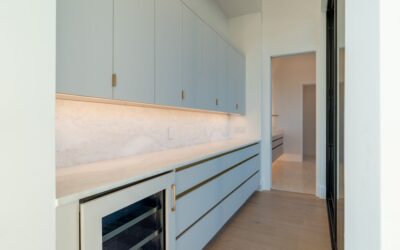
Pure bright white can feel like a hospital corridor, and it shows every smudge and shadow. That’s why so many designers steer clients toward a softer alternative. Off white kitchen cabinets deliver the light, airy, timeless look people want from white without the cold sterility or the unforgiving glare — the subtle warmth of a creamy or greige-tinted white makes a kitchen feel inviting rather than clinical. Getting it right is all about undertones, and the wrong one can leave your cabinets looking dingy or clashing with your floors. This guide walks through choosing the shade, pairing it, and living with it.
Part of our Kitchen Remodeling guide — explore the full guide →
- Why Off White Beats Bright White
- Understanding Undertones
- The Best Off White Paint Colors
- Pairing Countertops and Backsplash
- Hardware and Fixtures
- The Honest Drawbacks
- Off White in Different Kitchen Styles
- Painting Existing Cabinets Off White
- Lighting That Flatters a Soft White
- Making It Work in Your Home
Why Off White Beats Bright White
Bright white (think stark, blue-tinted white) has its place in ultra-modern kitchens, but it comes with real drawbacks. It reflects light harshly, reads cold, and highlights every fingerprint and shadow gap. Off white — whites softened with a touch of gray, beige, or yellow — solves those problems:
- It feels warmer and more welcoming, especially in north-facing kitchens with cool natural light.
- It hides minor smudges and wear better than stark white.
- It pairs more easily with wood tones, warm metals, and natural stone.
- It’s more timeless, sidestepping the trendy-then-dated cycle.
The result is a kitchen that photographs bright and clean but feels lived-in and comfortable in person.
Understanding Undertones
This is the make-or-break decision. Every off white leans toward a subtle undertone, and matching it to your kitchen’s light and finishes is everything:
- Warm (yellow/cream undertones) — cozy and traditional, beautiful with wood floors and bronze hardware. Can read too yellow in a warm, south-facing room.
- Neutral (greige undertones) — the most versatile, a whisper of gray keeping it clean without going cold. Works in almost any light.
- Cool (gray undertones) — crisp and contemporary, pairs with stainless and marble, but can feel flat in low light.
Always test undertones in your own kitchen. Paint large sample boards, tape them to the cabinets, and look at them morning, noon, and night before committing. Lighting transforms these colors completely.
The Best Off White Paint Colors
Designers return to a short list of proven shades again and again. If you’re painting existing cabinets or specing new ones, these are safe, tested bets:
- Benjamin Moore White Dove — the perennial favorite, a soft warm white that flatters nearly any kitchen.
- Sherwin-Williams Alabaster — creamy and warm without going yellow, a top seller for good reason.
- Benjamin Moore Simply White — brighter but still warm, for those who want cleaner without stark.
- Sherwin-Williams Dover White — a warmer antique white for traditional kitchens.
- Benjamin Moore Swiss Coffee — a slightly deeper creamy off white, cozy and forgiving.
White Dove and Alabaster are the two you’ll see most, because their neutral-to-warm undertones behave well in the widest range of homes.
Pairing Countertops and Backsplash
Off white cabinets are a flexible canvas. For countertops, warm-veined quartz or granite in creamy whites and soft grays keeps the look cohesive, while a butcher-block or wood counter adds cozy contrast. Marble and marble-look quartz with subtle gray veining are classic pairings. For the backsplash, a white subway tile with warm-gray grout, a creamy zellige tile, or a natural stone all complement off white beautifully without competing. Avoid a stark bright-white counter against warm off white cabinets — the mismatch makes the cabinets look dirty.
Hardware and Fixtures
Metal finishes set the whole mood. Off white cabinets pair especially well with:
- Brushed brass or champagne bronze — warm and current, gorgeous against creamy whites.
- Matte black — crisp modern contrast that keeps the look from feeling too soft.
- Oil-rubbed bronze — traditional warmth for farmhouse and classic kitchens.
- Brushed nickel — safe and neutral, blends without drawing attention.
Mixing two metals — say brass hardware with black faucet and lighting — is a designer trick that adds depth, as long as you keep it to two finishes.
The Honest Drawbacks
Off white isn’t flawless. Light-colored cabinets show grease and grime near the stove and around handles, so plan to wipe them down regularly. Painted finishes can chip or yellow over years, especially cheaper factory coats near heat sources — a quality catalyzed or conversion-varnish finish resists this far better. And matching a touch-up years later can be tricky if the paint has aged, so keep a labeled quart of your color for repairs. None of these are dealbreakers, just the maintenance reality of living with a light kitchen.
Off White in Different Kitchen Styles
The beauty of a soft white is how easily it crosses design styles, but the supporting details change to match:
- Farmhouse — pair creamy Alabaster or Swiss Coffee cabinets with a butcher-block island, an apron-front sink, oil-rubbed bronze hardware, and open wood shelving for a warm, collected look.
- Traditional — White Dove on raised-panel or Shaker doors with a marble-look counter, subway tile, and brushed brass reads timeless and refined.
- Transitional — the most popular direction today: neutral greige-tinted white on flat Shaker fronts, quartz counters, and mixed brass-and-black hardware.
- Modern — a cooler off white on slab or minimalist doors with matte black fixtures and a waterfall counter edge keeps things clean without the sterility of stark white.
Because off white is a neutral rather than a statement color, it lets you express the style through counters, hardware, and lighting instead of fighting them.
Painting Existing Cabinets Off White
You don’t need new cabinets to get the look — repainting is one of the highest-return kitchen updates, often $2,500 to $6,000 for a pro versus a full replacement several times that. If you do it yourself, the prep is everything: degrease every surface with a strong cleaner to cut kitchen grime, sand or de-gloss the existing finish, and prime with a quality bonding primer before topcoating. Use a cabinet-grade enamel — a waterborne alkyd or a catalyzed lacquer if you can spray it — because standard wall paint won’t hold up to the abuse cabinet doors take. Spraying gives the smoothest factory-like finish, but a quality mini foam roller and brush produce good results with patience. Let each coat cure fully, and keep a labeled quart afterward for the inevitable touch-ups.
One planning tip pays off with any repaint: order or make a few extra doors or a spare finished panel in your chosen color and store them flat. Kitchens get remodeled in stages, and having matched spares on hand means you can add a cabinet, replace a damaged door, or extend the run years later without the near-impossible task of color-matching an aged finish. It’s a small step that protects the cohesive look you worked to achieve, and it costs almost nothing compared to redoing a whole run of cabinets down the road.
Lighting That Flatters a Soft White
Off white shifts more than almost any other cabinet color under different light, so the bulbs you choose are part of the design. Aim for LED bulbs in the 2700K to 3000K “soft white” range; anything cooler than 3500K pushes a warm cream toward gray and can make Alabaster or Swiss Coffee look dingy. Just as important is the color rendering index (CRI) — choose bulbs rated 90 CRI or higher so the true undertone reads accurately rather than washing out.
Under-cabinet lighting deserves special care because it grazes the countertop and lower door faces directly. A 2700K under-cabinet strip keeps creamy whites glowing and warm, while a 4000K strip can throw a cold cast that fights the cabinets above. In a north-facing kitchen with weak natural light, lean warmer to counteract the cool daylight; in a bright south-facing room, a neutral 3000K keeps the whites from tipping yellow. Test a single bulb before committing to a whole kitchen, and view the cabinets under it at night when artificial light is doing all the work.
Making It Work in Your Home
For a kitchen that feels bright, timeless, and warm all at once, off white kitchen cabinets are one of the safest and most rewarding choices you can make. Start with the undertone — test large samples in your actual light — lean on proven colors like White Dove or Alabaster, and pair with warm-veined stone and brass or black hardware. Get the undertone right and you’ll have a kitchen that looks fresh today and still feels current a decade from now, without the cold glare of stark white.