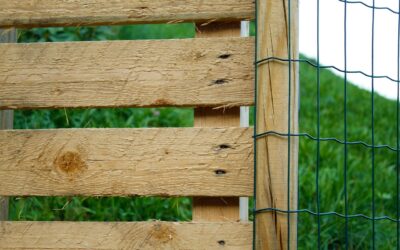
For most yards, the cheapest dog fence that actually holds a dog is welded wire fencing stretched on steel T-posts, which often runs about 1 to 3 dollars per linear foot in materials if you install it yourself. Wireless and in-ground electronic systems can cost less per foot on big properties, and plastic snow fence is cheaper still, but both come with real trade-offs for diggers, jumpers and strong pullers.
Part of our Decks & Outdoor guide — explore the full guide →
Price per foot is only half the story. A fence that a 70 pound dog knocks over in a week is not cheap, and a fence that a terrier tunnels under in an afternoon costs you a vet visit or worse. The right budget fence depends on your dog’s size, energy and escape habits as much as your yard.
- Cheapest Dog Fence Options by Cost per Foot
- Ranking the Budget Options
- Matching the Fence to Your Dog
- Tools and Materials for a DIY Welded Wire Fence
- How to Install a Budget Dog Fence
- Troubleshooting Budget Fences
- Cost Ranges for Common Yard Sizes
- When to Hire a Fence Contractor
- Frequently Asked Questions
The ranking here covers material costs, typical DIY effort and which dogs each option suits, so you can pick the lowest cost fence that still keeps your dog home.
Cheapest Dog Fence Options by Cost per Foot
These are general DIY material ranges for a typical 4 foot tall fence. Prices vary by region and season, and professional installation adds labor on top.
| Fence type | DIY material cost per foot | Best for | Weak spot |
|---|---|---|---|
| Wireless (radio) boundary system | Lowest on large lots; one kit price covers a set radius | Calm dogs on open, flat land | No physical barrier; signal drift; needs training |
| In-ground electronic wire | About 0.25 to 1 dollar (kit plus wire) | Trained medium and large dogs | Keeps no other animals out; needs training and batteries |
| Plastic snow or barrier fence | About 0.50 to 1.50 dollars | Small, calm dogs; temporary use | Easily chewed, pushed or climbed |
| Welded wire on T-posts | About 1 to 3 dollars | Most dogs; best all-round value | Diggers need a buried apron |
| Hog or cattle panels on T-posts | About 2 to 4 dollars | Large, strong dogs; rough ground | Gaps can let tiny dogs through |
| Chain link (DIY) | About 6 to 15 dollars | Long-term, all sizes | Climbable by some dogs; higher upfront cost |
| Portable exercise pen | Flat price per pen, usually a modest one-time cost | Puppies, small dogs, supervised use | Small area; not for unsupervised large dogs |
Welded wire on T-posts is the sweet spot for most owners: a real physical barrier at a fraction of chain link or wood prices. Hog panels cost a bit more but are far stiffer, which matters with big dogs that lean or jump on the fence.
Ranking the Budget Options
1. Welded wire fence on T-posts
A welded wire fence roll in 4 or 5 foot height, attached to steel T-posts every 8 to 10 feet, gives you a solid barrier for very little money. Use 2 by 4 inch mesh for most dogs, and choose a heavier gauge (lower number) for large or pushy dogs. Wooden or heavier steel corner posts with bracing keep the wire tight. This is the cheapest dog fence that most dogs respect without training.
2. Hog or cattle panels
These rigid welded panels come in long sections, typically 16 feet, and are far stiffer than rolled wire. They need fewer posts and resist leaning. Openings near the bottom are often smaller on hog panels than on cattle panels, which helps with medium dogs. For small breeds, add a strip of finer mesh along the bottom.
3. In-ground electronic fence
A buried boundary wire and receiver collar can enclose a large area for a low cost per foot. It does not stop other animals or people from coming in, and it only works after careful training with flags and short sessions. Some dogs will run through the correction when chasing something. Avoid it for anxious dogs and never rely on it near a busy road without a physical backup.
4. Wireless boundary systems
A wireless system creates a circular or GPS-defined boundary with no wire to bury. On big rural lots the cost per foot can be the lowest of any option. Boundaries can drift with terrain, trees and buildings, so they are less precise than a buried wire or a physical fence.
5. Plastic snow fence or garden barrier
Cheap and fast, but most dogs can chew, push or climb it. It works for a small, calm dog or as a temporary visual boundary while you save for something sturdier.
6. Chain link
Chain link costs more upfront, but it lasts for decades with little upkeep. If you plan to stay in a home long term, it can be the lowest cost per year of service.
7. Portable pens
Metal or plastic exercise pens set up in minutes and move with you. They suit puppies, small dogs and travel, but they are not a substitute for a yard fence for large or unsupervised dogs.
Matching the Fence to Your Dog
Use your dog’s habits to narrow the list before you shop.
- Diggers: Bury the bottom of the welded wire 6 to 12 inches, or lay an L-shaped apron of wire 12 to 24 inches wide on the ground inside the fence and pin it down. Grass grows through and hides it.
- Jumpers and climbers: Go to 5 or 6 feet, or angle an extension inward at the top. Avoid horizontal rails that act as ladders.
- Large, strong dogs: Choose hog panels or heavy gauge welded wire with closer post spacing and solid corner bracing.
- Small breeds: Use smaller mesh openings near the ground so heads cannot get through or stuck.
- Escape artists and fence chewers: Skip plastic fence and electronic systems. Pick a physical barrier and supervise until you know it holds.
Tools and Materials for a DIY Welded Wire Fence
- Welded wire fence roll in the height and gauge you need
- Steel T-posts, plus wood or heavy steel posts for corners and gates
- T-post driver and post hole digger
- Wire clips or fence ties, fencing pliers and a fence stretcher or come-along
- Gate kit sized for your mower or wheelbarrow
- Landscape staples or ground anchors for a dig-proof apron
- Work gloves and safety glasses
How to Install a Budget Dog Fence
- Check property lines and rules. Confirm your boundary and any HOA or local fence rules on height and placement.
- Call 811. Have buried utility lines marked before driving posts or digging, even for T-posts.
- Set corners and gate posts. Dig and set sturdy corner posts and brace them, since they carry all the wire tension.
- Drive T-posts. Run a string line between corners and drive T-posts every 8 to 10 feet, closer for big dogs.
- Unroll and stretch the wire. Attach one end to a corner, stretch the wire tight with a stretcher, and fasten it to each post.
- Add the dig guard. Bury the bottom edge or pin an apron of wire along the inside base.
- Hang the gate. Make sure it latches automatically and leaves no gap a dog can squeeze through.
- Walk the line with your dog. Supervise the first few sessions and watch for weak spots or gaps.
Troubleshooting Budget Fences
The wire sags between posts
Sagging usually means the corners moved or the wire was not stretched before fastening. Re-brace the corners, add a mid-span post and re-tension the wire.
The dog still gets out underneath
Look for low spots and washouts along slopes. Fill them with soil or stone, extend the apron, and check after heavy rain.
The electronic system stopped working
Check the collar battery first, then look for a broken boundary wire where you mowed, edged or dug. Most systems have an indicator that shows a break in the loop.
The dog climbs the fence
Raise the height, add an inward-angled top, or switch to a smoother fence face. Remove items stacked near the fence that work as launch points.
Cost Ranges for Common Yard Sizes
A quarter acre yard often needs roughly 300 to 450 linear feet of fence depending on shape and how much of the lot you enclose. At 1 to 3 dollars per foot, a DIY welded wire fence for that space might land in the low hundreds to around a thousand dollars in materials, plus a gate. Hog panels would run somewhat higher, and DIY chain link several times more. Professional installation of any fence type adds labor that can match or exceed the material cost.
Electronic systems are priced differently: a one-time kit cost covers a set amount of wire or radius, with ongoing collar battery costs. On large rural acreage they usually beat any physical fence per foot, while on a small suburban lot the savings shrink.
When to Hire a Fence Contractor
Hire a pro for long runs on steep or rocky ground, for fences that must meet strict HOA or local requirements, and for chain link or wood fences with set concrete posts. A contractor can also handle surveying questions near property lines. If you are unsure whether your dog will respect a cheaper fence, ask a trainer before you spend money on the wrong type.
Frequently Asked Questions
What is the cheapest dog fence that actually works?
For most dogs, welded wire on steel T-posts is the cheapest dog fence that provides a real physical barrier, typically about 1 to 3 dollars per foot in DIY materials.
Is an electronic dog fence cheaper than a physical fence?
On large properties, yes, often by a wide margin per foot. It needs training, does not keep other animals out and may not stop a determined dog.
How tall should a cheap dog fence be?
Four feet works for most small and medium dogs. Use 5 to 6 feet for large breeds and known jumpers.
How do I stop my dog digging under a welded wire fence?
Bury the bottom 6 to 12 inches or pin a 12 to 24 inch wire apron along the inside base of the fence.
Can I use T-posts for a dog fence?
Yes. T-posts every 8 to 10 feet work well with welded wire or panels, as long as the corners and gate posts are sturdy and braced.