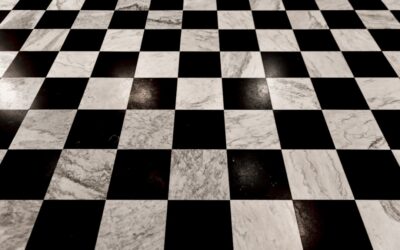
The classic black-and-white floor never really left — it just keeps coming back with bigger tiles, softer colors, or marble veining. Checkered tile flooring remains one of the few designs that reads timeless in a 1920s bungalow and editorial in a brand-new build. The trick is choosing a tile material, size, and color combination that matches both your maintenance tolerance and your room’s proportions.
Part of our Tile & Grout guide — explore the full guide →
Materials That Work for a Checkerboard
Porcelain leads the category. It runs $3 to $9 per square foot, hits a Mohs hardness of 7 to 8, and absorbs less than 0.5 percent water — meaning it is virtually bulletproof in kitchens, baths, and mudrooms. Ceramic costs $1.50 to $5 per square foot but chips more easily and is less suited to high-traffic zones.
Real marble checkerboards (Carrara white paired with Nero Marquina black) cost $15 to $40 per square foot installed and deliver unmatched luxury. The catch: marble etches with citrus and red wine, and white marble shows oil stains within minutes if not sealed every 6 to 12 months.
Tile Sizes and Pattern Scale
Tile size dramatically changes the room’s feel. Small 4×4 or 6×6 tiles read vintage and bistro-like — perfect for a 30 sq ft powder room or a Victorian entryway. Medium 12×12 tiles are the safest choice for kitchens and laundry rooms. Large 18×18 or 24×24 tiles deliver a modern, gallery-floor look and reduce grout lines, which makes cleaning easier.
- 4×4 tiles: Best for under 50 sq ft; max vintage character
- 12×12 tiles: Versatile workhorse for 50-200 sq ft rooms
- 18×18 tiles: Modern, fewer grout lines, ideal for open kitchens
- 24×24 tiles: Statement floors in 300+ sq ft spaces
Layout Patterns
Standard square layout (each tile straight to the wall) is the easiest install and reads classic. Diagonal layout — rotating the grid 45 degrees — visually widens narrow rooms and adds dynamic movement, but generates 15 to 20 percent more cutting waste. Order extra tile if you go diagonal.
Some designers add a contrasting border row of solid black or white around the perimeter to frame the field. That detail looks stunning in entryways but eats up another half-day of labor.
Pros of Checkered Tile Flooring
Style longevity is the headline. A well-laid black-and-white floor will not look dated in 30 years — the pattern has survived every decorating trend since the 1700s. Maintenance is straightforward: porcelain wipes clean with a pH-neutral floor cleaner, and the dark tiles forgive scuffs and dirt that plain white floors broadcast.
Resale appeal is real. Checkered tile flooring in a kitchen or entry consistently shows up in top-photo MLS listings and helps a home stand out. Real estate agents in markets like Brooklyn, Charleston, and Nashville frequently cite checkerboard floors as a selling feature in heritage properties.
Cons and Common Pitfalls
Cold and hard. Tile sits 5 to 8 degrees cooler than the room. Add an electric radiant mat ($8 to $15 per sq ft installed) under the tile if you live in Zones 5 through 7 and want comfort underfoot in winter. Standing on tile for kitchen prep also fatigues knees and lower back — a 3/4-inch anti-fatigue mat near the sink helps.
Grout maintenance is the other catch. White grout against black tile shows every coffee drip within a week. Use epoxy grout (Mapei Kerapoxy or Laticrete SpectraLOCK) for $1 to $2 per square foot extra — it does not stain and never needs sealing.
Cost to Install
Total installed cost depends on material and complexity:
- Ceramic checkerboard: $7-$12 per sq ft installed
- Porcelain checkerboard: $10-$16 per sq ft installed
- Marble checkerboard: $25-$45 per sq ft installed
- Diagonal layout upcharge: $1.50-$3 per sq ft
- Border accent row: $200-$500 flat add-on
Subfloor prep adds $1.50 to $3 per square foot if you need cement backer board over plywood, which you should — it prevents grout cracks long-term.
Color Combinations Beyond Black and White
Modern installations are exploring softer palettes. Ivory and charcoal feels less stark while keeping the contrast. Sage green and white reads coastal cottage. Terracotta and cream nods to Mediterranean farmhouses. Navy and white works beautifully in laundry rooms. Stick to a value contrast of at least 50 percent between the two tile colors — anything closer reads muddy.
Where Checkered Floors Shine
Entryways, mudrooms, powder rooms, kitchens, butler’s pantries, and laundry rooms all wear checkerboard well. Avoid checkered tile in bedrooms, where the high contrast feels visually busy, and in narrow hallways under 4 feet wide, where small tiles can feel claustrophobic.
Maintenance Realities
Porcelain and ceramic checkerboards are nearly maintenance-free. Sweep daily, damp mop weekly with a pH-neutral cleaner like Miracle Sealants Tile and Stone Cleaner, and re-seal cement-based grout once a year. Marble checkerboards need more attention — re-seal stone every 6 months with an impregnating sealer (Aqua Mix Sealer’s Choice Gold runs $35 a quart and covers 200 sq ft).
Avoid acidic cleaners on any natural stone, and never use steel wool or abrasive pads — they scratch even high-fired porcelain. For deep grout cleaning, an oxygen-based powder (OxiClean dissolved in warm water) lifts most stains without damaging the joints.
Final Buying Tips
Order 15 percent overage instead of the usual 10 — checkerboards generate more cuts and more chances for breakage. Buy from one dye lot to avoid color shifts. Hire a tile setter with at least 5 years of experience; alignment errors are obvious in checkerboard layouts and very expensive to fix after grouting. Done right, your checkered tile floor will outlast three kitchens and still look intentional.
Prefer to explore on your own?
See how new flooring looks in your actual room in seconds — free, no signup.
Try the free Floor Studio →