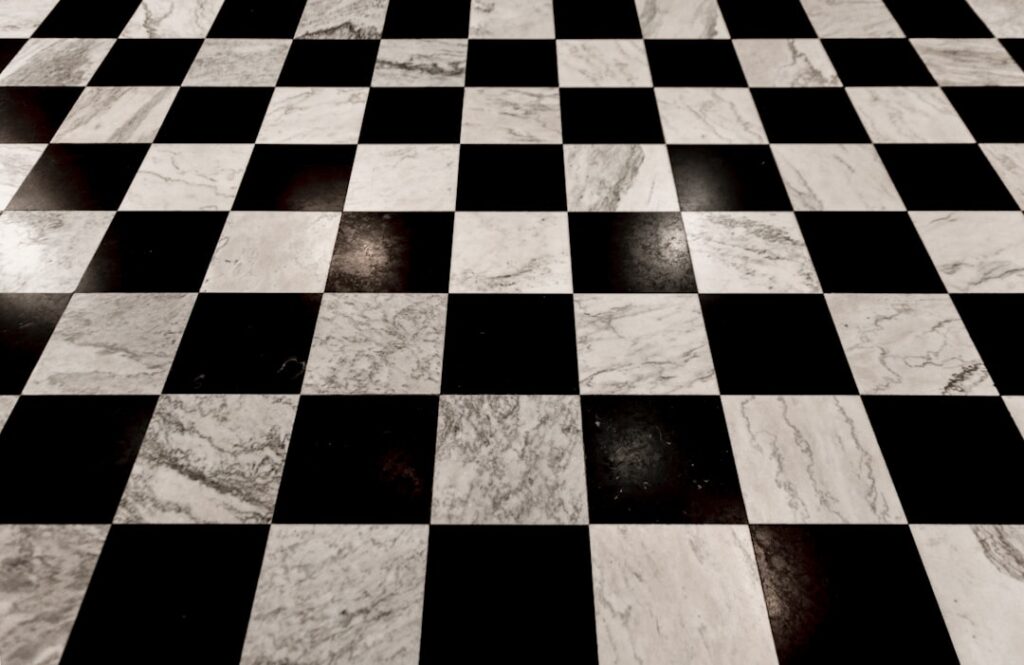
Few floors are as instantly recognizable or as enduringly stylish as a checkerboard. Black and white checkered tile has graced diners, grand foyers, French bistros, and chic kitchens for well over a century, and it keeps coming back because the bold, graphic pattern works in almost any era of design, from vintage charm to crisp modern minimalism.
If you are considering this classic look, there is more to it than picking black and white squares. Tile size, material, layout angle, and grout color all shape the final effect. This guide covers everything you need to plan a checkerboard floor that looks intentional, timeless, and built to last.
Why the Checkerboard Endures
The checkered pattern survives trends because it is fundamentally simple and bold. The high contrast between black and white creates a strong visual rhythm that energizes a room without relying on color. It reads as both traditional and contemporary, which is why you see it in restored historic homes and brand-new modern builds alike.
That versatility is the pattern’s superpower. Paired with brass fixtures and vintage details, it feels old-world and elegant. Set against sleek cabinetry and clean lines, it looks fresh and graphic. The same floor can anchor wildly different design styles depending on what you put around it.
The pattern also carries a sense of history that newer trends cannot fake. Checkerboard floors trace back through grand European entry halls and the black-and-white marble of classical architecture, and that pedigree gives the look an air of permanence. Choosing it signals confidence: it is a floor that was fashionable a hundred years ago and will still look right a hundred years from now, which is exactly the kind of staying power most homeowners want from a permanent surface.
Choosing Your Tile Material
Checkerboard floors can be created from several materials, each with its own look and performance.
- Porcelain and ceramic: The most practical choice, offering durability, water resistance, and easy maintenance at a reasonable price.
- Natural marble: The luxury option, with genuine stone in classic white and black marbles for a high-end, authentic feel. Marble needs sealing and gentler care.
- Vinyl and luxury vinyl tile: A budget-friendly, softer-underfoot alternative that mimics the look with simpler installation.
- Encaustic and cement tile: Offers a matte, artisanal look popular in period-style and bistro designs.
For most homeowners, porcelain delivers the best balance of looks, durability, and value. If you want true luxury and are prepared to maintain it, marble brings unmatched depth and authenticity.
Tile Size and Scale
The size of your squares dramatically changes the personality of the floor. Common sizes range from small 4-inch and 8-inch tiles to large 12-inch, 18-inch, and even 24-inch squares.
Smaller tiles read as more traditional, detailed, and busy, which suits cozy bathrooms, mudrooms, and vintage-inspired kitchens. Larger squares feel bolder, cleaner, and more modern, and they work well in spacious rooms and open foyers. As a rule, scale the tile to the room: oversized tiles can overwhelm a tiny powder room, while tiny tiles can look fussy across a large open floor. When in doubt, lay out samples in the actual space to judge the effect before committing.
Layout and Pattern Direction
How you orient the checkerboard matters as much as the tile itself. The two main layouts are:
- Straight (grid) layout: Squares run parallel to the walls, creating a structured, classic look.
- Diagonal layout: Squares are turned 45 degrees so they form diamonds, which feels more dynamic and can make a narrow room appear wider.
The diagonal setting is a favorite for entryways and hallways because the diamond pattern visually expands the space and adds movement. The straight grid feels more formal and tailored. Plan your starting point carefully so the pattern is centered and balanced, with cut tiles falling evenly along the edges rather than leaving a sliver against one wall.
Grout Color Choices
Grout is an underrated decision on a checkerboard floor. Because the pattern already has strong contrast, your grout can either reinforce the grid or soften it. A gray grout is a popular, practical middle ground because it hides dirt and blends with both colors.
If you want the squares to pop and the pattern to feel sharp and graphic, choose a grout that matches the tile edges closely so the lines nearly disappear. If you prefer a more vintage, hand-laid look, a slightly contrasting grout emphasizes each tile. Avoid pure white grout in high-traffic areas, since it stains and shows dirt quickly.
Best Rooms for Checkered Tile
This pattern is at home in plenty of spaces. Classic applications include:
- Kitchens, where it adds energy and a retro or bistro vibe
- Entryways and foyers, where it makes a dramatic first impression
- Bathrooms and powder rooms, where smaller tiles suit the scale
- Mudrooms and laundry rooms, where the dark squares hide everyday grime
Because the look is so bold, many homeowners use it as the star of an otherwise restrained room, keeping cabinetry, walls, and decor relatively simple so the floor does the talking.
Installation and Care
Precision is everything with a checkerboard, since any drift in alignment is obvious across the contrasting grid. Start from a centered reference line, dry-lay tiles to confirm the pattern, and use spacers to keep grout lines perfectly even. For a flawless result, especially with marble or a diagonal layout, hiring an experienced tile setter is often worth the cost.
Maintenance is straightforward. Sweep regularly to keep grit off the surface, then mop with a pH-neutral cleaner. Seal grout lines after installation and reseal periodically, and if you chose marble, seal the stone and avoid acidic cleaners that can etch it. With proper care, a well-installed black and white checkered tile floor will look as sharp in twenty years as it does the day it goes in.
Cost and Budgeting
Pricing depends heavily on the material you choose. Ceramic and porcelain field tiles often run about $3 to $10 per square foot, making a porcelain checkerboard one of the more affordable ways to get a dramatic floor. Marble pushes the cost well higher, frequently $10 to $25 or more per square foot, plus the ongoing expense of sealing. Vinyl and luxury vinyl tile sit at the budget end, often under $5 per square foot.
Installation adds to the total, and a checkerboard typically costs more to lay than a single-color floor because of the extra precision and pattern planning involved. A diagonal layout usually costs more than a straight grid for the same reason. When you budget, account for a few extra tiles to cover cuts, breakage, and future repairs, and ask your installer how they price patterned work so there are no surprises.
Prefer to explore on your own?
See how new flooring looks in your actual room in seconds — free, no signup.
Try the free Floor Studio →