In my 20+ years of flooring experience, checkered flooring remains one of the most enduring design choices I install. From classic black-and-white kitchens to bold colorful patterns in commercial spaces, the checkerboard pattern has never gone out of style — and it’s experiencing a major resurgence right now. I’ve installed checkered floors in every material imaginable, from budget-friendly VCT to high-end marble, and I can help you find the right approach for your space and budget. Here’s everything you need to know about checkered flooring.
- The Timeless Appeal of Checkered Floors
- Material Options for Checkered Flooring
- Vinyl and VCT Checkered Floors
- Ceramic and Porcelain Tile
- Natural Stone (Marble and Granite)
- Laminate and LVP Options
- Design Variations Beyond Basic Black and White
- Room-by-Room Design Ideas
- Installation Tips
- Cost Comparison
- Frequently Asked Questions
The Timeless Appeal of Checkered Floors
Checkered flooring has been a design staple for centuries. From European palaces and cathedrals to American diners and mid-century kitchens, the alternating-color grid pattern carries an instant visual impact that few other flooring patterns achieve. Its longevity as a design choice speaks to something fundamental — the human eye is drawn to geometric regularity, and the high contrast of a checkerboard pattern creates a dynamic energy that makes any room feel more intentional and designed.
Design Eras and Checkered Floors
Checkered floors fit naturally into several popular design styles. In art deco interiors, large black-and-white marble checkerboards create dramatic grandeur. In 1950s retro kitchens, VCT checkerboard is quintessentially period-correct. In French country design, checkered floors in softer tones (cream and gray, or terra cotta and cream) add charming sophistication. And in modern minimalist spaces, a checkered floor can serve as the single bold design element in an otherwise restrained room.
Material Options for Checkered Flooring
The material you choose dramatically affects the cost, installation method, durability, and overall aesthetic of your checkered floor. Here’s a comprehensive look at each option.
Vinyl and VCT Checkered Floors
Vinyl Composition Tile (VCT)
VCT is the classic material for checkered floors, and it remains my top recommendation for budget-conscious projects. These 12×12-inch tiles come in solid colors that are perfect for creating checkerboard patterns. Standard VCT costs just $1 to $3 per square foot for materials, making a checkered floor achievable for almost any budget.
VCT requires regular waxing to maintain its shine, which some homeowners see as a drawback and others appreciate as part of the retro charm. Commercial-grade VCT (like Armstrong or Mannington products) is extremely durable and handles heavy foot traffic well. It’s what you see in diners, barbershops, and retro-themed restaurants — and there’s a good reason it’s been used in those settings for decades.
Sheet Vinyl
Sheet vinyl with a pre-printed checkered pattern is the easiest and cheapest way to get the look. No individual tile layout required — just roll it out and cut to fit. The pattern is consistent, installation is fast, and costs are minimal ($1-$4/sq ft). The downside is that printed patterns can look flat and artificial compared to actual two-tone tile installations. I recommend sheet vinyl for utility areas but prefer real tile for living spaces where the floor is a design focal point.
Luxury Vinyl Tile (LVT)
LVT offers a significant upgrade over VCT and sheet vinyl. Individual tiles with realistic stone or solid-color finishes can be arranged in a checkerboard pattern with sharp, clean edges. LVT is waterproof, durable, and low-maintenance — no waxing required. Costs range from $3 to $7 per square foot for quality LVT tiles in solid colors. For a checkered pattern, you simply order equal quantities of two colors.
Ceramic and Porcelain Tile
The Most Practical Premium Option
Ceramic and porcelain tile are my most-recommended materials for checkered floors in kitchens, bathrooms, and entryways. They’re waterproof, extremely durable, available in virtually any color, and the checkered pattern lasts forever because the color goes through the entire tile.
Best Tile Sizes
The tile size significantly impacts the final look:
- 12×12 inches: The most common size — creates a classic, balanced checkerboard that works in most rooms
- 6×6 inches: Creates a busier, more detailed pattern — works well in smaller spaces like bathrooms
- 18×18 inches: Creates a grand, dramatic pattern — best for large rooms with high ceilings
- 24×24 inches: Makes a bold statement — typically used in commercial or very large residential spaces
Choosing the Right Colors
Classic black and white is the most popular combination, but consider your options carefully. Pure black and pure white creates the highest contrast and most dramatic effect. Off-white and charcoal softens the contrast slightly while maintaining the classic look. Cream and black adds warmth while preserving drama. Two shades of gray creates an elegant, subtle checkerboard that reads as sophisticated rather than retro.
Cost
Basic black and white porcelain tiles for a checkerboard pattern cost $3 to $7 per square foot for materials. Professional installation runs $5 to $10 per square foot. The precise layout required for a perfect checkerboard takes slightly more time than standard tile installation, so labor costs are at the higher end of the range.
Natural Stone (Marble and Granite)
The Luxury Statement
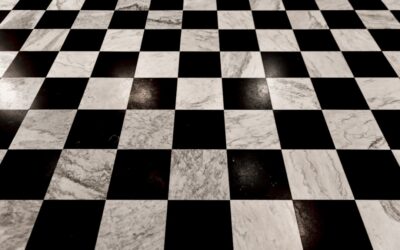
A black-and-white marble checkered floor is one of the most timeless and elegant flooring designs in existence. It evokes grand European architecture and instantly elevates any space. Carrara white marble paired with Nero Marquina black marble is the classic combination, and it’s as stunning today as it was in Renaissance Italy.
Material Options
Marble: The quintessential checkered floor stone. White Carrara or Thassos marble paired with black Nero Marquina marble creates the classic look. Marble is softer than porcelain (susceptible to etching from acidic substances) and requires sealing, but its natural veining and depth of color are impossible to replicate with manufactured tiles.
Granite: More durable and stain-resistant than marble, granite can also create beautiful checkered patterns. Black Absolute granite and white granite (like Bianco Cristal) are popular choices. Granite is harder wearing than marble, making it more practical for high-traffic areas.
Cost
Natural stone checkered floors are a significant investment. Marble tiles for a checkerboard pattern run $10 to $30 per square foot for materials, and professional installation adds $8 to $15 per square foot. A 200-square-foot marble checkered entryway can easily cost $4,000 to $9,000 fully installed. Granite is comparable in price. For many of my clients, this is a signature design investment that defines the character of their home.
Laminate and LVP Options
Modern laminate and luxury vinyl plank products offer checkered-pattern options that are more affordable and easier to install than tile or stone. Some products come in pre-printed checkered patterns (usually 12×12 or 24×24 tiles), while others allow you to create a checkerboard by alternating two solid-colored products.
Laminate tiles with a checkered print cost $2 to $5 per square foot and install via click-lock systems with no grout required. The look isn’t as authentic as real tile, but for a laundry room, playroom, or rental property, it’s a practical and affordable way to achieve the checkered aesthetic. Click-lock LVT tiles in alternating solid colors offer a slightly more authentic look at $3 to $7 per square foot.
Design Variations Beyond Basic Black and White
Diagonal Checkerboard
Setting the checkerboard pattern on a 45-degree diagonal creates a more dynamic, visually interesting floor than a standard grid alignment. Diagonal installation uses more material (about 15% more due to edge cuts) and takes longer to install, but the effect is worth it. Many of the most iconic checkered floors — including those in European palaces — are set on the diagonal.
Three-Color Patterns
Adding a third color or a border strip between the main checkered field creates a more complex, customized look. A popular approach is a black-and-white field with a gray or colored border strip framing the room. This works particularly well in entryways and formal dining rooms.
Oversized and Undersized Patterns
Don’t default to 12×12 tiles. Oversized tiles (18×18 or larger) in a checkerboard pattern create a grand, dramatic effect that works beautifully in large rooms. Conversely, small tiles (4×4 or 6×6) create a busy, detailed pattern that’s reminiscent of vintage bathrooms and European kitchens. Scale the tile size to your room size and desired visual impact.
Color Alternatives
While black and white is classic, consider these alternative color combinations:
- Navy and white: Coastal, fresh, and slightly softer than black and white
- Green and white: Perfect for kitchens and sunrooms — vintage charm
- Terra cotta and cream: Warm, Mediterranean, French country aesthetic
- Gray and white: Modern, subtle, and universally complementary
- Red and white: Bold retro diner aesthetic — fun for a bar or game room
Room-by-Room Design Ideas
Kitchen
The kitchen is the most popular room for checkered flooring, and it works beautifully here. For a classic look, use 12×12 black-and-white porcelain tiles with dark grout. For a softer approach, try cream and gray. VCT is a budget-friendly kitchen option that nails the retro look. In a modern kitchen, consider large-format (18×18) tiles set diagonally for a fresh take on the classic pattern.
Bathroom
Small-format (6×6 or 2×2 mosaic) checkered tiles work wonderfully in bathrooms. The smaller scale suits the typically smaller room, and the pattern adds visual interest without overwhelming the space. Black and white with white fixtures is a timeless combination. For a vintage look, use hexagonal tiles alternating in two colors for a honeycomb-checkered effect.
Entryway and Foyer
A checkered entryway floor makes a powerful first impression. This is where a marble or natural stone checkerboard truly shines. Set the pattern on a diagonal with a solid border for maximum impact. For a more affordable option, porcelain tile in 18×18 format creates a similar effect at a fraction of the cost.
Laundry Room
Laundry rooms are an ideal spot for checkered flooring — they’re small enough that even premium materials are affordable, and the pattern adds personality to a utilitarian space. VCT or sheet vinyl works perfectly here given the moisture and the casual nature of the room.
Installation Tips
Layout Planning
The most critical step in a checkered floor installation is the layout. Snap chalk lines to find the exact center of the room and dry-lay tiles from the center outward to determine the best starting point. The goal is balanced borders — you don’t want a full tile on one side and a sliver on the other. I always spend more time planning the layout than actually setting the tile.
Precision Matters
A checkered pattern amplifies any installation errors. Tiles that are even slightly off-center or uneven grout lines are much more visible in a checkerboard pattern than in a single-color installation. Use tile spacers consistently, check alignment frequently, and don’t rush. This is not the project for learning tile installation — hire a professional or practice on a less visible room first.
Grout Color Selection
Grout color significantly impacts the final appearance. Dark grout (charcoal or black) between black and white tiles creates defined squares and a bolder pattern. Light grout blends with the white tiles and makes the dark tiles pop. Medium gray grout offers a compromise. I typically recommend a grout color that matches the darker tile for the cleanest, most defined checkerboard pattern.
Cost Comparison
Here’s what to expect for a 200-square-foot checkered floor, fully installed:
- VCT: $600-$1,400 (most affordable)
- Sheet vinyl: $400-$1,200 (easiest installation)
- LVT tiles: $1,200-$2,800
- Ceramic tile: $1,600-$3,400
- Porcelain tile: $1,800-$3,800
- Marble: $4,000-$9,000 (most luxurious)
- Granite: $3,600-$8,000
Frequently Asked Questions
What is the best material for a checkered floor?
Porcelain tile is the best overall material for checkered floors. It’s waterproof, extremely durable, available in perfect black and white (and every other color), and the pattern will last forever. For a luxury look, natural marble is unmatched in beauty. For a budget-friendly option, VCT provides an authentic retro checkered look at a fraction of the cost. Choose based on your budget, the room’s function, and the design style you’re aiming for.
Should checkered floors be laid straight or diagonal?
Both orientations work well, but diagonal installation creates a more dynamic, visually interesting effect and is considered the more sophisticated layout. Straight (grid) alignment is easier to install and uses less material. For entryways and formal spaces, I recommend diagonal. For kitchens and utility areas, either orientation works. Note that diagonal installation requires about 15% more material due to edge cuts.
Are checkered floors outdated?
Not at all. Checkered flooring has been a design staple for centuries and continues to appear in high-end design projects today. The key is choosing the right material and scale for your space. Large-format tiles in subtle color combinations (gray and white, for instance) feel completely modern. Small-format VCT in black and white reads as deliberately retro. The pattern is timeless — it’s the material and execution that determine whether it feels current or dated.
What grout color should I use for black and white checkered tile?
I recommend dark gray or charcoal grout for the most defined, clean-looking checkerboard pattern. Dark grout creates crisp lines between tiles and doesn’t show dirt as readily as white grout. Some clients prefer matching the grout to the white tiles for a softer look where the black tiles “float” on a white background. Avoid bright white grout between black tiles — it will stain and discolor over time and become a maintenance headache.
Can I create a checkered pattern with luxury vinyl plank?
You can create a checkerboard with luxury vinyl tile (LVT), but not with luxury vinyl plank (LVP). LVP comes in elongated plank shapes designed to mimic wood and isn’t suitable for a checkered pattern. LVT, however, comes in square tiles that work perfectly. Order equal quantities of two colors, and install them in alternating fashion. Click-lock LVT tiles make this a relatively straightforward DIY project since no grout or adhesive is required.
Prefer to explore on your own?
See how new flooring looks in your actual room in seconds — free, no signup.
Try the free Floor Studio →