Some design choices never fade, and vintage black and white tile is one of them. From grand hotel lobbies of the early 1900s to cozy 1920s bathrooms and cheerful mid-century kitchens, this crisp, high-contrast pairing has decorated stylish homes for well over a century. Its graphic punch feels both nostalgic and thoroughly current, which is why designers keep returning to it. Whether you are restoring an old house or adding retro character to a new one, this guide covers the classic patterns, materials, costs, and styling tricks that make black and white tile sing.
Part of our Tile & Grout guide — explore the full guide →
The Enduring Appeal of Black and White
The power of this combination lies in pure contrast. Black grounds and defines while white opens and brightens, and together they create bold geometry that reads clearly from across a room. Because the palette is essentially neutral, it plays well with any accent color and any decorating era, from vintage to ultra-modern. That flexibility is why a black and white floor laid a hundred years ago still looks intentional and fresh today.
There is also a practical side. The two-tone scheme hides dirt cleverly, with black concealing scuffs and white brightening the space, and it never risks looking dated the way a trendy color might. It is the definition of a timeless investment in your home.
Classic Patterns to Consider
Vintage installations relied on a handful of beloved layouts, each carrying its own period flavor. Knowing them helps you choose the right era for your room.
- Checkerboard: The iconic alternating grid, the most recognizable retro floor of all.
- Hexagon mosaic: Small white hex tiles with scattered black accents, a hallmark of 1920s bathrooms.
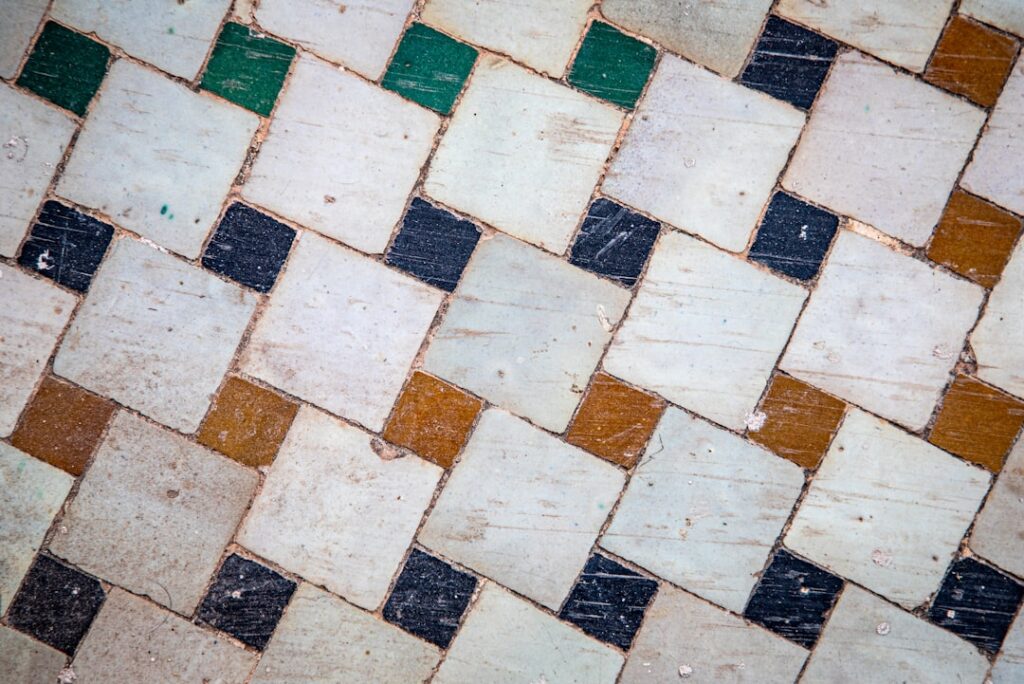
- Basketweave: Interlocking rectangles and dots that evoke early-twentieth-century elegance.
- Penny round: Tiny circular tiles in black, white, or a mix for playful vintage charm.
- Border patterns: A dark Greek-key or geometric border framing a light field like a rug.
Mixing a patterned border with a simple field is a classic move that instantly signals period authenticity. The border does the decorative work while the field keeps the overall look calm and grounded.
Choosing Your Materials
Several tile types can achieve the vintage look, each with trade-offs. Porcelain and ceramic are the most practical, offering durability, water resistance, and easy care in an endless array of shapes. Marble delivers authentic old-world luxury with natural veining, especially in classic checkerboard floors, though it needs sealing and gentle cleaners. Encaustic cement tiles provide genuine period texture and matte depth but require sealing and more careful maintenance. For a budget or DIY approach, luxury vinyl tile reproduces the look convincingly and installs quickly over many subfloors.
For most homeowners, glazed porcelain hexagons or squares hit the sweet spot of authenticity and low upkeep. If you are restoring a landmark home, though, marble or cement tile rewards the extra care with unmatched genuineness.
Where Vintage Black and White Tile Works Best
This scheme feels at home in several key spaces. Bathrooms are the classic destination, where a hex or checkerboard floor pairs perfectly with white subway walls and chrome fixtures. Kitchens gain bistro energy from a checkerboard floor or a graphic backsplash. Entryways and foyers make a striking first impression with a bordered field that greets guests like a woven rug. Laundry rooms, mudrooms, and powder rooms are ideal low-risk spots to experiment with the bold pattern without committing your whole home to it.
Because the look is so architectural, it especially suits homes with traditional bones, but it can also add welcome contrast and personality to sleek modern interiors.
Cost of Vintage Black and White Tile
Budget depends on material and pattern intricacy. These ranges will help you plan the project.
- Ceramic or porcelain: $3 to $12 per square foot for material.
- Marble tile: $8 to $25 per square foot.
- Encaustic cement tile: $10 to $30 per square foot.
- Luxury vinyl tile: $2 to $7 per square foot.
- Professional installation: $8 to $16 per square foot, more for mosaics and borders.
Small mosaic tiles and detailed borders take more labor to set, so factor that into your estimate. A modest bathroom floor in porcelain hex might run $600 to $1,500 installed, while a marble checkerboard foyer costs considerably more but delivers heirloom-quality results.
Styling Tips for a Timeless Look
To let the tile shine, surround it with era-appropriate simplicity. A few reliable ideas:
- Pair the floor with white subway tile walls and beadboard for authentic period layering.
- Choose polished chrome, nickel, or brass fixtures to complete the vintage story.
- Add a single accent color, such as red, sage, or navy, for a pop against the neutral base.
- Keep grout crisp: white grout with white tile, or contrasting grout to emphasize geometry.
- Layer in natural wood or a woven rug to warm the cool palette.
The goal is a room that feels collected over time rather than newly decorated. Mixing genuine or reproduction period fixtures with the classic tile achieves exactly that.
Care and Maintenance
Keeping the contrast crisp is straightforward with the right routine. Porcelain and ceramic need only regular sweeping and a damp mop with pH-neutral cleaner. White grout benefits from periodic sealing and the occasional gentle scrub to stay bright, since grime shows most against light tile. Marble and cement tiles require sealing and non-acidic cleaners to prevent etching and staining. Avoid harsh abrasives that can dull any finish. With modest attention, the sharp black-and-white contrast that defines this look will stay striking for many years.
Modern Twists on a Classic
While vintage black and white tile honors the past, it also adapts beautifully to contemporary tastes, letting you capture the nostalgia without making a room feel like a museum. Scale is one of the easiest levers to pull: oversized checkerboard squares read as fresh and modern, while tiny mosaics feel more period-authentic. Choosing large-format tiles instantly updates the classic look for a sleek, current interior.
Grout is another way to modernize. Traditional installations often used tight white grout, but a bold contrasting grout that outlines each tile gives the pattern a graphic, of-the-moment edge. Matte finishes in place of glossy glazes also lend a softer, more contemporary feel. And while pure black and white is the classic, many homeowners now swap in a deep charcoal, warm cream, or even a muted navy for one of the two tones, keeping the high-contrast spirit while personalizing the palette.
A few ideas for a fresh take on the tradition:
- Use large-format squares for a clean, modern checkerboard.
- Pair the floor with sleek, minimalist fixtures instead of ornate vintage ones.
- Try a matte finish for a soft, contemporary surface.
- Add a single bold accent wall or colorful vanity to bring the look forward.
- Mix in natural wood and greenery to warm the crisp palette.
This flexibility is exactly why the black and white scheme has endured. It can lean fully vintage, fully modern, or anywhere in between, adapting to your home’s character while always looking intentional and timeless.
A Look That Never Ages
Bringing vintage black and white tile into your home is a bet you can make with total confidence, because this pairing has proven its staying power across generations of design. Choose a classic pattern that fits your home’s era, select a material that balances authenticity with the upkeep you want, and concentrate the look where it will make the strongest statement. Keep the surrounding palette simple, add a touch of accent color, and maintain the crisp contrast with regular care. The result is a space that feels both nostalgic and timeless, a genuine classic that will charm you and every guest for years to come.
Prefer to explore on your own?
See how new flooring looks in your actual room in seconds — free, no signup.
Try the free Floor Studio →