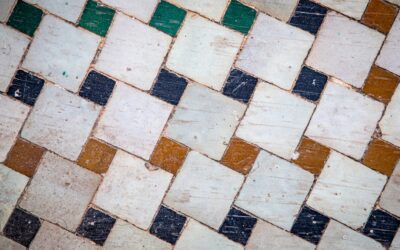
Black and white pattern tile is one of those design choices that never goes out of style, and I’ve installed it in everything from 1920s bungalows to brand-new modern farmhouses. Homeowners love black and white pattern tile because it delivers big graphic impact for a relatively modest material cost, and it reads as either classic or contemporary depending on the pattern you choose.
Part of our Tile & Grout guide — explore the full guide →
- Why This Look Endures
- Common Patterns
- Design and Color Considerations
- Where to Use It
- Buying Considerations
- Installation
- Care and Maintenance
- Pros and Cons
- Cost Per Square Foot
- Frequently Asked Questions
- Does black and white pattern tile make a room look bigger or smaller?
- Is white grout a bad idea?
- Can I use it in a shower?
- Will this look dated in ten years?
- Should I lay a checkerboard straight or on the diagonal?
- Is real cement encaustic worth the extra cost?
- What size squares work best for a kitchen floor?
- Can I mix black and white pattern tile with a wood floor?
Why This Look Endures
High contrast is the reason this palette works in almost any home. Black and white sit at opposite ends of the value scale, so the pattern pops whether the room has tons of natural light or almost none. It also plays nicely with any accent color, from brass fixtures to a red front door, because the floor itself stays neutral. That flexibility is why designers keep coming back to it decade after decade.
Common Patterns
The pattern does most of the talking, so choose it to match the mood you want:
- Checkerboard: Alternating solid squares set straight or on a diagonal. The most classic and the easiest to source.
- Hexagon: Small black-and-white hex mosaics, often with a scattered or bordered layout, big in vintage bathrooms.
- Encaustic-look: Ornate Moroccan, Victorian, or Spanish motifs printed on porcelain. High drama, no maintenance of true cement encaustic.
- Basketweave and pinwheel: Traditional mosaics that suit period homes and powder rooms.
- Chevron and stripe: Bold linear patterns for a modern, energetic feel.
Design and Color Considerations
Not all blacks and whites are equal. A true jet black with a bright white feels crisp and modern. A softer charcoal paired with a warm cream reads vintage and easier on the eyes. Look at samples in your actual room light before deciding, because a stark combination that dazzles in the store can feel cold at home.
Scale is the other lever. Large 12-inch checkerboard squares suit big kitchens and open floors. Tiny one-inch hex or penny mosaics belong in small bathrooms and entries, where the fine pattern feels intentional rather than dizzying. In a small powder room you can go bolder than you think, because there is a door to close on it.
Where to Use It
This tile shines in entryways, kitchens, bathrooms, mudrooms, and laundry rooms. A checkerboard entry makes a strong first impression, and a patterned powder-room floor is a low-risk place to be adventurous. It also works on walls and backsplashes, though a busy floor plus a busy wall in the same room usually fights with itself, so let one surface be the star.
For wet areas, confirm the tile carries a slip-resistant rating, ideally a DCOF of 0.42 or higher, and choose a matte or textured finish over high gloss on floors that get wet.
Buying Considerations
Run through these before you order:
- Material: Porcelain is the workhorse for floors; cement encaustic looks stunning but needs sealing and stains easily.
- PEI rating: Choose PEI 3 or 4 for floor use.
- Sheet vs. individual: Mosaics come mesh-mounted on 12-inch sheets, which speeds installation dramatically over setting single pieces.
- Overage: Buy 10 to 15 percent extra, more for diagonal checkerboard layouts.
- Batch matching: Order all tile from one lot so the whites and blacks match across boxes.
Installation
Pattern alignment is everything with this tile. A checkerboard that drifts even a quarter inch across a room jumps out at anyone standing in the doorway. Start by finding the room’s true center, snap perpendicular layout lines, and dry-lay a full run before mixing thinset.
The subfloor must be flat within one-eighth inch over 10 feet, and I set an uncoupling membrane or cement board over wood subfloors to prevent cracking. Use white thinset under white tiles and light mosaics so it doesn’t ghost through, and be meticulous with grout-line width because any inconsistency shows against the high contrast. Expect labor of $6 to $12 per square foot for a straight checkerboard and more for intricate mosaics or diagonal sets.
Care and Maintenance
Porcelain versions are nearly bulletproof: sweep, then damp-mop with a pH-neutral cleaner. The real maintenance question is grout. White grout between black tiles shows dirt fast, so I often recommend a medium-gray grout as a compromise, or an epoxy grout that resists staining in high-traffic entries.
If you choose genuine cement encaustic tile, it needs a penetrating sealer at installation and periodic resealing, and you should wipe spills quickly because the surface is porous. Porcelain look-alikes skip all of that while keeping the pattern.
Pros and Cons
- Pros: Timeless graphic style, works with any accent color, high visual impact for low material cost, huge pattern selection, and durable in porcelain.
- Cons: Grout upkeep with high contrast, demanding layout, can feel busy in large open spaces, and real encaustic needs sealing.
Cost Per Square Foot
Material costs in USD run roughly:
- Basic porcelain checkerboard: $3 to $6 per sq ft.
- Porcelain encaustic-look patterns: $5 to $10 per sq ft.
- Black-and-white mosaic sheets: $8 to $18 per sq ft.
- Genuine cement encaustic: $12 to $25 per sq ft.
Add installation of $6 to $14 per square foot depending on complexity, plus setting materials and grout. A professionally installed porcelain checkerboard floor typically lands between $12 and $22 per square foot all-in.
Frequently Asked Questions
Does black and white pattern tile make a room look bigger or smaller?
Large-scale patterns on a diagonal can make a space feel wider, while tiny busy mosaics tend to shrink a room visually. Match the scale to the room size.
Is white grout a bad idea?
Not necessarily, but it shows dirt. Epoxy grout or a gray tone gives you the contrast without constant scrubbing.
Can I use it in a shower?
Yes, on walls readily, and on floors if the tile carries a wet-area slip rating. Small mosaics are ideal for shower floors because the extra grout lines add grip.
Will this look dated in ten years?
Classic checkerboard and hex layouts have stayed popular for over a century, so this is one of the safer long-term choices in tile.
Should I lay a checkerboard straight or on the diagonal?
A straight lay feels crisp and modern and wastes less tile. A diagonal, or on-point, layout feels more traditional and can make a narrow room read wider, but it creates more cut pieces and 15 to 20 percent more waste. Pick based on the room’s proportions and the era you’re after. As a rule of thumb, run the diagonal lines toward the room’s longest sightline to exaggerate depth.
Is real cement encaustic worth the extra cost?
It has unmatched depth and a soft, matte character, but it’s porous, needs sealing, and scratches more easily. For a busy family entry or kitchen, I usually steer clients to a porcelain look-alike that captures the pattern with none of the upkeep.
What size squares work best for a kitchen floor?
For an open kitchen, 12-inch or larger squares keep the pattern from feeling busy and reduce grout lines. In a small galley or a powder room, 6-inch or 8-inch squares keep the checkerboard in scale with the space.
Can I mix black and white pattern tile with a wood floor?
Absolutely. A common approach is a patterned tile entry or mudroom that transitions to wood in living areas, using a clean threshold or a metal transition strip where the two meet. The graphic tile grabs the muddy, high-traffic zone and the wood keeps the rest warm.
Whether you want vintage charm or modern edge, black and white pattern tile is a proven way to give a floor real personality without gambling on a trend.
Prefer to explore on your own?
See how new flooring looks in your actual room in seconds — free, no signup.
Try the free Floor Studio →