Few flooring choices make a stronger statement than high-contrast monochrome underfoot. Carpet black and white options work in everything from formal dining rooms to mid-century basements, but the bold pattern demands careful planning around lighting, room size, and family lifestyle. Choose wrong and the floor overwhelms the room; choose right and you have a focal point that anchors the entire interior design for a decade or more.
This guide walks through the major black and white carpet styles, where they work, and how to keep them looking sharp under real household conditions.
Why Black and White Carpet Has Returned
The current revival traces to two design trends: graphic mid-century revival aesthetics and the rise of maximalist interiors. Designers gravitate to black and white because the palette pairs effortlessly with any wall color, furniture finish, or accent metal. The pattern adds visual texture without competing with art and decor.
Manufacturers responded with dozens of new patterns in the past five years, from precise geometric grids to organic Berber flecks and bold harlequin diamonds.
Pros of Black and White Carpet
Beyond the obvious aesthetic punch, monochrome carpet offers practical benefits:
- Hides certain stains: Black areas mask coffee, wine, mud; white areas hide dust and lint
- Versatile palette: Works with cool grays, warm woods, and saturated accent colors
- Timeless appeal: Black and white never reads dated the way trend colors do
- Defines space: Strong pattern visually anchors furniture arrangements
- Hides traffic patterns: Pattern complexity disguises walking lanes
- Photographs well: Strong contrast adds depth to room photos for resale
For homes with frequent gatherings, the pattern’s ability to hide minor wear and crumbs is a quiet daily advantage.
Cons Worth Honest Consideration
Bold pattern brings bold problems:
- Pet hair shows obviously on opposite-color sections
- Vacuum lines stand out more than on solid carpets
- White sections show set-in stains permanently
- Pattern can overwhelm small rooms (under 100 sq ft)
- Difficult to coordinate patterned upholstery and rugs over the carpet
- Resale buyers may want neutral; some demographics see black-and-white as polarizing
If you have a white-haired pet, expect to vacuum the black sections daily. The reverse holds for black-haired pets on white sections.
Major Pattern Styles
Most black and white carpet falls into one of these style families.
Geometric Grids
Crisp lines and squares, often called “Greek key” or “trellis.” Best for transitional and contemporary homes. Pattern repeats range from 6 to 24 inches.
Harlequin Diamond
Large diamond shapes alternating in color. Reads bold and theatrical. Strong fit for entryways, dining rooms, and formal spaces.
Berber Fleck
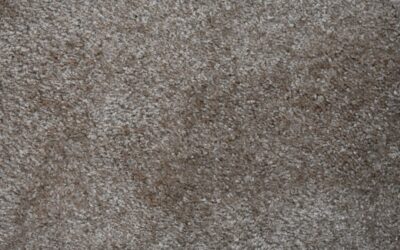
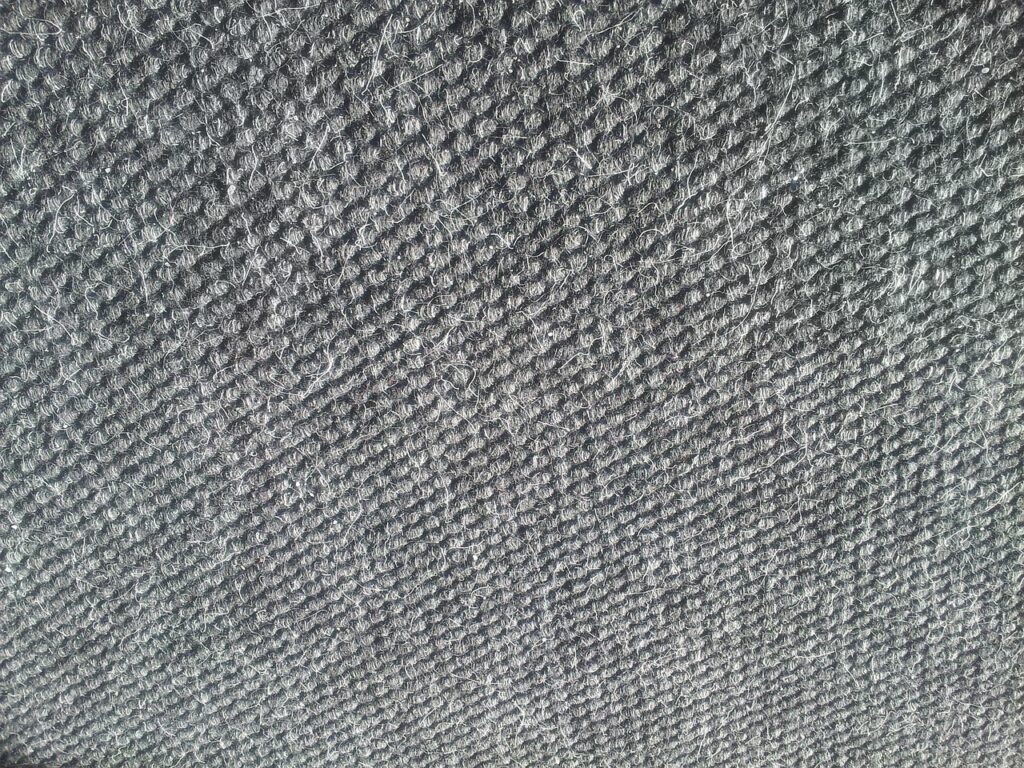
Random color speckles in cut or loop pile. Subtler than full pattern. Hides everyday dirt better than precise patterns.
Damask and Floral
Intricate scrollwork or botanical patterns. Best for traditional homes and formal rooms.
Houndstooth and Chevron
Classic textile patterns translated to carpet. Mid-century friendly. Pairs well with walnut furniture.
Best Black and White Carpet Brands
Sources for reliable monochrome carpet in 2026:
- Stark Carpet: Designer-grade patterns, $15-$40/sq ft, custom widths available
- Couristan Bromley: Wool blends with classic patterns, $10-$15/sq ft
- FLOR: Modular tiles in various B&W patterns, $7-$15 per tile
- Stanton Carpet: Strong pattern selection for stairs and runners, $14-$22/sq ft
- Karastan Geometric Collection: Wool-blend patterns, $16-$28/sq ft
- Mohawk Smartstrand Pattern: Synthetic, stain-resistant, $4-$7/sq ft
For runners and stairs, woven Wilton construction holds the pattern definition longer than tufted construction in heavy-traffic areas.
Where Black and White Carpet Works Best
Room-by-room recommendations based on real installs:
Entryways and Foyers
Bold harlequin or geometric patterns make a statement. The first impression matters.
Formal Dining Rooms
Damask or chevron under the dining table adds elegance without competing with serving pieces.
Stairs
Striped or geometric runners highlight the architecture and hide tread wear.
Home Offices
Tone-on-tone patterns add interest during long workdays without distracting.
Bedrooms
Smaller-scale patterns work in primary suites. Avoid stark high-contrast in serene sleep spaces.
Kid Rooms
Skip — every spill shows. Save B&W for adult areas.
Coordinating Furniture and Decor
Working a strong patterned carpet into your room takes discipline:
- Choose solid-color upholstery in cream, charcoal, or rich accent colors
- Skip secondary patterned rugs over the carpet
- Use brass, gold, or warm wood accents to soften the high contrast
- Limit accent colors to 2-3 across the room
- Hang large-scale art with simple frames; busy gallery walls compete with the floor
The carpet should be the loudest pattern in the room. Everything else plays support.
Care and Maintenance
Keeping black and white carpet looking sharp:
- Vacuum 2-3 times weekly with brush roll on for cut pile
- Spot-clean white sections immediately with cool water and white vinegar
- Use a black carpet specific dye marker to touch up faded sections
- Professional cleaning every 12-18 months, more often in entryways
- Place walk-off mats at all entrances to limit dirt transfer
- Rotate furniture every 6 months to even out crushing
Avoid bleach products on white sections — they remove dye from neighboring black areas through wicking, creating permanent shadows.
Frequently Asked Questions
Is black and white carpet harder to keep clean?
Each color shows different debris. Total visibility of dirt is similar to mid-tone neutrals, just spread differently across the pattern.
Does monochrome carpet add or subtract resale value?
Polarizing for resale. Plan to remove and replace with neutral if selling within 12 months.
Can I install black and white carpet on stairs?
Yes. Striped runners highlight stair architecture beautifully. Specify woven construction for the longest service life.
What pad should I use under patterned carpet?
8 lb rebond pad minimum, 7/16 inch thick. Avoid super-soft pads that let pattern definition compress over time.