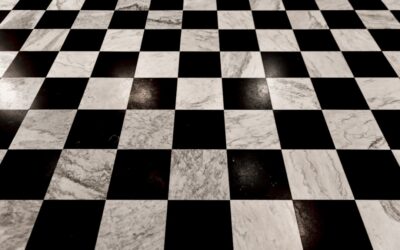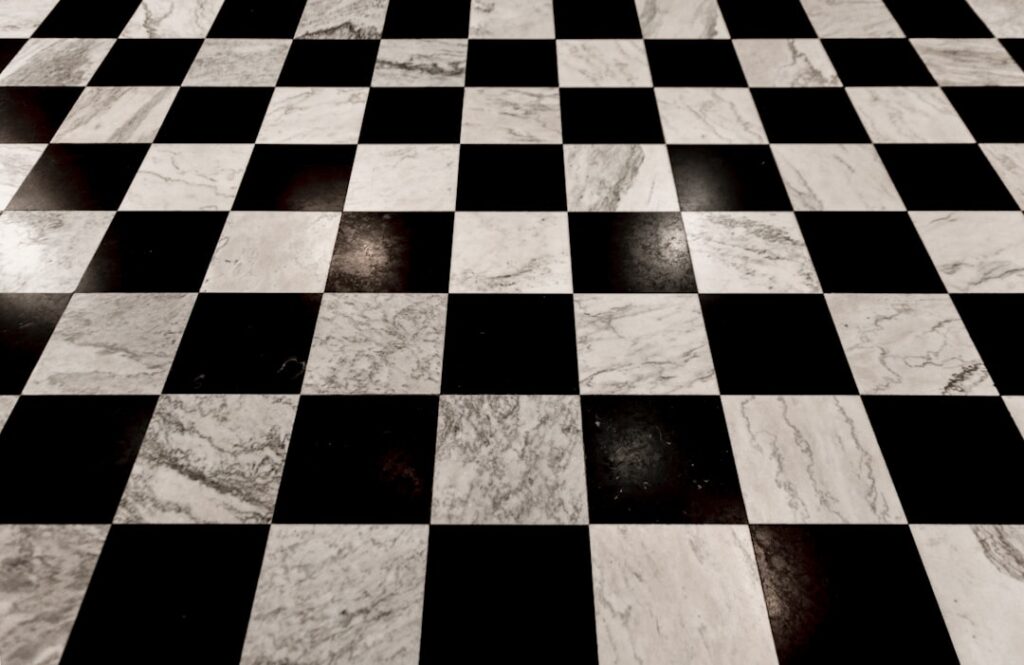
The checkerboard floor is one of the oldest design moves in the book, and it refuses to go out of style. Swap the traditional black for a softer charcoal or dove gray, and you get grey and white checkered tile — a look that feels both classic and current, with less of the stark, high-contrast drama of true black and white. It reads sophisticated in an entryway, cheerful in a kitchen, and vintage-chic in a bathroom. I have installed it in period homes and brand-new builds alike, and the softer gray palette suits far more design styles than most people expect.
Part of our Tile & Grout guide — explore the full guide →
- Why Gray Beats Black for the Checkerboard
- Choosing Your Tile Size
- Straight vs. Diagonal Layout
- Material Options
- Grout Color Strategy
- What Grey and White Checkered Tile Costs
- Design Styles It Complements
- Is the Checkerboard Right for Your Home?
- Checkerboard on Walls and Backsplashes
- Maintenance and Keeping It Crisp
- The Verdict on the Checkerboard
Why Gray Beats Black for the Checkerboard
Black and white checkerboard is bold, but it can feel busy and severe, and every speck of dust shows on the black. Gray tempers that. A mid-gray paired with white still delivers the graphic pattern, but the softer contrast is easier to live with day to day and pairs more flexibly with wall colors and cabinetry. Lighter gray reads airy and subtle; charcoal gray keeps more of the dramatic punch. You control the intensity simply by choosing how dark the gray runs.
Choosing Your Tile Size
Scale transforms the pattern completely. The size you pick should match the room:
- 12×12 inches: The classic checkerboard scale, versatile for most kitchens and bathrooms.
- 8×8 or smaller: A tighter, more traditional pattern that suits period homes and powder rooms.
- 18×18 or 24×24: An oversized, modern checkerboard that makes a bold statement in large, open spaces.
In a small bathroom, oversized checks can overwhelm; in a grand foyer, tiny checks look busy and dated. Match the tile scale to the room’s proportions and you cannot go wrong.
Straight vs. Diagonal Layout
How you orient the grid dramatically changes the effect. A straight-set checkerboard, with the squares running parallel to the walls, reads clean, modern, and calm. A diagonal layout, where the squares turn 45 degrees to form diamonds, feels more dynamic and traditional — and it can make a narrow room appear wider. The diagonal approach costs more to install because of the additional cutting and waste, typically adding 15 to 25 percent to labor. Lay out both options in a dry run before committing; the difference is bigger than it looks on paper.
Material Options
You can achieve the checkerboard in several materials, each with trade-offs. Porcelain is the workhorse — durable, waterproof, affordable at $2 to $6 per square foot, and available in convincing marble-look grays and whites. Marble delivers the highest-end look with real veining, at $8 to $20 per square foot, but demands sealing and etches easily. For walls and backsplashes, you can even use peel-and-stick or vinyl checkered tile as a budget-friendly, renter-friendly option. Most homeowners settle on porcelain for the best balance of looks and low maintenance.
Grout Color Strategy
Grout can either sharpen the pattern or soften it. For a crisp, defined checkerboard, use a gray grout that blends with the gray tiles and lets the white squares pop. A white grout throughout brightens the whole floor but stains quickly in high-traffic zones and needs diligent sealing. Some installers use two grout colors — matching each tile — but that is fussy and rarely worth the effort. My go-to is a single mid-gray grout, which disappears into the gray tiles and frames the white ones cleanly. In busy areas, an epoxy grout resists staining and never needs sealing.
What Grey and White Checkered Tile Costs
Budget depends heavily on material and layout. For porcelain in a straight-set pattern, expect $8 to $16 per square foot installed all in. Diagonal layouts push labor higher, and marble can double or triple the material cost. A 60-square-foot kitchen floor in porcelain checkerboard typically runs $900 to $1,800 installed; the same floor in marble could reach $2,500 to $4,000. Order 10 percent extra for straight layouts and up to 20 percent for diagonal, and confirm both your gray and white tiles come from single dye lots.
Design Styles It Complements
The beauty of grey and white checkered tile is its range. In a farmhouse kitchen, it grounds white shaker cabinets and warm wood accents. In a modern space, a large-scale straight-set checkerboard in matte porcelain looks architectural and current. In a vintage or French-country bathroom, a small diagonal checkerboard evokes classic European style. Because gray is a neutral, the floor pairs with nearly any wall color — sage green, navy, blush, or crisp white all work. Keep the rest of the room relatively simple, though; a bold floor wants calm surroundings.
Is the Checkerboard Right for Your Home?
This pattern is a commitment — it is a statement floor, not a background. If you love graphic, timeless design and want a space with personality, grey and white checkered tile delivers character that plain flooring never will, and the softer gray keeps it from overwhelming the room. If you prefer a quiet, minimal look or plan to change your decor often, a solid-color floor gives you more flexibility. When you do commit, invest in a skilled installer — a checkerboard lives or dies on straight grout lines and perfectly aligned squares, and any wander in the grid is immediately obvious to the eye.
Checkerboard on Walls and Backsplashes
The pattern is not confined to the floor. A grey and white checkerboard backsplash brings retro-modern charm to a kitchen, and a checkered accent wall in a powder room makes a bold, graphic statement. On walls you can use smaller tiles for a tighter pattern without the wear concerns of a floor. Peel-and-stick and vinyl checkered options make wall applications accessible to renters and budget renovators. Whether on floor or wall, the checkerboard reads best when the surrounding surfaces stay calm — a busy checkered floor under equally busy patterned walls quickly becomes overwhelming, so let the pattern be the focal point.
Maintenance and Keeping It Crisp
Daily care is simple: sweep to keep grit off the surface and damp-mop with a pH-neutral cleaner. The real maintenance concern is grout, especially if you chose a light or white grout that shows dirt in the traffic lanes. Sealing cement grout and refreshing it periodically keeps the lines looking clean, or an epoxy grout sidesteps the issue entirely. On the white tiles, a matte or honed porcelain hides water spots and scuffs better than a high-gloss surface, which shows every footprint. Address any cracked grout promptly, since a checkerboard’s crisp geometry makes flaws stand out more than a random pattern would.
The Verdict on the Checkerboard
A grey and white checkered floor is a timeless, high-personality choice that adds instant character and works across farmhouse, modern, and vintage styles thanks to the softer gray palette. It is a statement, so commit to it with confidence and keep the surrounding decor relatively simple. Match the tile scale to your room, decide between the calm straight-set and the dynamic diagonal layout, choose a smart grout color, and above all hire a skilled installer. The pattern depends entirely on straight lines and perfectly aligned squares — get that right, and you will have a floor that looks intentional and designed for decades.
Prefer to explore on your own?
See how new flooring looks in your actual room in seconds — free, no signup.
Try the free Floor Studio →