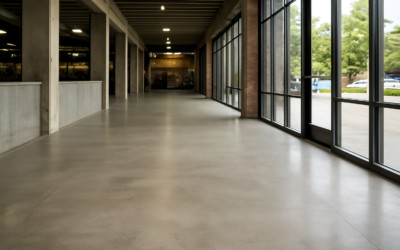
A dropped beaker of sulfuric acid or a spilled pail of sodium hydroxide can destroy an uncoated concrete slab in minutes. Once the surface pits, bacteria colonize, the finish fails, and the floor becomes a liability in any audit. Chemical resistant flooring is a specialized category of industrial and laboratory floor systems engineered to survive daily exposure to acids, caustics, solvents, and reactive chemicals that wreck standard concrete and epoxy. Pick the wrong system for your chemical profile and you will be tearing out the floor within two years. Pick the right one and it lasts 15 to 25 years.
What “Chemical Resistant” Actually Means
The term is not a single specification. It is a matrix of resistance ratings against specific chemical families at specific concentrations, temperatures, and exposure times. A floor that shrugs off dilute hydrochloric acid at 10 percent may soften under 40 percent. A coating that handles methanol may blister in dichloromethane. Responsible specification starts with a complete list of every chemical the floor will see, including concentration ranges and whether exposure is splash, immersion, or continuous.
Manufacturers publish chemical resistance charts rating each product against 50 to 150 common chemicals with ratings like A (recommended), B (acceptable for occasional exposure), C (limited), and NR (not recommended). Consult the actual chart from Stonhard, Sika, BASF, or Dur-A-Flex before specifying, not just marketing claims.
The Four Main Systems
- Bisphenol-A epoxy: Standard industrial epoxy. Good alkali resistance, moderate acid resistance, limited solvent resistance.
- Novolac epoxy: High-crosslink epoxy for strong acid environments up to 98 percent sulfuric acid.
- Vinyl ester resin: Excellent against both oxidizing acids and strong caustics, with good solvent resistance.
- Urethane cement: Best thermal shock resistance, good chemical resistance across a broad range, USDA-approved for food and pharma.
Each system serves a different use case. Standard epoxy handles light-duty manufacturing and packaging. Novolac covers battery rooms, pickling lines, and acid storage. Vinyl ester is the pick for corrosive fume rooms and secondary containment. Urethane cement dominates pharmaceutical, dairy, and food processing.
Standard Bisphenol-A Epoxy
Bisphenol-A epoxy is the workhorse of industrial flooring. Products like Sikafloor 263, Stonhard Stonclad GS, and Sherwin-Williams ArmorSeal cost $4 to $9 per sq ft installed depending on thickness and broadcast aggregate. 1/16 to 1/4 inch thickness is typical.
Chemical resistance is acceptable for dilute acids (below 30 percent), most caustics up to pH 12, and petroleum-based oils. It fails against concentrated acids, aromatic solvents, and sustained exposure to chlorinated solvents like trichloroethylene. Use this system for warehouses, light manufacturing, and spill-containment where chemical exposure is occasional rather than continuous.
Novolac Epoxy for Acid Service
Novolac epoxy is Bisphenol-F based rather than Bisphenol-A, with tighter crosslinking that blocks acid penetration. Stonhard Stonchem, Sika Sikagard 62 Novolac, and Dur-A-Flex Dur-A-Gard Novolac are common specifications. Cost runs $12 to $22 per sq ft installed.
Resistance to sulfuric acid, hydrochloric acid, nitric acid, and phosphoric acid is excellent up to 70 to 90 percent concentration depending on product. Novolac also handles most caustics well. Specify this system for battery rooms, pickling lines, semiconductor fabs, and any zone with acid storage or handling.
Vinyl Ester for Extreme Corrosion
Vinyl ester resin flooring is the top tier for chemical resistance. It handles both strong acids and strong caustics, including hypochlorite, chlorine dioxide, and aggressive solvents. Products include Dur-A-Flex Dur-A-Chem, Stonhard Stonchem 8100, and Ashland Derakane coatings.
Installed cost runs $18 to $35 per sq ft. Installation is highly technical and requires experienced applicators. Cure time is 48 to 72 hours before return to service. Use this for pulp and paper mill chemical rooms, chlor-alkali plants, and any environment where both oxidizing and reducing chemicals are present.
Urethane Cement for Food, Pharma, and Thermal Shock
Urethane cement is chemical resistant flooring’s most versatile system. Products like Sika PurCem, BASF Ucrete, and Stonhard Stonclad UT deliver excellent resistance across a broad chemical range while handling thermal shock from 250°F water washdowns and freezer room cycling. Installed cost runs $14 to $22 per sq ft.
USDA and FDA approvals make urethane cement the default for dairy processing, meat and poultry plants, and pharmaceutical manufacturing. The system pours at 3/16 to 1/2 inch thickness, cures in 24 hours, and delivers a textured non-slip surface with aggregate broadcast into the base coat.
Specifying the Right System
Step 1: Chemical Inventory
List every chemical, concentration, and exposure type. Include cleaning chemicals, not just process chemicals. Sanitizers and floor strippers often attack coatings more aggressively than process chemicals.
Step 2: Exposure Classification
Determine splash (occasional drips), intermittent (daily small volumes), or continuous (pooled or immersed). Continuous exposure demands a far more robust system than splash.
Step 3: Temperature Range
Chemical attack accelerates with temperature. A floor rated for 75°F service may fail at 160°F. Specify the peak service temperature and peak cleanup water temperature.
Step 4: Manufacturer Chart Review
Cross-reference your chemical list against manufacturer resistance charts. Any “NR” rating for a chemical on your list is a hard disqualification for that product.
Honest Drawbacks by System
Bisphenol-A epoxy yellows under UV and becomes brittle after 8 to 12 years. It cannot handle concentrated acids or aromatic solvents. Novolac is expensive, off-gasses heavily during cure, and demands skilled applicators. Vinyl ester is even more expensive, has a short working time (15 to 30 minutes), and requires strict temperature control during install.
Urethane cement has a 15 to 20 minute working window that makes large pours difficult. All of these systems require aggressive surface prep: shot-blast or diamond-grind the existing concrete to CSP 4 to 6 profile, mechanically remove any existing coatings, and test for moisture vapor transmission below 5 lbs/1000 sq ft per 24 hours.
Installation and Cost Summary
A typical 5,000 sq ft chemical process floor ranges from $25,000 for basic bisphenol-A epoxy up to $150,000 for full vinyl ester with coved base and thermal shock zones. Lifespan under proper service conditions runs 10 to 25 years depending on system and chemical profile.
Do not DIY chemical resistant flooring. The material costs alone are significant and improper install voids every warranty. Hire a certified applicator who has done the system before and carries the manufacturer’s written approval. The installed system is only as good as the installation.
Prefer to explore on your own?
See how new flooring looks in your actual room in seconds — free, no signup.
Try the free Floor Studio →