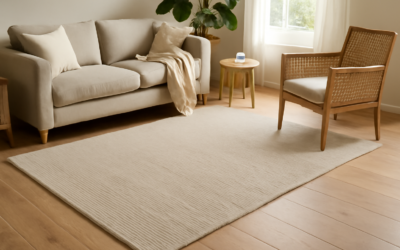
A chenille rug is prized for one quality above all others: softness. The name comes from the French word for caterpillar, a nod to the fuzzy, velvety yarn that gives these rugs their plush, inviting texture. Run your hand across one and you immediately understand the appeal, which is why chenille has become a favorite for bedrooms, living rooms, and any space meant to feel cozy.
Softness is only part of the story, though. Chenille has real strengths and a few honest limitations, and matching it to the right room is the key to being happy with it long term.
What Chenille Actually Is
Chenille is not a fiber but a type of yarn. It is made by binding short lengths of fiber, the pile, between two core yarns that are then twisted together, leaving the cut ends to stand out like the bristles of a caterpillar. That construction creates the characteristic fuzzy, three-dimensional surface that catches light and feels luxurious underfoot.
The yarn can be spun from several materials, and the fiber choice dramatically affects how the rug performs, so it pays to know what you are buying.
Common Chenille Fibers
The same plush look comes in very different materials.
- Cotton chenille: Soft, breathable, and easy to wash, often machine-washable in smaller sizes. Great for casual and kids’ spaces, though it crushes and stains more easily.
- Polyester chenille: Affordable, stain-resistant, and colorfast, with a lush sheen. The most common and a strong value for living areas.
- Rayon or viscose chenille: Silky and lustrous with a luxurious feel, but delicate and prone to water spotting, best for low-traffic rooms.
- Blends: Combinations balance softness, durability, and cost, common in mid-range rugs.
Why Homeowners Love Them
Comfort is the headline. Few rugs feel as good barefoot, which makes chenille a natural fit beside a bed or under a coffee table where people relax. The plush pile also adds visual warmth and a sense of richness to a room.
Chenille’s slight sheen gives colors depth and a subtle shimmer that flat-woven rugs lack. Many are also reasonably priced, especially polyester versions, so you can get a genuinely soft, good-looking rug without spending like you would on wool or silk.
The Limitations to Know
That lush pile is also chenille’s weak point. The cut fiber ends can crush and flatten under heavy traffic and furniture, losing some of their loft over time. Chenille sheds a little when new, and the pile can snag, so it is not the best choice for homes with pets that scratch.
Moisture is another concern, particularly for rayon and viscose, which can spot, stiffen, or discolor when wet. Chenille also tends to hold onto pet hair and lint, requiring more frequent vacuuming than a flat weave. None of this is a dealbreaker, but it steers chenille toward lower-traffic, drier rooms.
Best Places to Use a Chenille Rug
Bedrooms are the ideal home, where the rug meets bare feet in the morning and traffic stays light. Living rooms and dens work well too, especially under a seating arrangement where furniture protects the pile from constant footsteps.
Keep chenille away from entryways, kitchens, bathrooms, and dining areas under the table, where moisture, spills, and heavy traffic will wear it quickly. A nursery or reading nook, by contrast, is exactly where its softness pays off.
Cleaning and Care
Regular maintenance keeps a chenille rug looking its best.
- Vacuum gently and often using suction without a stiff beater bar, which can pull and fray the pile.
- Blot spills immediately with a clean cloth, pressing rather than rubbing to avoid matting the fibers.
- Spot-clean with a mild detergent solution, testing a hidden corner first, and avoid soaking the backing.
- Use a rug pad underneath to reduce crushing, slipping, and wear.
- Rotate the rug periodically so foot traffic and sunlight wear it evenly.
Always check the care label, since cotton versions may be machine-washable while rayon and viscose usually require professional cleaning.
Styling a Chenille Rug in Your Space
Chenille’s subtle sheen and plush depth make it a natural anchor for a cozy, layered room. In a living room, choose a rug large enough to sit under the front legs of your sofa and chairs, which visually ties the seating together and keeps the soft surface where feet actually land. A solid or tonal chenille adds warmth without competing with patterned pillows and throws.
In a bedroom, a chenille rug placed under the lower two-thirds of the bed lets you step onto softness each morning, or use a pair of smaller runners on either side. Because chenille reflects light, lighter shades brighten a room while deeper tones add intimacy, so pick the color to match the mood you want the space to hold.
Choosing the Right Pile Height
Chenille rugs come in everything from low, dense weaves to lush, high-pile constructions, and the height should follow the room. A lower, denser pile holds up better in spaces that see some traffic and is easier to vacuum and keep flat, making it the practical pick for a busy living area.
High-pile chenille feels wonderfully indulgent underfoot and suits bedrooms and reading nooks where comfort outranks durability. Keep in mind that taller pile crushes more readily under furniture and shows footprints, so reserve the plushest options for spots that stay relatively undisturbed. A rug pad beneath any chenille reduces crushing and adds a layer of cushion that extends the rug’s good looks.
What to Expect to Spend
Chenille rugs span a broad range. Small polyester accent rugs start around $30 to $80, mid-size area rugs typically run $100 to $400, and large or premium blends can exceed $600. Cotton and synthetic blends offer the best value, while viscose-rich rugs cost more and demand gentler care.
Rotating the rug every few months and keeping it out of direct, prolonged sunlight also helps it wear evenly and hold its color. Choose the fiber for your room, protect the pile with a pad, and vacuum regularly, and a chenille rug rewards you with a soft, warm, and welcoming floor that makes a space feel finished.