A circle jute rug brings warmth, texture, and a relaxed, organic look to a room without competing with your furniture or wall color. Round natural-fiber rugs have become one of the most requested items in flooring showrooms over the past few years, partly because they solve an awkward layout problem that rectangular rugs can’t, and partly because jute itself photographs beautifully and wears in a way that feels lived-in rather than shabby. Before you buy one, though, it helps to understand how jute behaves differently from wool, cotton, or synthetic fibers, because that difference affects everything from where you place the rug to how you clean it.
What Jute Is and Why It Comes in Circles
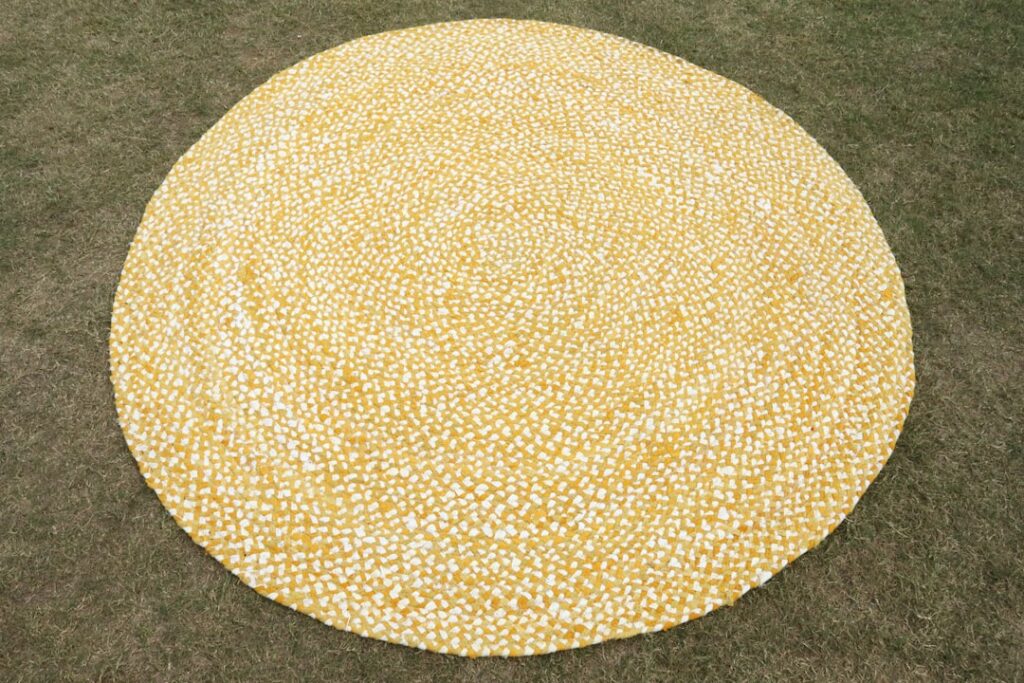
Jute is a plant-based bast fiber harvested mostly from India and Bangladesh, spun into yarn and woven into rugs the same way it’s woven into burlap sacks, just with tighter, more decorative patterns. It has a golden-tan, slightly variegated color that ranges from pale wheat to deeper caramel depending on the batch, and no two rugs look perfectly identical because it’s a natural crop, not a synthetic extrusion. Round jute rugs are typically constructed on a circular loom or hand-braided in a spiral, which is why the weave pattern often radiates outward from the center rather than running in straight rows like a rectangular rug.
Manufacturers favor jute for round rugs because the fiber holds its shape well at the curved edge, unlike some flatweave cottons that can pucker when cut into a circle. You’ll usually find a sturdy cotton or latex binding stitched around the perimeter to keep the edge from fraying, which is worth inspecting closely before you buy, since a poorly finished edge is the first thing to unravel with foot traffic.
Common Sizes and How to Choose One
Round jute rugs are sold in a narrower size range than rectangular rugs, but there’s still enough variety to fit most spaces. The most common diameters are:
- 4 feet round — small entryways, reading nooks, or under a single accent chair
- 5 feet round — a compact dining nook or a cozy corner seating area
- 6 feet round — a popular size for round dining tables seating four
- 8 feet round — larger living rooms, round dining tables seating six, or open foyers
- 9 to 10 feet round — statement pieces for great rooms or large circular layouts
A rule of thumb for a round dining table: measure the table diameter and add at least 24 inches on each side so chairs stay on the rug even when pulled out. A 42-inch table generally wants a 6-foot rug at minimum, while a 54-inch table is more comfortable on an 8-foot rug. For entryways, an 8-inch to 12-inch border of exposed floor around the rug edge usually looks intentional rather than undersized.
Where Round Rugs Actually Work
Round shapes soften rooms full of hard angles, which is exactly why designers reach for a circle jute rug in spaces where every other element is rectilinear. Entryways with square tile or a straight run of hardwood benefit from the visual break a circle provides near the front door. Under a round pedestal dining table, a circular rug echoes the table’s shape and avoids the mismatched look of a rectangular rug poking out at odd angles. Reading nooks, bay window seating areas, and the foot of a bed are also natural spots, since a small round rug can anchor a single chair or ottoman without demanding the square footage a large area rug would need.
They tend to work less well in long, narrow rooms or hallways, where a runner will always serve the space better. If you’re layering, a circle jute rug over a larger square or rectangular rug is a popular technique that adds depth and texture without needing to buy a patterned rug at all.
Braided, Boucle, and Flatweave Textures
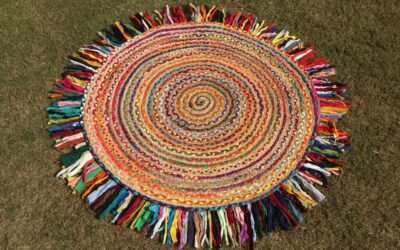
Not all jute rugs feel or look the same, and the construction method changes both softness and price. Braided jute rugs are made from thick ropes of twisted fiber sewn together in a spiral, giving a chunky, tactile surface with visible dimension — this is the look most people picture when they think of a classic natural rug. Boucle weave, sometimes labeled as a looped or bouclé jute, uses smaller uncut loops that create a slightly softer, more uniform surface underfoot, closer in feel to a low-pile wool rug. Flatweave jute is the thinnest and most budget-friendly option, woven tight and low to the floor, which makes it easier to vacuum but also the roughest against bare feet.
If comfort is a priority, look for rugs blended with a bit of cotton or wool in the weave, since 100 percent jute can feel coarse and even scratchy compared to sisal or synthetic alternatives. Many manufacturers now offer a jute-chenille or jute-blend hybrid specifically to address that stiffness while keeping the natural look.
Softness, Shedding, and What to Expect
Jute is softer than sisal but still firmer than wool or a synthetic shag, so set expectations accordingly if you’re picturing something plush enough for a nursery floor. Shedding is normal, especially in the first few months — small fibers will work loose during vacuuming or foot traffic, and that’s not a manufacturing defect, it’s the nature of a natural bast fiber settling in. Shedding typically slows down considerably after 60 to 90 days of regular use and vacuuming.
Jute also isn’t the most resilient fiber under heavy furniture. Chair and table legs can leave permanent indentations, and pets that scratch or chew will damage it faster than they would a tighter synthetic weave. For households with large dogs or toddlers who spill constantly, jute is a better fit for lower-traffic decorative zones than for a primary family room floor.
Cleaning and the Moisture Problem
The single most important thing to know about jute is that it hates water. Unlike wool or synthetic fibers, jute fibers weaken and can even rot or develop mildew odor when they get thoroughly wet, and the natural dyes or fiber color can yellow or brown from water exposure. That rules out steam cleaning, wet shampooing, or soaking the rug to remove a stain — all approaches that work fine on other rug types will damage a jute rug.
Instead, stick to these methods:
- Vacuum weekly using a suction-only setting or a low beater-bar height, since aggressive brush rollers pull at the fibers
- Blot spills immediately with a dry or barely damp cloth — never rub, and never pour water on the spot
- Use a mild dish soap diluted in water for small stains, applying with a cloth and blotting dry quickly, then aiming a fan at the spot to speed drying
- Shake out small rugs outdoors every few weeks to release trapped dust and debris
- Rotate the rug every 3 to 6 months so wear and sun fading distribute evenly
For a deep clean, many owners take jute rugs to a professional cleaner who specializes in natural fiber and dry-cleaning methods rather than risk a home wet-clean. Keep jute rugs away from bathrooms, mudrooms, or any spot near an exterior door where wet shoes or umbrellas are common, since that’s exactly the environment jute struggles with most.
Rug Pads and Placement Tips
A rug pad isn’t optional with a round jute rug — it’s essential. Jute backing can be somewhat abrasive against hardwood or vinyl plank flooring, and without a pad the rug can also slide, bunch, or wrinkle at the edges, which is a bigger problem with round shapes since there’s no straight edge to tuck back into place. Choose a felt or felt-rubber combination pad cut about an inch smaller in diameter than the rug itself so it stays hidden. A pad also raises the rug slightly off the floor, improving airflow underneath, which matters given how much jute dislikes trapped moisture.
On top of carpet, a thinner grip pad works to prevent bunching without adding excessive height that makes doorways or furniture legs awkward. If you’re placing the rug in a sunroom or a spot with strong direct sunlight for several hours a day, expect gradual fading over a year or two, since jute’s natural dyes aren’t as UV-stable as synthetic fiber dyes.
What to Expect to Pay
Pricing for a circle jute rug varies by size, weave, and blend. A basic 4-foot round flatweave jute rug typically runs $40 to $90, while a 6-foot round braided jute rug lands in the $90 to $180 range. Move up to an 8-foot round rug and prices climb to roughly $150 to $350, with premium boucle or wool-jute blend versions reaching $300 to $500 or more at that size. Larger 9- to 10-foot round rugs from higher-end retailers can exceed $500, especially when the design includes contrast borders or hand-finished detailing.
Given the price spread, it’s worth reading the weave description carefully rather than shopping on diameter and price alone — a tightly braided rug at a mid-range price will generally outlast a loosely flatwoven rug sold for less, even if they’re the same size. Factor in a rug pad, typically $20 to $60 depending on diameter, when budgeting for the full purchase.