Few upgrades pay off as quickly as a set of well-planned closet organizer drawers. They turn a chaotic pile of folded shirts and loose socks into a tidy, drawer-by-drawer system that makes getting dressed faster and keeps clothing in better shape. Whether you are outfitting a reach-in closet in a starter home or building out a full walk-in, drawers are the workhorse of any storage plan. This guide walks through the drawer styles, materials, sizing, costs, and installation choices that matter most for U.S. homeowners.
- Why Drawers Belong in Your Closet
- Drawer Styles and Systems
- Materials That Hold Up
- Sizing Your Drawers
- What Closet Organizer Drawers Cost
- DIY Installation vs. Hiring a Pro
- Common Mistakes to Avoid
- Organizing the Drawers Once They Are In
- Maintenance and Long-Term Care
- Matching Drawers to Your Closet Type
Why Drawers Belong in Your Closet
Hanging rods handle shirts, dresses, and pants beautifully, but they do nothing for the items you fold: T-shirts, sweaters, underwear, socks, workout clothes, and pajamas. Without drawers, those items end up in wire baskets, on shelves where they topple, or crammed into a separate dresser that eats up bedroom floor space. Building drawers directly into the closet frees the bedroom and consolidates everything in one place.
Drawers also protect delicate fabrics. Wool sweaters stretch out on hangers, and folding them flat in a drawer preserves the shape. A shallow drawer lined with felt keeps jewelry and belts from scratching, while a deep drawer swallows bulky sweatshirts. The flexibility is the point: a good closet mixes drawer depths to match what you actually own.
Drawer Styles and Systems
There are three broad approaches to adding drawers to a closet, and each fits a different budget and skill level.
- Wire drawer systems such as ClosetMaid or Rubbermaid slide into a track and are the most affordable option, often $15 to $40 per basket. They ventilate well but do not hide contents and can snag lightweight fabrics.
- Melamine drawer towers are the mid-range standard. These are the flat-pack cabinet boxes you see in most closet systems, finished in white or wood-look melamine over particleboard. A three-drawer tower runs roughly $120 to $300.
- Custom cabinetry drawers built from plywood with dovetail joints and soft-close slides are the premium tier. Expect $400 to $1,000 or more per drawer bank, but the durability and feel are on a different level.
Materials That Hold Up
The drawer box and the slide hardware determine how long the unit lasts. Particleboard with melamine laminate is the industry baseline; it looks clean and resists moisture better than raw MDF, but it can sag under heavy loads and the screws can strip if you overtighten. Plywood boxes cost more but hold fasteners far better and resist warping in humid climates.
Drawer slides are where cheap systems reveal themselves. Basic epoxy-coated side slides are rated for around 75 pounds and feel gritty over time. Ball-bearing full-extension slides, ideally soft-close, let the drawer pull all the way out so you can see the back, and they carry 100 pounds or more. If you are investing in a system you will use every day for a decade, pay for the better slides.
Sizing Your Drawers
Getting the dimensions right is the difference between a system you love and one you fight. A few field-tested guidelines help:
- Width: Most closet drawer banks are 24 to 30 inches wide. Wider than 36 inches and the drawer bottom can bow, so split very wide runs into two banks.
- Depth (front to back): 14 to 16 inches is standard for folded clothing. A 14-inch drawer holds folded shirts perfectly; go 16 inches only if you fold bulky items.
- Height: Vary it. Use 4 to 6 inch drawers for underwear, socks, and accessories; 8 to 10 inch drawers for shirts and jeans; and one 12-inch drawer for sweaters or bulky knits.
Leave at least 30 to 36 inches of clear floor space in front of the bank so drawers can open fully without hitting an opposite wall or shelf.
What Closet Organizer Drawers Cost
Budgeting depends heavily on whether you buy off the shelf or hire a company. A wire-basket setup for a reach-in closet might total $60 to $150 for a few baskets and tracks. A ready-to-assemble melamine tower from a home center lands between $150 and $400. A professionally designed and installed system from a closet company, with several drawer banks, typically runs $1,500 to $5,000 for a walk-in, with drawers making up a meaningful share of that.
Remember to factor in the extras: soft-close upgrades add $10 to $25 per drawer, felt or velvet liners run $8 to $20 each, and dividers for socks and accessories add another $10 to $30 per drawer. These small items dramatically improve daily usability, so do not skip them entirely to save a few dollars.
DIY Installation vs. Hiring a Pro
A confident DIYer can install a melamine drawer tower in an afternoon. The work involves leveling the base cabinet, anchoring it to wall studs with 2.5-inch screws through the back rail, and adjusting the slides so drawer faces line up with even reveals. A stud finder, a 4-foot level, a drill/driver, and a bit of patience are the main requirements.
Where people run into trouble is out-of-square walls and uneven floors, which are common in older homes. If your closet floor slopes or the corners are far from 90 degrees, the drawers will bind or the faces will look crooked no matter how carefully you assemble the box. That is when hiring a pro who can scribe pieces to the wall and shim precisely earns its cost.
Common Mistakes to Avoid
The most frequent error is making drawers too deep. A 24-inch-deep drawer looks generous but becomes a black hole where clothing gets lost at the back and the loaded drawer grows too heavy to pull smoothly. Stick to 14 to 16 inches. The second mistake is skipping the wall anchor; a tall drawer tower can tip forward when several drawers are open, which is a genuine safety hazard around children.
Homeowners also tend to buy all identical drawer heights, then discover they have nowhere to put a folded sweater or a stack of jeans. Plan the drawer heights around a quick inventory of what you own before you order. Finally, do not forget lighting; a battery or hardwired LED strip above a drawer bank makes the contents visible in an otherwise dim closet.
Organizing the Drawers Once They Are In
Installation is only half the job. File-fold clothing vertically so you can see every item at a glance rather than stacking flat, which buries the bottom pieces. Add adjustable dividers to keep categories separated, and dedicate a shallow top drawer to small accessories with a velvet insert. Rotate seasonal items so the drawers you reach daily hold current-season clothing, and keep off-season pieces in lower or less accessible drawers.
Maintenance and Long-Term Care
Drawers see heavy daily use, so a little upkeep keeps them running smoothly for years. Every six months, pull each drawer fully out and vacuum the slide channels, since dust and lint are the main causes of gritty, sticking drawers. A quick wipe of the ball-bearing slides with a dry cloth, followed by a small amount of white lithium grease or a dry silicone lubricant, restores an effortless glide; avoid oily lubricants that attract dust and gum up over time. Check the mounting screws once a year and snug any that have worked loose, because a drawer bank that shifts slightly will throw the drawer faces out of alignment.
Melamine surfaces clean up with a damp cloth and mild soap, but never let water sit on exposed particleboard edges, which can swell. If a melamine edge chips, iron-on edge banding matched to the finish makes an invisible repair for a couple of dollars. For solid-wood drawers, an occasional wipe with a wood-safe cleaner keeps the finish looking fresh. Address any wobble or sag early, because a sagging drawer bottom often just needs a support cleat added underneath rather than a full replacement.
Matching Drawers to Your Closet Type
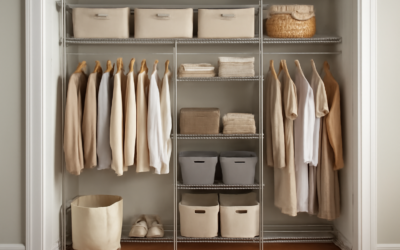
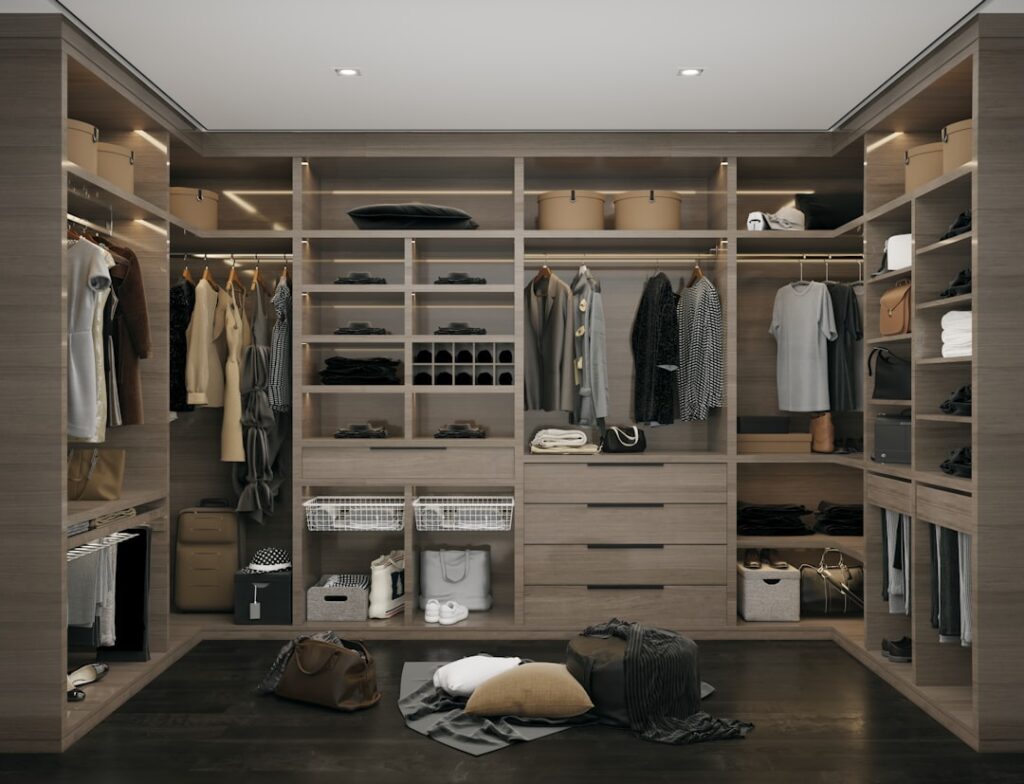
Where you place drawers depends on the closet layout. In a reach-in closet, a single drawer tower on one side under a section of hanging rod maximizes limited space without blocking access. In a walk-in, a drawer bank often works beautifully as a central island or under a window, doubling as a folding surface on top. For a wardrobe or armoire-style closet, drawers occupy the lower third while hanging space fills the upper two-thirds. Whatever the layout, keep the most-used drawers between knee and chest height, the easiest zone to reach without bending or stretching, and reserve the very bottom drawers for off-season or rarely accessed items.
A thoughtful set of closet organizer drawers rewards you every single morning. Match the drawer style to your budget, choose sturdy slides, vary the heights to fit your wardrobe, and anchor everything securely. Do that and you will have a closet that stays tidy for years with almost no effort.