The average American household owns about 300 pieces of clothing and wears 20% of it regularly, according to a 2023 ClosetMaid survey. That leaves roughly 240 items squeezing closet space, jamming drawers, and ending up wrinkled on the floor. The best clothing storage ideas start by cutting that number, then organizing what remains so you actually see and use it. Systems that look good on Pinterest fail within weeks if they do not match how you dress each morning.
The Closet Audit First
Before buying a single bin or hanger, pull everything out of the closet and dresser and sort into three piles: keep, donate, and maybe. Handle every piece. If you have not worn it in 12 months and it is not seasonal or formal, it goes. The maybe pile gets boxed and labeled with a date — if the box is still sealed 6 months later, donate the whole thing unopened.
Most households drop 30 to 50% of their clothing in a first serious audit. The remaining wardrobe fits properly into existing storage with room to spare.
Matching Hangers Transform Any Closet
Replacing mismatched plastic, wire, and wood hangers with a single uniform style is the fastest visual upgrade. Velvet flocked hangers in slim profile ($25 for a pack of 50) hold 30 to 40% more clothes in the same rod length because they stack tighter than bulky wood or plastic.
- Velvet slim: Best for shirts, dresses, thin fabrics
- Wood suit: For jackets, blazers, coats — preserves shoulder shape
- Clip hangers: Skirts, pants with clips at the waistband
- Multi-tier pant hangers: 5 pairs of pants in one hanger slot
Keep one style for shirts and dresses, a second for pants, and wood hangers for anything tailored. Uniformity alone makes a closet feel organized.
Double-Hang Low, Single-Hang Tall
Most builder-grade closets have one rod at 66 inches off the floor and a single shelf above. That layout wastes the bottom 30 inches entirely. Install a second rod at 40 inches off the floor for shirts, skirts, and folded pants, giving you twice the hanging capacity without adding closet space.
Reserve the full-length side for dresses, long coats, and jumpsuits. A section 60 to 72 inches tall handles all but the longest formal wear.
Drawer Organization
Inside every drawer, use dividers or fabric boxes to keep folded clothes vertical. KonMari-style file folding stands shirts on their edges instead of stacking flat, so you see every item at a glance. A $20 set of bamboo drawer dividers creates 6 to 10 compartments in a standard dresser drawer.
Rolling t-shirts saves space over folding flat and prevents crease lines across the chest. Underwear and socks fit four times as many pairs per drawer in small cube dividers versus loose piles.
Shoe Storage
Shoes consume more floor space than anything else in a closet. Three solid approaches work depending on space:
- Clear stackable boxes: Visible, protects shoes, stacks high. $1 to $3 per box
- Over-door shoe pocket: 24 pocket pairs on a closet door. $15 to $30
- Tilted shelf rack: Angled wooden shelves hold shoes toe-in for visibility
- Rolling shoe shelf: Pulls out from under hanging clothes
Off-season shoes (winter boots in July, sandals in January) belong in labeled bins on top shelves or under the bed, not competing for prime closet real estate.
Seasonal Rotation
Cycling clothing twice a year cuts active storage needs in half. Box up off-season items in labeled plastic bins and store under the bed, on high closet shelves, or in the garage. Space bags (compression storage from Ziploc or Vacwel) shrink down bulky sweaters and coats to 1/4 of their volume.
Label every bin with contents and season. “Winter sweaters – 2024” beats opening 8 identical unlabeled bins to find the cashmere cardigan you remembered in November.
Small Bedrooms Without a Closet
If the bedroom has no closet, freestanding options fill the gap. An IKEA PAX system ($400 to $1,200) builds a modular wardrobe from 20 to 40 inches wide. Cheaper alternatives include a rolling garment rack ($60) plus a 4-drawer dresser, or a clothing armoire ($300 to $600).
Corner closets from brands like Closetmaid or Rubbermaid use awkward bedroom corners without eating full-wall space. Budget around $150 to $300 for a corner organizer with rod and shelves.
Walk-In Closet Layouts
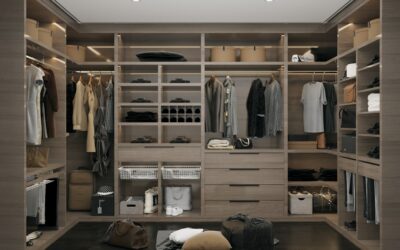
A 6 ft by 8 ft walk-in can be outfitted as a boutique-style dressing room. U-shape layouts use three walls with a center dressing area. L-shape layouts use two walls and leave the third for a dresser or mirror. Island closets add a center drawer base for jewelry and accessories.
IKEA BOAXEL or Elfa systems install for $800 to $2,000 in a typical walk-in. Custom built-ins from California Closets or local cabinetmakers run $5,000 to $25,000+ depending on material and hardware.
Jewelry and Accessories
Jewelry deserves its own storage system so pieces do not tangle, scratch, or disappear. A drawer insert with slots for rings, earrings, and necklaces ($25 to $60) protects and displays simultaneously. Wall-mounted jewelry organizers with hooks and shelves work in small spaces.
Belts get rolled and placed in a drawer divider, or hung on a single belt hook inside the closet. Ties roll into a drawer or hang from a tie rack. Scarves fold flat in a drawer or hang from S-hooks on a rod.
Bags and Luggage
Handbags deform when crushed together on a shelf. Stand each one upright with a cardboard insert or acrylic divider, or hang them from sturdy hooks installed on the back of the closet door. Nesting dust bags store off-season bags protected and stackable.
Suitcases go on the very top shelf or under the bed — never at floor level where they block access to daily-use items. Use the suitcases themselves as secondary storage for off-season clothing or linens while not traveling.