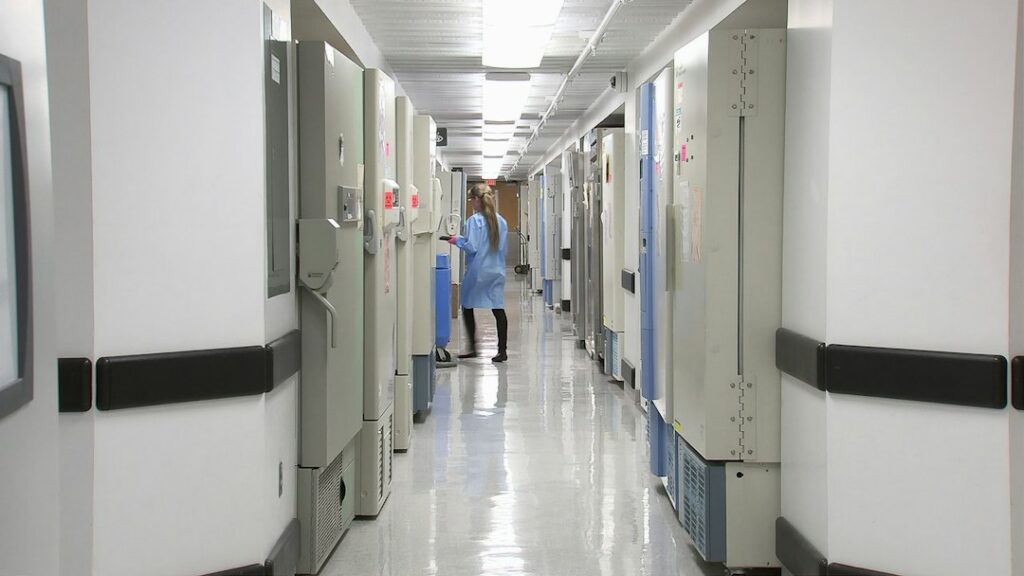
A hospital floor takes more abuse in a single year than a residential floor takes in twenty. Crash carts, IV poles, gurneys, and 24/7 chemical disinfection chew through products that look bulletproof in a showroom. Commercial hospital flooring is its own engineered category — sheet vinyl, sheet rubber, resinous epoxy, and homogeneous PVC products designed around infection control, slip resistance, sound dampening, and chemical attack. Picking the wrong product costs facilities six figures in early replacement.
- The Five Performance Standards That Drive Specs
- The Four Material Families That Actually Win Bids
- Pros That Translate to Real Outcomes
- The Honest Cons Project Managers Underestimate
- Zone-by-Zone Recommendations
- Maintenance Costs and Realistic Lifespans
- Specifying Without Getting Burned
- Antimicrobial and Surface Treatments
- Commercial Hospital Flooring Lifecycle Costs
- Frequently Asked Questions
The Five Performance Standards That Drive Specs
Hospital architects work from a core set of test data. Any floor product short on these numbers gets rejected at submittal review:
- Static coefficient of friction (SCOF) 0.60+ wet, per ASTM D2047
- Class A flame spread per ASTM E84 (less than 25 flame spread index)
- NFPA 253 critical radiant flux 0.45 watts/cm² minimum for corridors
- IIC and STC acoustic ratings 50+ for patient rooms
- Total VOC emissions below CDPH Section 01350 thresholds
Add infection control overlays — Joint Commission and CDC guidance on heat-welded seams, integral cove base, and 6-inch wall transitions — and you’ve narrowed the field to a handful of product families.
The Four Material Families That Actually Win Bids
Most US hospitals built or renovated in the last decade use one of four floor types. Each fits a different zone of the building.
Sheet vinyl with heat-welded seams (Armstrong Medintech, Tarkett iQ Granit, Mannington BioSpec) dominates patient rooms and corridors. Homogeneous PVC offers through-color wear so scratches don’t show, and 6-foot-wide rolls keep seams to a minimum. Sheet rubber (Nora nora plan, Mondo Idea) wins surgical suites and trauma centers because it absorbs impact, dampens sound 18 to 22 dB better than vinyl, and tolerates aggressive cleaning. Resinous epoxy and methyl methacrylate (MMA) systems take central kitchens, sterile processing, and laboratories where chemical exposure is constant. Terrazzo holds lobbies and main entries for 50-plus-year design life.
Pros That Translate to Real Outcomes
Properly specified hospital flooring delivers measurable savings. The CDC has linked seamless heat-welded floors to a 22 to 30 percent reduction in floor-source HAI risk in surgical and ICU settings. Infection control aside, the operational wins are real:
- Walk-off matting plus continuous cove base reduces janitorial labor by 15-20 percent
- Rubber floors cut staff fatigue complaints in night-shift surveys
- Welded seams stay closed for 20+ years versus carpet tile averaging 7-year replacement
- Resinous systems resist chlorhexidine, bleach, and quaternary ammonium compounds
Life-cycle cost wins too. Sheet rubber averages $0.18 per square foot per year over 20 years; carpet tile in the same zone runs $0.42.
The Honest Cons Project Managers Underestimate
Heat-welded vinyl needs an installer certified in flash-coving and welding. A second-tier crew leaves voids in welds that retain pathogens — exactly the failure infection-control teams are trying to prevent. Plan to vet certifications before bid award, not after.
Resinous floors require humidity and temperature-controlled install windows. Pour MMA below 50°F and the catalyst freezes; epoxy above 80 percent humidity blooms cloudy. Most hospitals have to coordinate phased OR shutdowns 90 days out, which is operationally painful.
Cost is the other reality. Sheet rubber lands at $11 to $17 per square foot installed; resinous systems run $14 to $28 per square foot. Sheet vinyl is more affordable at $7 to $11 per square foot but won’t survive central plant or sterile processing zones.
Zone-by-Zone Recommendations
Different parts of a hospital need different products. Most spec writers map them this way:
- Patient rooms and corridors: sheet vinyl, heat-welded, integral cove
- Operating rooms and trauma: conductive sheet rubber or static-control vinyl
- ICU/CCU: sheet vinyl with welded seams and antimicrobial topcoat
- Lobbies and atriums: terrazzo or large-format porcelain
- Kitchens and pharmacy compounding: MMA or epoxy with quartz aggregate
- Imaging and MRI suites: non-conductive sheet vinyl, no metallic backings
Maintenance Costs and Realistic Lifespans
Sheet vinyl needs daily microfiber dust mopping plus a weekly auto-scrubber pass with neutral cleaner (Spartan Damp Mop, $24 per gallon, dilution 4 oz per gallon). Skip the strip-and-wax cycle that 1990s housekeeping departments used — modern UV-cured topcoats last 7 to 10 years without recoating.
Sheet rubber needs only neutral cleaner and water; never use solvents or aggressive alkaline strippers. Properly maintained, expect 20 to 25 years of service. Resinous floors are nearly maintenance-free but need an annual recoat in heavy chemical zones — typically $3 to $5 per square foot.
Specifying Without Getting Burned
Insist on full ASTM and NFPA test data sheets, not marketing brochures. Verify Buy American Act compliance if federal funding is involved. Require manufacturer-certified installers with at least three completed hospital projects. Pull mock-ups: a 4-by-8-foot welded seam, cove base, and sealed transition shown on-site before full install. The fee for that mock-up — usually $2,000 to $4,000 — is the cheapest insurance you will buy on a $400,000 floor package.
Antimicrobial and Surface Treatments
Many hospital flooring products advertise antimicrobial topcoats embedded with silver ion or zinc-based additives. The CDC’s position is that these treatments do not replace cleaning protocols, but they do provide a measurable reduction in bacterial colonization between cleanings. Look for EPA-registered claims with specific kill rates (E. coli, Staph aureus, MRSA) backed by third-party lab data. Ignore unsupported “antimicrobial” marketing without registration documentation.
Static-control flooring is non-negotiable in operating rooms, MRI suites, and any zone with sensitive electronics. Specify products meeting ANSI/ESD S20.20 standards with point-to-point resistance between 1×10⁶ and 1×10⁹ ohms. Conductive sheet rubber and dissipative vinyl both meet the spec; standard sheet vinyl does not.
Commercial Hospital Flooring Lifecycle Costs
Total cost of ownership matters more than first-cost on hospital projects. A commercial hospital flooring package that costs 30 percent more upfront but lasts twice as long delivers significant savings. Sheet rubber at $14 per sq ft installed with a 25-year service life beats sheet vinyl at $9 per sq ft installed with a 12-year service life on lifecycle math. Run the numbers before defaulting to the lowest bid.
Frequently Asked Questions
Why don’t hospitals use carpet in clinical areas?
Carpet is difficult to disinfect, absorbs blood and bodily fluids, and can harbor microorganisms within the fibers and backing, which conflicts with infection control requirements. It also increases rolling resistance for gurneys, wheelchairs, and carts. Hospitals generally limit carpet to offices, waiting areas, and administrative zones, and use sheet vinyl, sheet rubber, or resinous floors in patient care spaces where floors must withstand daily chemical disinfection.
What is integral cove base in hospital flooring?
Integral cove base is flooring that continues up the wall, usually about 6 inches, over a curved cove former instead of meeting the wall at a sharp corner. Eliminating the floor-to-wall joint removes a crevice where dirt, moisture, and pathogens collect and makes wet mopping and disinfection far easier. It is standard with heat-welded sheet vinyl and sheet rubber in patient rooms, operating rooms, and other clinical areas.
Can hospital flooring be replaced while the building stays open?
Yes, most hospital flooring projects are phased so patient care continues. Work zones are isolated with infection control barriers and negative air pressure under an infection control risk assessment, and low-odor, low-VOC adhesives and fast-curing products shorten downtime. Night and weekend shifts are common in corridors. Critical areas such as operating rooms and ICUs require coordinated shutdown windows planned well in advance with clinical staff.
Prefer to explore on your own?
See how new flooring looks in your actual room in seconds — free, no signup.
Try the free Floor Studio →