
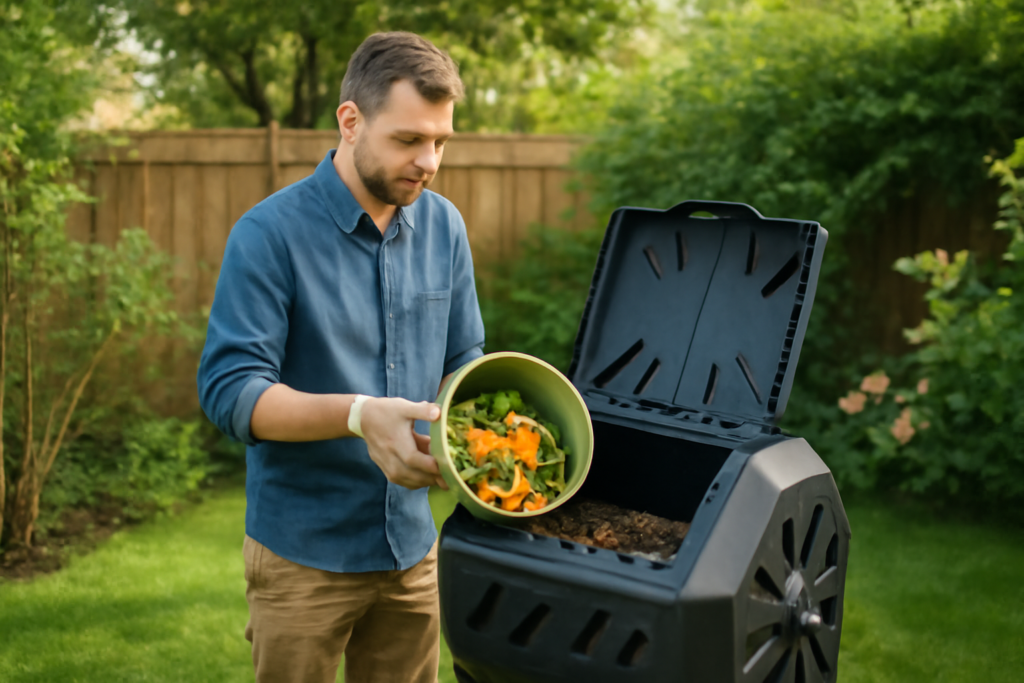
A compost maker machine promises to turn your kitchen scraps into garden gold faster and cleaner than a backyard pile. The category has exploded, but it covers two very different products that get lumped together: countertop electric “composters” and outdoor tumbler bins. Understanding what each one actually does, and what it does not, will save you from disappointment and help you pick the right tool for how you cook, garden, and live.
Two Very Different Machines
Before buying anything, it helps to know that the term covers two distinct approaches.
- Electric kitchen composters: Countertop appliances that heat, dry, and grind food waste into a small volume of dry, soil-like material in a matter of hours.
- Compost tumblers: Sealed, rotating outdoor barrels that hold scraps and yard waste while microbes break them down into true finished compost over weeks.
They serve overlapping but different goals. One is about fast, odor-free waste reduction indoors; the other is about producing genuine compost for your garden.
How Electric Kitchen Composters Work
An electric kitchen composter runs a cycle that combines heat, mixing, and grinding. Over several hours it dries food waste, kills odors and pathogens, and pulverizes the scraps into a dry, crumbly powder that can be a fraction of the original volume. The convenience is real: no smell, no fruit flies, and no trip to an outdoor bin, all in a unit that fits on a counter.
Here is the crucial caveat. Most countertop machines do not produce finished compost. What they make is dehydrated, ground-up food, sometimes called a soil amendment or pre-compost. It still needs to be mixed into soil or a compost pile and given time for microbes to actually break it down. Tilled straight into a garden bed in large amounts, the dried material can temporarily rob soil of nitrogen as it finishes decomposing. Treat the output as a head start, not a finished product.
How Compost Tumblers Work
A tumbler is closer to traditional composting, just contained and easier. You load a balanced mix of “greens” like food scraps and “browns” like dry leaves or shredded cardboard, then spin the barrel every few days to aerate the contents. Oxygen and turning speed up the microbial breakdown, and the enclosed drum keeps pests out and heat in.
Tumblers do produce real, garden-ready compost, typically in a few weeks to a couple of months depending on temperature, balance, and how often you turn it. They are slower than an electric machine but deliver the genuine article you can spread on beds with no further processing.
Pros and Cons at a Glance
Each approach has clear trade-offs.
- Electric composter pros: Extremely fast, odor-free, compact, and indoor-friendly. Great for apartments and small households.
- Electric composter cons: Uses electricity, has a limited capacity per cycle, does not make finished compost, and can be pricey.
- Tumbler pros: Produces true compost, handles yard waste, uses no power, and processes larger volumes over time.
- Tumbler cons: Slower, needs outdoor space, requires balancing greens and browns, and slows down in cold weather.
What You Can and Cannot Compost
Both machines have limits on inputs. Electric composters generally handle fruit and vegetable scraps, coffee grounds, eggshells, and small amounts of cooked food; many discourage large bones, hard pits, and excessive grease. Tumblers welcome fruit and vegetable waste, coffee grounds, eggshells, yard trimmings, and shredded paper, but you should avoid meat, dairy, and oily foods, which attract pests and slow the process. Always follow the specific guidance for your machine.
Using the Output Correctly
How you handle the finished material determines whether composting helps or hurts your garden. True compost from a tumbler is ready to use: spread an inch or two over garden beds, mix it into potting soil, or top-dress around plants. It is gentle and improves soil structure immediately.
The dried ground material from an electric composter needs more care. Because it is concentrated and not fully broken down, applying too much at once can disrupt soil chemistry and temporarily tie up nitrogen as it finishes decomposing. The safe approach is to add it in small amounts to a compost pile or worm bin to finish, or to dilute it heavily into soil and let it rest before planting. Think of it as a powerful ingredient rather than a finished amendment, and your plants will thank you.
Cost and Running Considerations
Budget plays into the decision in ways beyond the sticker price. Electric composters carry a higher upfront cost and add a modest amount to your electric bill with each cycle, and some models use replaceable carbon filters that need periodic buying. Tumblers cost much less to buy and nothing to run, though they require you to source browns like dry leaves or shredded cardboard to balance the greens. Over several years, a tumbler is the cheaper system to own, while an electric unit buys you speed and indoor convenience. Weigh the ongoing costs, not just the purchase price, against how much you value the convenience.
Which One Should You Buy?
Match the machine to your living situation and goals. If you live in an apartment, hate kitchen odors, or simply want to shrink your food-waste footprint without an outdoor setup, an electric composter is the convenient answer, just remember to age its output before using it on plants. If you have a yard, want real compost for your garden, and do not mind a slower, more hands-on process, a tumbler delivers the finished product at a lower running cost. Some gardeners use both: the electric unit for fast, indoor scrap reduction, then add that material to a tumbler or pile to finish it properly.
The Bottom Line
A compost maker machine can genuinely simplify food-waste recycling, but only if you buy the right type for the right reason. Electric countertop units excel at fast, clean volume reduction yet produce a pre-compost that needs finishing. Tumblers take longer but yield true, ready-to-use compost. Decide whether your priority is convenience or finished compost, set realistic expectations about the output, and you will get years of value from whichever machine you choose.


