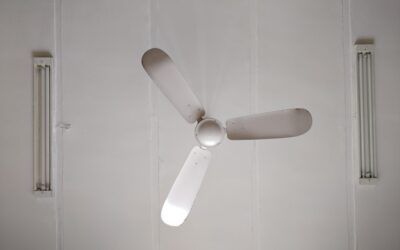
Traditional ceiling fans move air well but dominate a room’s look, and their blades gather dust and clash with minimalist decor. A concealed ceiling fan hides or retracts its blades to deliver airflow without the visual bulk, giving you a clean, modern ceiling that looks more like a stylish light fixture than a fan. This guide explains the different types of concealed fans, how they work, what they cost, and how to choose one that keeps your rooms cool and your ceiling clutter-free.
What Is a Concealed Ceiling Fan?
A concealed ceiling fan is any fan designed so the blades are hidden when the fan is off, or so slim and integrated that they barely register visually. The goal is a streamlined ceiling that suits contemporary, minimalist, and transitional interiors. There are two main approaches:
- Retractable-blade fans, whose blades fold up and tuck into the housing when off, then swing out when running.
- Enclosed or shrouded fans, which house the blades inside a drum, dome, or bladeless-style shroud so they are never exposed.
Both types let you enjoy the cooling of a fan while keeping the sculptural, uncluttered look of a modern light fixture.
Retractable-Blade Fans
Retractable-blade fans are the most literal interpretation of “concealed.” When switched off, centrifugal force releases and the blades pivot upward into the central housing, leaving what looks like a simple flush ceiling light. When you turn the fan on, the spinning motion swings the blades back out to their full span.
- Look off: A compact, disc-shaped fixture with blades hidden inside.
- Look on: A conventional fan with three or more extended blades.
- Best for: Rooms where you want the fan invisible when idle but still want full-size airflow when needed.
- Cost: $150 to $500 depending on size, finish, and features like integrated LED lights and remote control.
These fans usually include a light kit and are operated by remote or wall control, so you can extend or retract the blades with the push of a button.
Enclosed and Shrouded Fans
The second approach hides the blades permanently inside an enclosure. Options include:
- Drum-shrouded fans: A cylindrical shroud wraps around the blades, so you see a clean drum shape rather than spinning blades. These double as attractive statement fixtures.
- Bladeless-style fans: Compact fans that move air through a ring or dome without visible external blades, similar in concept to bladeless tower fans.
- Low-profile flush fans: Slim, hugger-style fans whose short blades sit tight to the ceiling and read almost like a flush light.
Shrouded fans typically cost $120 to $600 and are popular in bedrooms, offices, and small living spaces where a full-size fan would feel intrusive.
Benefits and Trade-Offs
Concealed fans deliver real advantages, but there are compromises to weigh:
Benefits:
- Clean, modern aesthetic that blends into the ceiling.
- Less visible dust buildup on hidden or shrouded blades.
- Doubles as a stylish light fixture in many models.
- Great for low ceilings, since many are low-profile.
Trade-offs:
- Lower airflow (CFM) than a large exposed-blade fan, since concealed designs often use shorter or shrouded blades.
- Higher price for the engineering and design.
- Retractable mechanisms add moving parts that could need service over time.
- Best suited to small and medium rooms rather than large great rooms.
How to Choose the Right One
Match the fan to your room and priorities:
- Room size: Check the airflow rating in CFM. For a small bedroom (up to 150 square feet), a modest CFM is fine; larger rooms need higher airflow, where a shrouded or retractable fan may fall short of a full-size fan.
- Ceiling height: Low ceilings favor flush or low-profile concealed fans. Keep at least 7 feet of clearance below the blades.
- Lighting needs: Many concealed fans include dimmable LED lights; check the lumen output if it is your main ceiling light.
- Controls: Remote or smart-home compatibility adds convenience, letting you retract blades or adjust speed without a wall switch.
- Finish: Choose a color that blends with the ceiling for the most hidden effect.
Installation Notes
Installing a concealed fan is similar to any ceiling fan and is a moderate DIY job if you are comfortable with wiring:
- Turn off power at the breaker and confirm it is off with a voltage tester.
- Use a fan-rated electrical box anchored to a joist or a rated brace bar. A standard light box cannot support a fan’s weight and motion.
- Follow the manufacturer’s wiring diagram, connecting the fan and light leads to the house wiring and ground.
- For retractable models, verify the blades deploy and retract smoothly before finalizing.
- If you are replacing a light fixture with a fan, you may need to upgrade the box; when in doubt, hire a licensed electrician (typically $100 to $300 for installation).
Best Rooms for a Concealed Fan
Concealed fans suit some spaces better than others, largely because of their airflow profile and low-profile design. They tend to work best in:
- Bedrooms: The most popular application. A hidden or shrouded fan keeps the ceiling clean and quiet, ideal for a restful room where you also want gentle air movement for sleep.
- Home offices: A discreet fan avoids the visual bulk of a traditional fan in a professional or video-call setting while keeping you comfortable.
- Small living rooms and dens: Where a full-size fan would overwhelm the space, a compact concealed model provides airflow without dominating.
- Rooms with low ceilings: Low-profile flush and hugger-style concealed fans keep blades safely above head height in spaces under 8 feet.
- Modern and minimalist interiors: Any room where clean lines and an uncluttered ceiling are the design goal.
They are a weaker fit for large great rooms, vaulted spaces, and covered patios, where you need the high airflow of a big exposed-blade fan and the concealed design’s shorter or shrouded blades simply cannot move enough air. In those areas, a traditional large-diameter fan is the better performer. Before buying, always double-check three numbers: the airflow rating in CFM to match your room size, the light output in lumens if the fan is your main ceiling light, and the fan’s diameter or drop to confirm it fits your ceiling height with proper clearance. Getting those figures right ensures your sleek, hidden-blade fan actually keeps the room comfortable rather than just looking good. When the room and the fan are well matched, a concealed ceiling fan delivers the best of both worlds: real cooling and a ceiling that stays elegantly clutter-free.
Frequently Asked Questions
Do concealed ceiling fans move enough air? They move less air than large exposed-blade fans because the blades are shorter or shrouded, but they are perfectly adequate for small and medium rooms. Check the CFM rating and match it to your room size.
How do retractable-blade fans work? When the fan starts, centrifugal force swings the folded blades out to their full span. When it stops, the blades pivot back up into the housing, leaving a clean, flush fixture that looks like a ceiling light.
Are concealed fans more expensive? Generally yes. Expect $120 to $600 versus $50 to $300 for a standard fan, reflecting the added design and, for retractable models, the folding mechanism.
Can I install one myself? If you have wiring experience and a fan-rated ceiling box, yes. Otherwise hire an electrician, especially if you need to upgrade the electrical box to support a fan.
Are concealed ceiling fans noisy? Quality models run quietly, though retractable-blade fans have moving parts that can develop a slight click over time if not maintained. Look for a low sone rating and a DC motor, which tends to be quieter and more energy-efficient than an older AC motor.
Do they provide enough light as a main fixture? Many include a dimmable LED light kit that can serve as a room’s primary light. Check the lumen output before buying; for a bedroom you generally want the fixture to deliver enough light for the room size, supplemented by lamps for task lighting if needed.
A concealed ceiling fan gives you cooling airflow without the visual weight of a traditional fan, blending into your ceiling as a sleek, modern fixture. Choose a retractable-blade model for a fully hidden look when off, or a shrouded design for a statement piece that never shows its blades. Match the airflow to your room size, and enjoy a cleaner ceiling and a more comfortable space.