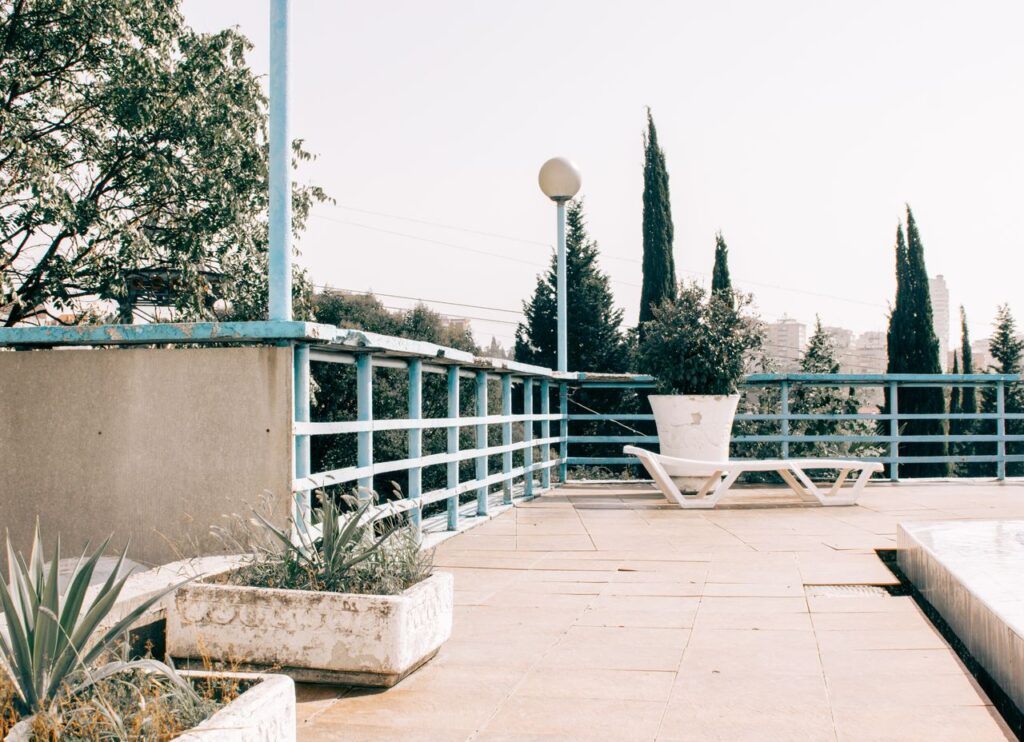
A bare concrete patio is durable but plain, and over time it stains, cracks, and fades under sun and weather. The right concrete patio coatings can transform a dull gray slab into a colorful, sealed, slip-resistant surface that shrugs off spills and lasts for years. This guide compares the main coating types, from epoxy and polyaspartic to acrylic sealers, stains, and decorative overlays, and explains their costs, durability, prep requirements, and which situations each one suits best.
Part of our Decks & Outdoor guide — explore the full guide →
- Why Coat a Patio at All
- Epoxy Coatings
- Polyaspartic and Polyurea Coatings
- Acrylic Sealers
- Concrete Stains
- Decorative Overlays and Microtoppings
- Surface Prep Makes or Breaks the Job
- Slip Resistance and Safety
- Maintenance and Recoating
- DIY vs Hiring a Pro
- Choosing the Right Coating
- Frequently Asked Questions
Why Coat a Patio at All
Coating does more than add color. A quality coating seals the porous concrete against water intrusion, which is the root cause of freeze-thaw spalling and cracking. It resists oil, grease, and food stains from grilling, adds slip resistance when finished with a broadcast texture, and dramatically improves appearance. For an outdoor living space that doubles as a dining and entertaining area, a coated patio is easier to clean and holds up far better than raw concrete. The tradeoff is upfront cost and the need for proper surface prep.
Epoxy Coatings
Epoxy is a two-part resin that cures to a hard, glossy, chemical-resistant film. It is best known for garage floors but is used on patios too. Its strengths are toughness and a rich, deep finish, often broadcast with decorative color flakes. However, standard epoxy has real drawbacks outdoors: it can yellow and chalk under UV, and it becomes slippery when wet unless a texture is added. For a covered patio out of direct sun, epoxy performs well; for a fully exposed slab, a UV-stable topcoat is essential. Expect $3 to $7 per square foot installed for a quality epoxy system.
Polyaspartic and Polyurea Coatings
Polyaspartic is the premium choice for exposed patios. It is a fast-curing polyurea-based coating that resists UV yellowing, tolerates temperature swings, and cures so quickly a full system can be walked on the same day. It flexes better than rigid epoxy, which helps it bridge minor concrete movement, and it holds color and gloss outdoors for many years. The main downside is price and the short working time, which makes it a job better suited to pros. Installed cost typically runs $5 to $12 per square foot. For a homeowner who wants a durable, good-looking exposed patio and does not mind paying, polyaspartic is often the best overall coating.
Acrylic Sealers
Acrylic concrete sealers are the budget-friendly, DIY-friendly option. They soak into or lay a thin film over the concrete, enhancing color with a matte or gloss sheen and providing basic water and UV protection. They breathe, allowing moisture vapor to escape, which reduces the risk of blistering common with thicker coatings. The catch is longevity: acrylic sealers wear in two to five years and need periodic reapplication. At roughly $0.50 to $2 per square foot in materials, they are an easy way to freshen and protect a patio without a big commitment, and they are ideal over stamped or stained concrete you want to keep looking crisp.
Concrete Stains
Stains add color rather than a protective film, so they are often paired with a sealer on top. There are two kinds:
- Acid stains react chemically with the concrete to create mottled, variegated earth tones that look natural and never peel because the color is part of the slab.
- Water-based stains come in a much broader palette, including blues and greens, and sit more like a translucent paint; they are easier and safer to apply.
Stains are perfect when you want to keep the concrete look but add warmth and depth. Because they do not build a wear layer, always topcoat a stained patio with an acrylic or polyaspartic sealer for protection. Staining runs about $2 to $6 per square foot.
Decorative Overlays and Microtoppings
If your slab is worn or you want a completely new texture, a cement-based overlay trowels a thin new layer over the old concrete. Overlays can be stamped to mimic stone, brick, or tile, or finished smooth and stained. They resurface minor surface damage and open up nearly unlimited decorative possibilities. Overlays cost more, roughly $5 to $15 per square foot depending on the design, and require skilled application, so they are usually a pro job. They are the go-to when a patio is cosmetically tired but structurally sound.
Surface Prep Makes or Breaks the Job
No coating outperforms its preparation. Every option requires a clean, sound, properly profiled surface:
- Clean thoroughly, removing oil, dirt, and old failing coatings; degrease grease spots specifically.
- Profile the concrete by acid etching or, better, mechanical grinding so the coating can bond; a smooth troweled surface will reject epoxy and polyaspartic.
- Test for moisture with a plastic-sheet test; a slab that pushes vapor upward will blister film coatings, favoring a breathable acrylic instead.
- Repair cracks and spalls with the appropriate patch before coating.
- Ensure it is fully dry and the weather is mild, since most coatings need temperatures roughly between 50°F and 90°F to cure.
Slip Resistance and Safety
An exposed patio gets wet, so slip resistance matters. Glossy epoxy and thick film coatings can be treacherous when wet unless you broadcast a fine aggregate, such as silica sand or polymer grit, into the topcoat. Decorative flakes add some texture, but a dedicated anti-slip additive is cheap insurance around pools, steps, and shaded areas that stay damp. Discuss the finish texture with your installer or plan it into a DIY job from the start.
Maintenance and Recoating
Every coating has a service interval, and knowing it up front prevents disappointment. Acrylic sealers are the shortest-lived, needing reapplication every two to five years, but they are also the easiest to refresh, often just a clean and a new coat with no grinding. Epoxy and polyaspartic systems last far longer, five to fifteen years or more, but when they finally wear they require mechanical prep to recoat properly. Whatever you install, routine care extends its life: sweep off grit that acts like sandpaper underfoot, rinse the surface, clean spills promptly, and avoid dragging metal furniture across it. In snow country, use a plastic shovel rather than a metal blade and skip harsh de-icing salts, which can attack some coatings and the concrete beneath. A quick annual inspection catches small chips before water gets under the coating and spreads the failure.
DIY vs Hiring a Pro
Which coatings you can tackle yourself depends on the product. Acrylic sealers and water-based stains are genuinely DIY-friendly and forgiving, making them a good weekend project for a confident homeowner. Epoxy kits are doable but less forgiving, since the resin has a limited working time and demands thorough grinding for adhesion. Polyaspartic and decorative overlays are best left to professionals because their fast cure and specialized application leave little margin for error. When comparing a DIY job to a contractor quote, factor in the cost of grinding or etching equipment, the value of the product warranty a pro provides, and the real risk that a botched coating must be ground off and redone, which erases any savings.
Choosing the Right Coating
Match the coating to your priorities and budget:
- For maximum durability on a fully exposed patio, choose polyaspartic.
- For a covered patio and a rich flaked look on a tighter budget, choose epoxy with a UV topcoat.
- For an easy DIY refresh, choose an acrylic sealer, reapplied every few years.
- To add natural color while keeping the concrete look, choose a stain plus sealer.
- To resurface a tired but sound slab, choose a decorative overlay.
The best of the concrete patio coatings is the one that fits your slab’s condition, your climate, and your appetite for maintenance. Polyaspartic leads on outdoor durability, acrylic sealers win on simplicity and price, and stains and overlays deliver the most design flexibility. Whatever you pick, invest in thorough surface prep and add slip resistance, and your patio will stay sealed, colorful, and easy to clean for years of outdoor living.
Frequently Asked Questions
Can you paint a concrete patio?
Yes. A porch and patio floor paint made for concrete is the cheapest way to add solid color, but it is a thin film that wears and peels faster than epoxy or polyaspartic, so expect touch-ups every few years in busy areas. Clean and degrease the slab, etch or grind it so the paint can bond, apply a concrete primer if the label calls for one, then roll two thin coats. Add an anti-slip additive for wet areas.
What is the best coating for a concrete pool deck?
Pool decks need slip resistance and a surface that stays reasonably cool, so glossy epoxy is a poor fit. Textured acrylic deck coatings, often applied as a spray texture and knocked down, are a common choice because they grip wet feet and come in light colors that reflect heat. A penetrating sealer with fine grit added to the topcoat also works on a sound slab. Check that any product is rated for pool chemicals.
How long should new concrete cure before you coat it?
Most film-forming coatings, including epoxy, polyaspartic, and patio paint, call for new concrete to cure about 28 days before application so excess moisture can escape. Coating too early traps moisture and leads to blistering and peeling. Some penetrating sealers and specially formulated products allow earlier application, so follow the specific label, and run a plastic-sheet moisture test before coating any slab.
What is the difference between a penetrating sealer and a film-forming coating?
A penetrating sealer, such as a silane or siloxane product, soaks into the concrete and repels water from inside the pores without changing the look or adding sheen. It breathes well and suits freeze-thaw climates. A film-forming coating, such as acrylic, epoxy, or polyaspartic, sits on top as a visible layer that adds color, gloss, and stain resistance but wears at the surface and needs recoating when it breaks down.