Drive through any subdivision in Phoenix, Las Vegas, or Orlando and the majority of roofs you see are not clay — they are concrete pretending to be clay, at roughly half the price. A concrete tile roof costs $10 to $20 per square foot installed, weighs 600 to 1,100 pounds per square, and can protect a house for 50 years or more. But that headline lifespan comes with an asterisk involving the underlayment, and the weight demands a structural check before you commit. Here is what the material actually delivers.
Part of our Roofing guide — explore the full guide →
- What Concrete Roof Tiles Are
- Concrete vs. Clay: The Comparison Everyone Asks
- The Weight Question
- What a Concrete Tile Roof Costs
- Lifespan Reality: Tiles vs. Underlayment
- Performance: Where Concrete Tile Shines
- Maintenance That Actually Matters
- Installation: What a Good Tile Job Looks Like
- Bottom Line
What Concrete Roof Tiles Are
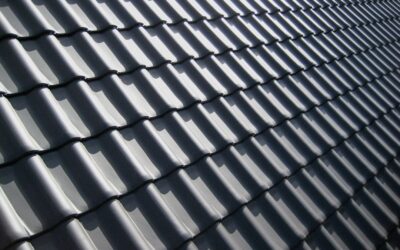
Concrete tiles are extruded from a dense mix of Portland cement, sand, and water, then cured and finished with either a color-through pigment or a surface slurry coat. Major US manufacturers — Eagle Roofing, Westlake (Boral), and Crown — produce three profile families: low-profile flat tiles that mimic slate or shake, medium S-profiles with a gentle wave, and high-barrel profiles that copy Spanish clay. A standard tile measures about 13 by 17 inches, covers the roof at roughly 90 tiles per square, and costs $1.50 to $4 per tile in materials. Color options run far beyond terracotta — charcoal, slate gray, brown blends, and multi-tone “weathered” mixes — and finish choices split between smooth, textured, and slurry-coated surfaces. If long-term appearance matters to you, ask specifically for color-through tiles: the pigment runs the full thickness, so chips and decades of surface wear expose the same color rather than gray concrete.
Concrete vs. Clay: The Comparison Everyone Asks
Both are hard-fired… actually, no — and this is the core difference. Clay is kiln-fired at around 2,000°F, which vitrifies the material; concrete simply cures. That single fact drives every practical difference:
- Price: concrete installs for $10 – $20 per sq ft; genuine clay runs $15 – $30. Concrete is typically 30 – 50 percent cheaper.
- Lifespan: concrete realistically lasts 40 – 60 years; clay routinely exceeds 75 and can pass 100.
- Water absorption: concrete absorbs up to 13 percent of its weight; clay absorbs around 6 percent. Absorbed water adds weight, feeds moss, and drives freeze-thaw spalling in cold climates unless the tile carries a proper cold-weather rating.
- Color: clay’s fired color never fades; concrete’s surface color softens noticeably over 15 – 25 years, especially slurry-coated finishes. Color-through tiles age more gracefully.
- Weight: concrete is the heavier of the two — 600 to 1,100 lbs per square vs roughly 600 – 850 for most clay.
For most budgets, concrete wins on value: you give up some longevity and color permanence and save five figures on a typical roof.
The Weight Question
Standard-weight concrete tile loads the structure at 6 to 11 pounds per square foot — three to four times the weight of asphalt shingles. Homes in tile-country markets (the Southwest, Florida) are usually framed for it from day one. If you are converting from shingles elsewhere, hire a structural engineer for a $300 to $700 evaluation before signing a roofing contract; reinforcing rafters, when needed, adds $1,000 to $10,000. Lightweight concrete tiles (about 5.5 – 7 lbs per sq ft) exist for marginal structures, but they are more fragile underfoot and cost more per square, so use them only when the engineering demands it.
What a Concrete Tile Roof Costs
For a 2,000 square foot roof, expect these installed ranges:
- Flat/low-profile concrete tile: $10 – $14 per sq ft ($20,000 – $28,000)
- S-profile and barrel concrete tile: $12 – $18 per sq ft ($24,000 – $36,000)
- Lightweight concrete tile: $13 – $20 per sq ft ($26,000 – $40,000)
Tear-off of an existing roof adds $1 to $2 per square foot, and complex hip-and-valley designs — common on the stucco homes these roofs top — add 15 to 30 percent in labor and cut-tile waste. Get itemized bids from installers who do tile weekly; a shingle crew learning on your roof is how tiles end up cracked and courses end up crooked.
Lifespan Reality: Tiles vs. Underlayment
Manufacturers advertise 50-year and even lifetime warranties on the tiles, and the tiles earn it. What nobody puts on the brochure: the waterproofing layer is not the tile, it is the underlayment beneath, and traditional 30-pound felt lasts 20 to 30 years under tile heat. Around that age, a concrete tile roof needs a lift and relay — tiles removed, new underlayment installed, the same tiles relaid — at $400 to $1,000 per square. It is far cheaper than a new roof, but it is a real five-figure event to budget for. If you are installing new today, pay the upgrade for a high-temp synthetic or dual-layer SBS-modified underlayment; it stretches that first relay from year 25 toward year 40. Individual cracked or slipped tiles along the way are a cheap fix — see our tile roof repair guide for the step-by-step.
Performance: Where Concrete Tile Shines
Concrete tile carries a Class A fire rating, which matters enormously in wildfire zones — it is a big reason the material dominates California and Arizona. Properly fastened systems are rated for 125 to 180 mph winds and pass Miami-Dade hurricane approvals. The thermal mass and the ventilated air gap under each tile cut summer cooling loads by 10 to 20 percent compared to shingles laid flat on the deck. Hail performance is decent but not invincible: most concrete tile handles 1-inch hail, while 2-inch stones will crack tiles that would only bruise a Class 4 metal roof.
The weak points: fragility under foot traffic (satellite installers and chimney sweeps break tiles constantly), moss and algae growth on shaded northern exposures in humid climates, and efflorescence — a temporary white calcium haze that alarms new owners but weathers off in a year or two.
Maintenance That Actually Matters
A concrete tile roof asks little, but not nothing. Once a year, scan from the ground for cracked, chipped, or slipped tiles and check gutters for granule slurry or mortar debris. Keep valleys and dead spots clear of leaf litter, since damp debris under tiles rots underlayment fast. Skip pressure washing — it strips the surface coating and forces water under the courses; treat moss with a zinc or copper-based cleaner instead. And keep everyone who walks the roof stepping on the lower third of each tile, where it is supported. A homeowner who does this much can realistically expect the 50-year tile lifespan the brochures promise, with one mid-life underlayment renewal along the way.
Installation: What a Good Tile Job Looks Like
Concrete tile installs over solid decking with underlayment, then either directly nailed (“direct deck”) or hung on horizontal battens, which is standard on steeper pitches and required by some manufacturers above 7:12. Minimum pitch for standard installation is 4:12; between 2.5:12 and 4:12 the tile becomes decorative and a fully sealed sub-roof underlayment does the waterproofing. Fastening escalates with wind zone — from every-other-tile nailing in calm regions to every tile nailed plus adhesive or storm clips in hurricane country, per the manufacturer’s engineering tables.
Watch three details when evaluating a bid or an in-progress job: eave risers or birdstops that close the gap under the first course (open eaves invite birds and wind-driven rain), proper headlap of at least 3 inches on every course, and mortarless mechanical attachment at hips and ridges rather than old-school mortar bedding, which cracks loose within a couple of decades. A crew that installs tile weekly will do all three without being asked; a shingle crew moonlighting on tile usually misses at least one.
Bottom Line
Choose a concrete tile roof when you want the tile look and fire-and-wind toughness at a price meaningfully under clay, your structure can carry the load, and you accept a mid-life relay as part of the deal. Skip it if your framing can’t take the weight without expensive reinforcement, you live where severe freeze-thaw cycles punish absorbent tile, or you plan to sell within a decade and can’t recoup the premium over architectural shingles.