
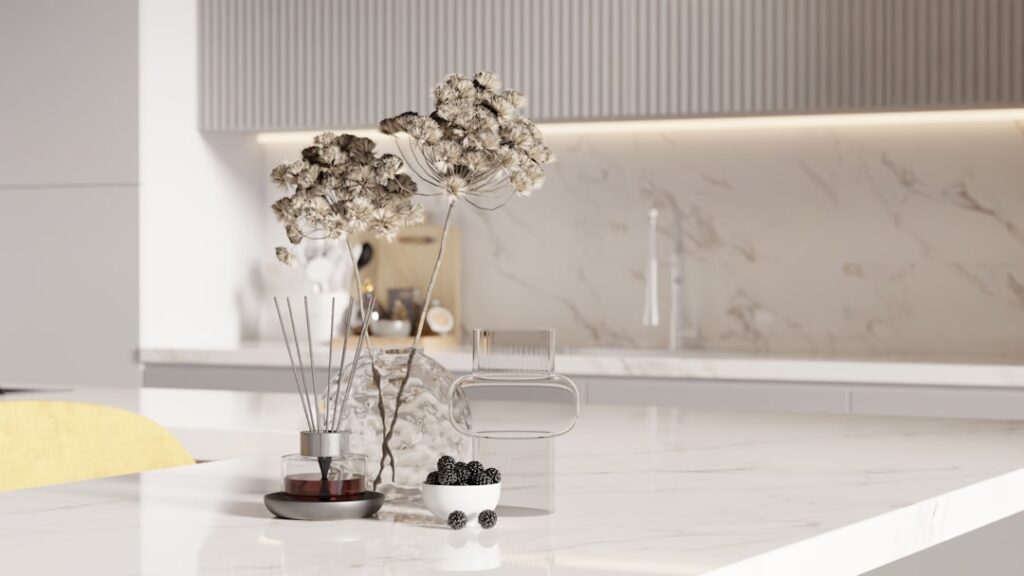
Contact paper for countertops is the ultimate budget kitchen and bathroom makeover hack — a self-adhesive vinyl film that transforms dated laminate, tile, or wood countertops into marble-look, granite-look, or wood-look surfaces for under $50 in most cases. While contact paper is undeniably temporary (lasting 1 to 3 years with careful use), it provides an instant cosmetic upgrade that renters, house flippers, and budget-conscious homeowners have embraced as an alternative to costly countertop replacement.
This guide covers everything you need to know about using contact paper for countertops — what it is, the best looks available (marble, granite, wood), step-by-step application instructions, realistic durability expectations, heat and water concerns, top brands (EZ Faux Decor, D-C-Fix, practicalWS), removal, and an honest assessment of pros and cons. For permanent countertop alternatives, see our guides on concrete countertops and white quartz countertops.
What Is Contact Paper for Countertops?
Contact paper for countertops is a self-adhesive vinyl film — typically 2 to 4 mils thick — printed with a decorative pattern on the surface and coated with a pressure-sensitive adhesive on the back. It comes in rolls (usually 24 to 26 inches wide by 6 to 16 feet long) protected by a peel-off backing liner. You peel the backing, position the film on the countertop surface, and smooth it down with a squeegee or credit card to eliminate air bubbles.
Countertop-grade contact paper differs from shelf liner in several important ways. Countertop paper uses a thicker, more durable vinyl with a semi-gloss or glossy finish that resists light scratches and cleans easily. The adhesive is formulated to stick firmly to smooth surfaces while remaining removable without permanent damage — a critical feature for renters. The printed patterns are designed to mimic natural stone, marble, granite, and wood from a normal viewing distance.
Contact paper is not a permanent countertop solution. Think of it as a cosmetic cover — similar to a phone case rather than a phone screen. It conceals the existing countertop surface and provides a fresh aesthetic, but it does not add structural strength, heat resistance, or the longevity of real stone or solid-surface countertops.
Best Looks: Marble, Granite, and Wood
Marble-Look Contact Paper
White marble-look (particularly Calacatta and Carrara patterns) is by far the most popular contact paper for countertops style. The appeal is obvious — real marble countertops cost $50 to $150+ per square foot installed, while marble-look contact paper delivers the visual effect for pennies per square foot. Quality marble contact paper features realistic veining patterns, subtle color variation, and a semi-gloss finish that mimics polished marble.
The best marble-look papers use high-resolution printing with randomized vein patterns that avoid obvious repeats across a long countertop span. Look for products with at least 3 to 4 distinct vein patterns in the print repeat to avoid a wallpaper-like repetitive look.
Granite-Look Contact Paper
Granite-look contact paper replicates the speckled, natural-stone appearance of black, grey, brown, and multicolor granite. This style is particularly effective at disguising existing countertop surfaces because the busy, speckled pattern is more forgiving of imperfect application — small bubbles, seams, and edge imperfections are less visible against a granular pattern than against the clean veining of marble.
Wood-Look Contact Paper
Wood-grain contact paper (butcher block, oak, walnut, and reclaimed wood looks) brings warmth and a farmhouse aesthetic to kitchen countertops. Wood-look paper is especially popular for kitchen islands, craft room surfaces, and bathroom vanity tops. The key to realism is a matte or satin finish — glossy wood-grain contact paper looks obviously fake.
Concrete and Solid Color Options
Concrete-look and solid color contact papers are gaining popularity for modern, minimalist kitchens. Concrete-look papers replicate the industrial aesthetic of poured concrete with subtle texture variation. Solid colors (matte black, matte white, sage green) work well for statement islands or accent countertop sections.
| Look | Realism (1-10) | Hides Imperfections | Best Finish | Popularity |
|---|---|---|---|---|
| White marble (Calacatta/Carrara) | 7 – 8 | Moderate | Semi-gloss | Most popular |
| Granite (speckled) | 6 – 7 | Very good | Semi-gloss | Popular |
| Wood grain (butcher block) | 6 – 7 | Good | Matte or satin | Popular |
| Concrete | 5 – 7 | Good | Matte | Growing |
How to Apply Contact Paper to Countertops (Step-by-Step)
Step 1: Clean the Countertop Thoroughly
The countertop surface must be perfectly clean, dry, and grease-free. Wash with soap and water, then wipe with rubbing alcohol (isopropyl alcohol) to remove any remaining oils, grease, or residue. The adhesive will not stick properly to dirty or oily surfaces. Let the countertop dry completely before proceeding.
Step 2: Measure and Cut
Measure the countertop length and width, adding 2 inches extra on all sides for overhang (you will trim the excess later). Use scissors or a utility knife to cut the contact paper to size. For L-shaped or U-shaped countertops, plan your seam placement — seams are least visible along the back edge near the backsplash or at natural break points like corners.
Step 3: Peel and Position
Peel approximately 6 inches of the backing liner from one end of the contact paper. Align the exposed adhesive edge with the front edge of the countertop (or whichever edge is most visible) and press it down firmly. Work slowly — once the adhesive contacts the surface, repositioning is difficult.
Step 4: Smooth and Press
Using a plastic squeegee, credit card, or smoothing tool, press the contact paper from the center outward toward the edges, working in 6-inch sections. Peel another 6 inches of backing, smooth, and repeat. This gradual approach prevents large air bubbles from forming. Small bubbles can be pierced with a pin and smoothed flat after application.
Step 5: Wrap the Edges
For the most professional look, wrap the contact paper over the front edge of the countertop and tuck it underneath. Use a heat gun or hair dryer on low heat to make the vinyl more pliable around curved edges and corners. Press firmly to ensure the adhesive bonds around the edge profile.
Step 6: Trim the Excess
Use a sharp utility knife to trim excess contact paper along the back edge (against the backsplash), around the sink cutout, and at any other edges. A sharp blade is critical — a dull blade will tear the vinyl rather than cutting cleanly. Use a straightedge for long, straight cuts.
Step 7: Seal the Edges (Optional but Recommended)
Apply a thin bead of clear silicone caulk along seams, around the sink cutout, and where the contact paper meets the backsplash. This prevents water from seeping under the edges and lifting the adhesive — the number one cause of premature contact paper failure in kitchens and bathrooms.
Durability: How Long Does It Last?
Contact paper for countertops is a temporary solution with a realistic lifespan of 1 to 3 years depending on usage, quality, and how well it was applied. In low-use areas (bathroom vanities, craft rooms, guest kitchens), quality contact paper can look good for 3 years or more. In heavily used main kitchens, expect signs of wear — peeling edges, knife scratches, discoloration around the stove — within 12 to 18 months.
Factors that shorten lifespan include direct heat exposure, standing water on seams, cutting directly on the surface without a cutting board, abrasive cleaners, and heavy items dragged across the surface. Factors that extend lifespan include sealed edges, use of cutting boards and trivets, gentle cleaning, and high-quality thick vinyl contact paper.
The temporary nature is actually an advantage for some homeowners. Contact paper costs $20 to $50 for a typical kitchen countertop, so replacing it annually still costs a fraction of a permanent countertop upgrade. Renters who cannot make permanent changes, homeowners saving for a full kitchen renovation, and house flippers staging a property for sale are the ideal users of countertop contact paper.
Heat and Water Concerns
Heat: Contact paper vinyl has a heat tolerance of approximately 150 to 175 degrees Fahrenheit. Hot pots, pans, and baking sheets taken directly from the oven or stove will damage, melt, or warp contact paper. Always use trivets, hot pads, or cooling racks. Slow cookers and toaster ovens placed directly on contact paper can also cause heat damage over time. The area around the stovetop is the most vulnerable — keep contact paper at least 2 inches from active burners.
Water: The surface of contact paper is waterproof, so spills wiped up promptly cause no damage. However, water that seeps under the edges — particularly around the sink — will weaken the adhesive and cause peeling and bubbling. Sealing edges with clear caulk and wiping up standing water immediately around the sink area are the two most important maintenance habits for longevity.
Best Brands
EZ Faux Decor
EZ Faux Decor is the most recommended brand specifically designed for countertop applications. Their marble-look rolls feature thick, durable vinyl with a glossy finish and realistic veining. The adhesive is strong enough for horizontal surfaces but removes cleanly. Widths up to 36 inches reduce or eliminate seams on standard 25-inch-deep countertops. Approximately $25 to $45 per roll (3 to 6 feet long).
D-C-Fix
D-C-Fix is a German brand known for high-quality self-adhesive vinyl films. Their marble, granite, and wood-look products are among the most realistic in the market, with excellent print quality and a smooth, durable finish. D-C-Fix products are slightly thicker than budget alternatives and adhere well to smooth surfaces. Approximately $15 to $30 per roll.
practicalWS
practicalWS (Practical Wall Sticker) offers budget-friendly marble and stone-look contact paper with good reviews on Amazon. Their products are thinner than EZ Faux Decor and D-C-Fix but deliver acceptable results for the price. A good entry-level option if you want to test the concept before investing in a premium brand. Approximately $8 to $18 per roll.
| Brand | Thickness | Realism | Price (per roll) | Best For |
|---|---|---|---|---|
| EZ Faux Decor | Thick (premium) | Very good | $25 – $45 | Main kitchen countertops |
| D-C-Fix | Medium-thick | Excellent | $15 – $30 | Any countertop, best print quality |
| practicalWS | Thin (budget) | Good | $8 – $18 | Low-traffic areas, testing |
How to Remove Contact Paper
Removing contact paper for countertops is straightforward but requires patience to avoid residue.
Step 1: Use a hair dryer or heat gun on low heat to warm a corner or edge of the contact paper. Heat softens the adhesive and makes peeling significantly easier.
Step 2: Lift the heated corner and slowly peel the contact paper back at a 45-degree angle. Continue heating ahead of where you are peeling to keep the adhesive soft. Pulling too fast or at a steep angle can leave more residue.
Step 3: Remove adhesive residue with Goo Gone, rubbing alcohol, or a citrus-based adhesive remover. Apply the solvent, let it sit for 5 minutes, then wipe with a soft cloth. Repeat as needed. Avoid abrasive scrubbing on laminate countertops, as it can scratch the surface.
Step 4: Clean the countertop with soap and water to remove all solvent residue. The countertop should be clean and undamaged, ready for new contact paper or for use as-is.
Cost Breakdown
| Item | Cost |
|---|---|
| Contact paper (enough for 30-40 sq ft kitchen) | $20 – $60 |
| Plastic squeegee / smoothing tool | $3 – $8 |
| Utility knife and extra blades | $5 – $10 |
| Clear silicone caulk | $5 – $8 |
| Rubbing alcohol (for cleaning) | $3 – $5 |
| Total project cost | $36 – $91 |
Compare this to permanent countertop options: laminate replacement ($20 to $50 per square foot installed), butcher block ($40 to $100 per square foot installed), quartz ($50 to $150 per square foot installed), and granite ($40 to $200 per square foot installed). Contact paper delivers a visual transformation at roughly 1% to 5% the cost of a permanent countertop replacement — making it an unbeatable value for temporary or budget-driven projects. For more budget-friendly home improvement ideas, see our cost-saving guides.
Pros and Cons
Pros
- Extremely affordable — under $100 for most kitchen countertop projects
- Instant transformation — complete application takes 1 to 3 hours
- Renter-friendly — removable without permanent damage to existing countertops
- Wide variety — marble, granite, wood, concrete, and solid color options available
- No tools or skills required — anyone can apply contact paper with patience
- Replaceable — easy to peel off and reapply with a new pattern when worn or outdated
Cons
- Temporary — lasts 1 to 3 years with careful use, not a permanent solution
- Not heat resistant — hot pots and pans will damage or melt the vinyl
- Edges can peel — especially around sinks and high-moisture areas without edge sealing
- Cannot cut on it — knife marks create permanent scratches in the vinyl surface
- Visible up close — contact paper looks realistic from a few feet away but is identifiable as vinyl upon close inspection or touch
- Seams are visible — wide countertops or L-shapes require seams that are difficult to hide completely
- No resale value — contact paper does not increase home value and may raise questions from buyers during inspections
Frequently Asked Questions
Does contact paper damage countertops?
Quality contact paper for countertops is designed to remove cleanly without damaging the surface underneath. Some adhesive residue may remain, but it is easily removed with Goo Gone or rubbing alcohol. Laminate, solid surface, and granite countertops are not harmed. Very old or degraded laminate surfaces might experience surface peeling, but this is rare with quality contact paper products.
Can you put contact paper on countertops with texture?
Contact paper works best on smooth, flat surfaces. Textured surfaces (rough granite, tile with grout lines, heavily textured laminate) will telegraph the texture through the thin vinyl, creating an uneven appearance and poor adhesion. For textured countertops, consider using a thicker, more rigid countertop film or a peel-and-stick laminate sheet rather than standard contact paper.
Is contact paper for countertops waterproof?
The vinyl surface is waterproof — water will not penetrate through the film. However, water can seep under the edges, especially around sinks, which weakens the adhesive and causes peeling. Sealing all edges and seams with clear silicone caulk dramatically improves water resistance and extends the lifespan of the application.
Can you put hot pans on contact paper countertops?
No. Contact paper for countertops will melt, warp, or discolor from direct contact with hot cookware. Always use trivets, hot pads, or cooling racks. This is the most significant practical limitation of contact paper compared to real stone, quartz, or even standard laminate countertops.
How do you avoid bubbles when applying contact paper?
Work in small sections — peel 6 inches of backing at a time and smooth with a squeegee from the center outward before peeling the next section. Do not attempt to peel the entire backing at once and lay the paper down in one motion. Small remaining bubbles can be pierced with a sewing needle and smoothed flat after application.
Is contact paper for countertops worth it?
Yes, for the right situation. Contact paper is worth it for renters who cannot modify their space, homeowners on a tight budget who want a cosmetic refresh, house flippers staging a property for sale, or anyone who wants to test a look (like marble) before committing to a permanent countertop. It is not worth it if you expect permanence, heavy cooking use, or a surface that looks and feels like real stone upon close inspection.


