The first generation of cordless stick vacuums were toys, and I told clients as much. That’s no longer true. A good cordless vacuum for carpet now pulls embedded grit and pet hair out of medium pile nearly as well as a corded upright, and it does it without dragging a cord across the room or hunting for outlets. The gap between marketing and reality is still wide, though, and the specs that sell units are not always the ones that clean carpet well.
Carpet is the hardest surface for a cordless to handle because it demands both strong suction and an aggressive brush roll, and both drain the battery fast. Knowing which numbers matter keeps you from overpaying for airflow you’ll never use on bare floors.
Why Carpet Is Harder Than Hard Floors
Dirt on tile or hardwood sits on the surface, so light suction clears it. Carpet fibers grab and hold debris deep in the pile, which means the vacuum has to do two jobs at once: agitate the fibers with a motorized brush and generate enough sealed suction to lift what the brush loosens. That combined workload is exactly what burns through a battery, so carpet performance and runtime are always in tension on a cordless.
Deep or plush pile compounds the challenge. A powerful brush roll can bog down or stall in thick Saxony carpet, which is why the best models offer adjustable power or auto-sensing modes.


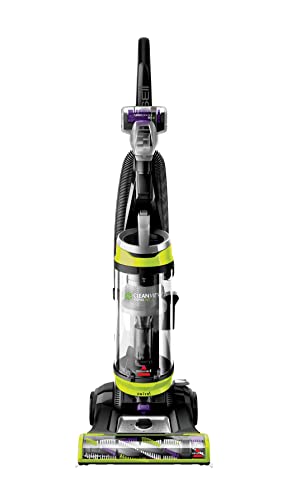
The Specs That Actually Matter
Ignore inflated marketing wattage and focus on these:
- Suction in air watts or pascals: Look for 150 air watts or 20,000 Pa and up for reliable carpet cleaning.
- Motorized brush roll: Non-negotiable for carpet. A passive floor head won’t agitate pile.
- Battery type and runtime: Removable, swappable batteries beat sealed ones. Expect 8 to 15 minutes on the high setting that carpet needs.
- Sealed HEPA filtration: Critical for allergy households, since carpet holds dander and dust.
- Bin size: A 0.7-liter bin or larger means fewer mid-clean emptying stops.
Notice the runtime numbers. Manufacturers quote runtime in eco mode on hard floors. On the high-power carpet setting, cut that headline number by half or more.
Brush Roll Design Makes or Breaks It
The floor head is where carpet cleaning is won or lost. Stiff bristle brush rolls dig into pile and flick out embedded grit, which is what you want for carpet. Soft roller heads designed for hard floors look impressive on hardwood but barely disturb carpet fibers. If a vacuum ships with only a soft roller, it’s a hard-floor machine no matter what the box says.
Anti-tangle brush designs are worth seeking out in pet or long-hair households. Nothing kills a cheap stick vacuum faster than a brush roll wrapped solid with hair that you have to cut off with scissors every week.
Battery Life and the Charging Reality
Here’s the honest picture: a mid-range cordless gives you 8 to 12 minutes of true carpet-cleaning power per charge, and recharging takes three to four hours. For a small apartment with area rugs, that’s plenty. For a 2,500-square-foot house with wall-to-wall carpet, it isn’t, unless the model takes a second swappable battery you can hot-swap.
If you’re carpeting a large home, prioritize a system with removable batteries and buy a spare. Two batteries turn a runtime limitation into a non-issue for about $80 to $130 extra.
What to Expect at Each Price Point
Budget matters, and the cordless market spreads across a wide range. Here’s the lay of the land:
- $80 to $150: Entry-level. Fine for area rugs and quick pickups, weak on deep pile.
- $200 to $400: The sweet spot. Strong suction, motorized brush, decent battery, good filtration.
- $500 to $750: Premium. Auto-sensing power, dual batteries, laser dust detection, self-emptying docks.
Most homeowners with carpet are best served in the $250 to $400 band. Below $150 you’re gambling on suction, and above $500 you’re paying for convenience features rather than fundamentally better carpet cleaning.
Maintenance That Keeps Suction Strong
Cordless vacuums lose suction fast when neglected because their filters and bins are small. Empty the bin when it hits the fill line, not when it’s overflowing, since a packed bin chokes airflow. Rinse the pre-filter under water every two to four weeks and, crucially, let it dry a full 24 hours before reinstalling; a damp filter breeds odor and strains the motor.
Clear the brush roll of wrapped hair every week or two. Most detach with a coin-turn latch. A clean brush roll spins freely and agitates carpet the way it should. It’s also worth wiping the sealing gaskets and checking the bin seal, because a poor seal lets airflow bypass the filter and quietly saps suction over months. If your battery is user-replaceable, store spares at room temperature and avoid leaving them fully drained for long stretches, since deep discharge shortens lithium-ion lifespan and you’ll notice the runtime dropping sooner than it should.
Corded vs. Cordless: An Honest Comparison
Before you commit to cordless, it’s worth being clear-eyed about what you give up. A corded upright still holds the edge in raw, sustained carpet-cleaning power. It never runs out of battery mid-job, its larger motor generates more consistent suction, and its bigger bin means fewer trips to the trash. For a large home wall-to-wall carpeted throughout, a corded upright remains the more thorough deep-cleaning tool, and it costs less for the performance.
What cordless buys you is convenience, and for many households that convenience is worth more than the last 10 percent of deep-cleaning power. There’s no cord to drag, unplug, and rewind, no outlet-hunting, and the stick format grabs stairs, upholstery, and car interiors in seconds when you clip on the crevice tool. That low-friction access means people actually vacuum more often, and frequent light cleaning keeps carpet in better shape than an occasional heavy pass.
Here’s how I frame it for clients. If your home is mostly hard floors with area rugs and a few carpeted rooms, a good cordless is the smarter single-vacuum choice; it handles everything and lives on a wall dock ready to grab. If your home is large and heavily carpeted, either buy a premium cordless with dual swappable batteries or keep a corded upright for deep cleaning and a cheaper cordless for daily touch-ups. The one setup I’d avoid is a budget cordless as the only vacuum in a big carpeted house, because you’ll spend the whole session recharging and never get a satisfying deep clean.
Making the Final Call
Pick a cordless vacuum for carpet by starting with the brush roll and suction, then check whether the battery matches your square footage. For apartments and rug-heavy homes, a $250 model with a stiff-bristle brush and 150-plus air watts handles everything. For larger carpeted houses, insist on swappable batteries and buy a spare. Skip the temptation to judge by weight or looks alone, because the lightest, sleekest units are often the ones that struggle most in deep pile. Match the machine to your floors and your home’s size, and a modern cordless earns its place in the closet.