
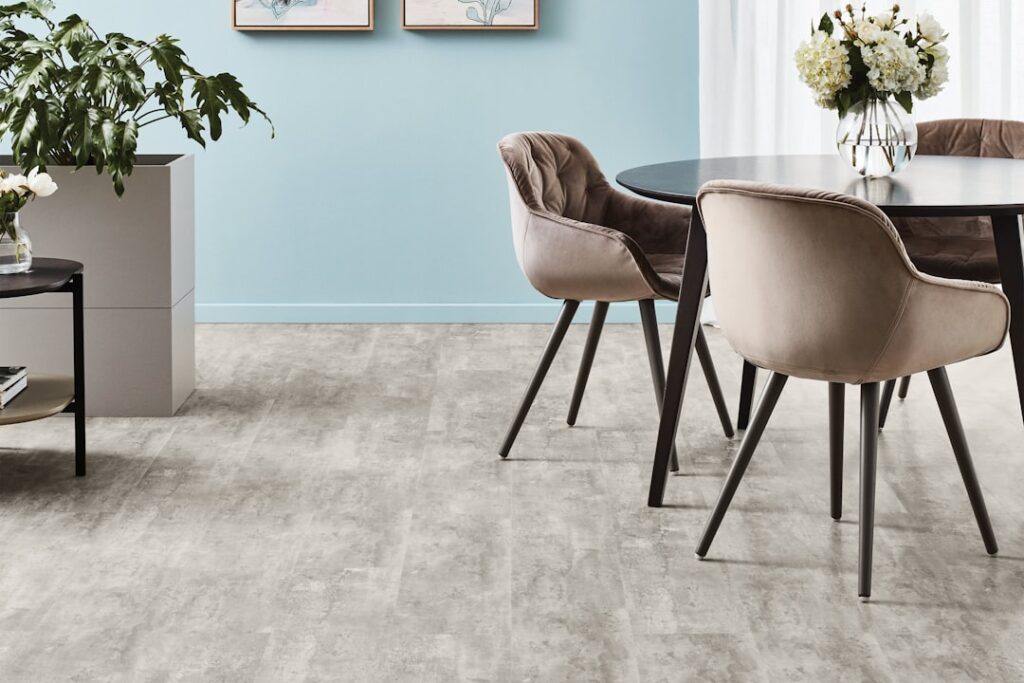
COREtec invented the modern WPC (wood-plastic composite) plank category in 2012 and remains one of the most-installed luxury vinyl plank brands in North America. Most installations perform exactly as advertised. But forums, contractor groups, and retailer return stacks tell another story — there are real, documented COREtec flooring problems that show up in specific scenarios. Understanding those failure modes before you buy lets you avoid the homeowners who end up with a 1,500 sq ft floor lifting at the seams two years in. The product is not bad. It is unforgiving of substrate, install, and environment errors that other brands tolerate.
- Edge Lifting and Curling
- Seam Gapping in Dry Climates
- Telegraphing Subfloor Imperfections
- Fading in High UV Exposure
- Underlayment-Related Issues
- Cleaning and Care Mistakes
- Installation Errors That Cause Problems
- Where COREtec Genuinely Performs Well
- Realistic Costs and Lifespan
- Should You Still Buy COREtec
Edge Lifting and Curling
The most common complaint. COREtec planks have a slight perimeter bevel and a thin clear-coat wear layer at the edge. In rooms that see heavy direct sunlight (south or west-facing windows, sunrooms, kitchens with skylights), the surface temperature can spike 30 to 50°F above ambient. The plank core expands faster than the wear layer, lifting the bevel.
The fix is preventing the conditions. COREtec’s warranty caps surface temperature at 140°F. For windows that produce surface temps above that, install solar film, cellular shades, or specify a different product like the COREtec Pro line with a higher-temp wear layer.
Seam Gapping in Dry Climates
WPC core flooring expands and contracts about 0.05% per 10°F temperature change. In Denver, Phoenix, or any climate where indoor relative humidity drops below 25% in winter, planks shrink and seams open. The gaps catch dust and look poorly finished within one heating season.
Manufacturer recommendation is to keep RH between 35% and 55%. Easier said than done in arid climates. Pre-acclimating boxes for 7 days at install conditions, leaving the recommended 1/4-inch perimeter expansion gap, and running a humidifier during heating season all help.
Telegraphing Subfloor Imperfections
COREtec planks at 5 to 8 mm thickness are stiffer than thinner LVP but still flexible enough to telegraph subfloor humps and divots over 3/16 inch in 10 feet. The result is visible high spots, audible creak when you step on certain planks, and sometimes click-edge separation as the plank flexes against an uneven substrate.
The required prep is more than most homeowners expect. Self-leveling compound or feather finish to flatten any subfloor variation greater than 3/16 inch in 10 feet. Skipping this step is the single most common cause of post-install complaints.
Fading in High UV Exposure
COREtec’s UV stability is good for a vinyl product but not perfect. Direct sunlight 6+ hours a day on darker colors (anything in the espresso, dark walnut, or black-stained oak palette) produces visible fading after 2 to 4 years. Lighter colors (oak natural, gray, blonde) hide fading better.
The warranty specifically excludes UV fading from “abnormal” exposure but does not define abnormal. Document conditions at install with photos and humidity readings — claims succeed more often when the conditions on the day of complaint match the conditions on the day of install.
Underlayment-Related Issues
COREtec planks come with a pre-attached cork or foam underlayment. Most homeowners assume that means no additional underlayment is needed. Adding a second underlayment under the pre-attached one voids the warranty and can cause stiffness issues that lead to click-edge failure. The pre-attached layer is the only underlayment that should be on the substrate.
Acoustic underlayment for sound transmission control in condos requires the COREtec-approved acoustic line (COREtec Pro Plus or Plus Premium) — adding aftermarket acoustic mat under a standard COREtec plank is one of the most common warranty rejections.
Cleaning and Care Mistakes
Documented installation and care issues that void warranty:
- Steam mops: water vapor at 200°F+ degrades the wear layer
- Bleach or ammonia cleaners: attack the urethane top coat
- Wax or oil-based polishes: build up and yellow
- Felt-pad-less furniture: dragging causes scratches
- Direct contact with rubber-backed mats: rubber compounds discolor the wear layer
Installation Errors That Cause Problems
Most COREtec failures trace back to install issues, not product defects. The big ones:
- Insufficient perimeter expansion gap (less than 1/4 inch)
- No transition pieces in runs over 30 feet
- Failure to acclimate planks 48 to 72 hours minimum
- Installing over a damp slab (RH probe over 80%)
- Not flattening subfloor before install
- Adding extra underlayment beneath pre-attached cork
An experienced LVP installer with COREtec-specific experience is worth the 10 to 20% labor premium over a generic floor crew. Cheap install costs more in two years than careful install costs today.
Where COREtec Genuinely Performs Well
It is fair to balance the problems. COREtec performs as advertised in:
- Basements with stable humidity and prepped slabs
- Kitchens with normal residential traffic
- Bathrooms with proper edge sealing
- Living rooms without extreme UV exposure
- Multifamily units with HVAC controlling RH year-round
The product is also realistically repairable plank-by-plank, the click system holds tight when properly installed, and warranty service through authorized retailers is fairly responsive when issues are documented.
Realistic Costs and Lifespan
COREtec runs $4 to $8 per sq ft material, $2 to $4 install. Quality lifespan is 15 to 25 years residential when conditions are managed. In high-stress conditions (extreme dry climate, intense UV, poor subfloor prep), plan on 7 to 12 years before noticeable issues — still acceptable for most homeowners but well short of the marketing implication.
Should You Still Buy COREtec
For most North American homeowners with stable HVAC, prepared subfloors, and no extreme sun exposure, COREtec remains a reasonable choice in the upper-tier LVP segment. The known coretec flooring problems are real but largely environment- and install-related rather than product defects. Compare carefully to alternatives — Karndean LooseLay, Shaw Floorte Pro, Mannington ADURA Max, and Mohawk RevWood Plus all compete in the same price band with slightly different failure profiles. Whatever you pick, prep the subfloor, manage humidity, and use felt pads on every furniture leg. Those three habits prevent the majority of issues homeowners blame on the product.
Prefer to explore on your own?
See how new flooring looks in your actual room in seconds — free, no signup.
Try the free Floor Studio →

