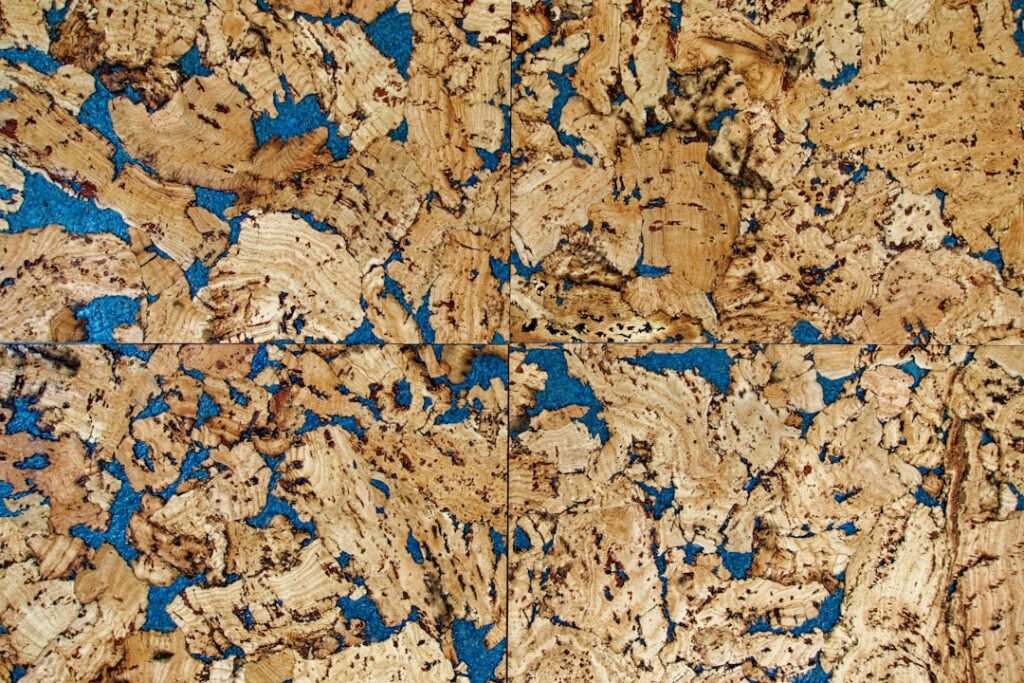
Walk barefoot across a cork floor and the first thing you notice is the temperature — it sits roughly 10 to 15 degrees warmer than tile or vinyl in winter, with a soft springiness underfoot that feels closer to memory foam than wood. Cork wood flooring earns a niche but loyal following among homeowners who prioritize comfort, sound damping, and renewable materials over the typical hardwood look. The category is misunderstood — most buyers think cork means a 1970s wine-room look, when in reality modern cork products span everything from natural amber tones to dark-stained planks that resemble walnut or hickory. Knowing which construction type and finish system fits your space matters more than picking a color.
What Cork Flooring Actually Is
Cork flooring is manufactured from the bark of the cork oak (Quercus suber), harvested in 9 to 12 year cycles without killing the tree. The bark is ground, mixed with a polyurethane or proprietary binder, and compressed into sheets or planks. The result is a dense, slightly springy material with millions of microscopic air pockets that give cork its insulating and shock-absorbing properties.
Two main constructions exist. Solid cork tiles bond directly to the subfloor with adhesive — this is the classic install method used since the 1920s. Floating cork engineered planks combine a 3 to 4mm cork wear layer over an HDF core with a click-lock joint, installed without adhesive over an underlayment.
Best Cork Brands and Pricing
- Wicanders ArtComfort: Premium engineered cork, $4.99 to $7.49 per sq ft
- Globus Cork tiles: Glue-down solid cork in 30+ colors, $5.49 to $8.99 per sq ft
- USFloors Natural Cork: Click-lock engineered cork, $4.49 to $5.99 per sq ft
- Amorim Wise: Hybrid cork-vinyl construction, $5.99 to $7.99 per sq ft
- Forna cork tiles: Direct-import glue-down, $3.49 to $4.99 per sq ft
Pros That Earn Cork Its Following
Sound absorption is the headline. Cork reduces footfall noise by 50 to 70% versus laminate or hard vinyl. In multi-story homes and condos this is genuinely transformative — you can run, drop toys, and walk in shoes without the downstairs neighbors hearing every step.
Comfort underfoot is the second major benefit. The natural cellular structure of cork creates a slight give that reduces fatigue when standing for hours. Bakeries, kitchens with serious cooks, and home offices with standing desks all benefit. The material also stays warmer than hardwood because cork is a natural thermal insulator.
Sustainability claims hold up under scrutiny. Cork harvesting is non-destructive, the trees absorb more carbon after harvest than before, and the resulting product is biodegradable at end of life. Certified manufacturers carry FloorScore or GreenGuard Gold labels confirming low VOC emissions.
Honest Drawbacks
Indentation is the most common complaint. Heavy furniture legs can create permanent compressions in cork over time. Use wide felt pads (minimum 1 inch diameter) under every leg, and consider coasters or platform spreaders under pianos, refrigerators, and china cabinets. Even with precautions, expect some recoverable indentation around the heaviest furniture.
UV sensitivity is the second issue. Natural cork lightens noticeably under direct sunlight over 6 to 12 months. South-facing rooms and window-adjacent areas may fade unevenly. Pre-finished products with UV inhibitors slow this, but the only complete solution is window film or interior shading.
Glue-Down vs Floating: Which to Pick
Glue-down cork tiles deliver the quietest, most permanent install. Adhesive bonds the tile directly to the subfloor, eliminating any hollow sound underfoot and adding to the overall structural feel. The downside is more demanding subfloor prep and a harder removal process down the line.
Floating cork engineered planks install faster, work over more subfloor types (including concrete with a vapor barrier), and let you replace individual planks if damage occurs. They are the easier DIY option and the more practical choice for most homeowners.
Cost Breakdown by Project Type
- Materials: $3.49 to $8.99 per sq ft depending on brand and construction
- Adhesive (glue-down only): $0.65 to $1.10 per sq ft
- Underlayment (floating only): $0.30 to $0.65 per sq ft
- Professional install: $3.00 to $5.50 per sq ft labor
- Subfloor prep and leveling: $0.75 to $2.50 per sq ft if needed
A 400 sq ft project lands between $3,800 and $6,800 turnkey. DIY click-lock cork cuts labor and is realistic for first-timers willing to spend a weekend on careful prep and layout.
Installation Tips That Prevent Failures
Acclimate cork boxes in the install room for 72 hours at 60 to 75 degrees and 35 to 65% relative humidity. Cork is naturally dimensionally stable but still benefits from this acclimation window before laying.
For glue-down tiles, use the adhesive recommended by the manufacturer (typically a contact cement or solvent-based product like Wakol D 3540). Spread with a 1/16 inch V-notch trowel, follow the open-time window, and roll with a 75 lb floor roller after laying. For floating click-lock, use 3/8 inch expansion spacers along all walls.
Sealing and Long-Term Care
Most modern cork floors arrive pre-sealed with a UV-cured polyurethane finish. Refresh that finish every 5 to 7 years with a compatible cork-specific topcoat like Bona Cork Sealer or Loba Cork Cleaner Refresher. Re-sealing is significantly cheaper than refinishing hardwood and dramatically extends the floor’s appearance.
Daily care is simple — sweep or vacuum (hard-floor setting, no rotating brush), damp-mop weekly with a pH-neutral cork-safe cleaner, and avoid steam, vinegar, and ammonia entirely. Felt pads under every furniture leg, area rugs in heavy-traffic zones, and humidity control between 35 and 65% will keep a quality cork floor looking great for 25+ years.
Prefer to explore on your own?
See how new flooring looks in your actual room in seconds — free, no signup.
Try the free Floor Studio →