The quoted prices online for marble countertops can swing by 400 percent for what looks like the same product. The honest cost of marble countertops for a typical 40 square foot kitchen runs $2,400 to $9,600 installed, and the spread comes down to species, slab grade, edge profile, and how good your fabricator is. After specifying marble for residential kitchens across five states, I can walk you through what actually drives the price.
Part of our Countertops guide — explore the full guide →
Price by Marble Type
- Carrara marble: $40 to $80 per square foot installed. The most common and most affordable true marble.
- Calacatta marble: $80 to $200+ per square foot installed. Whiter background, bolder gray veining.
- Statuario marble: $100 to $250+ per square foot installed. Brightest white, most dramatic veining, rarest.
- Crema Marfil: $50 to $100 per square foot. Warm cream color from Spain.
- Emperador marble: $50 to $120 per square foot. Brown with cream veining.
- Danby marble: $90 to $180 per square foot. Domestic Vermont marble — denser and harder than Italian varieties.
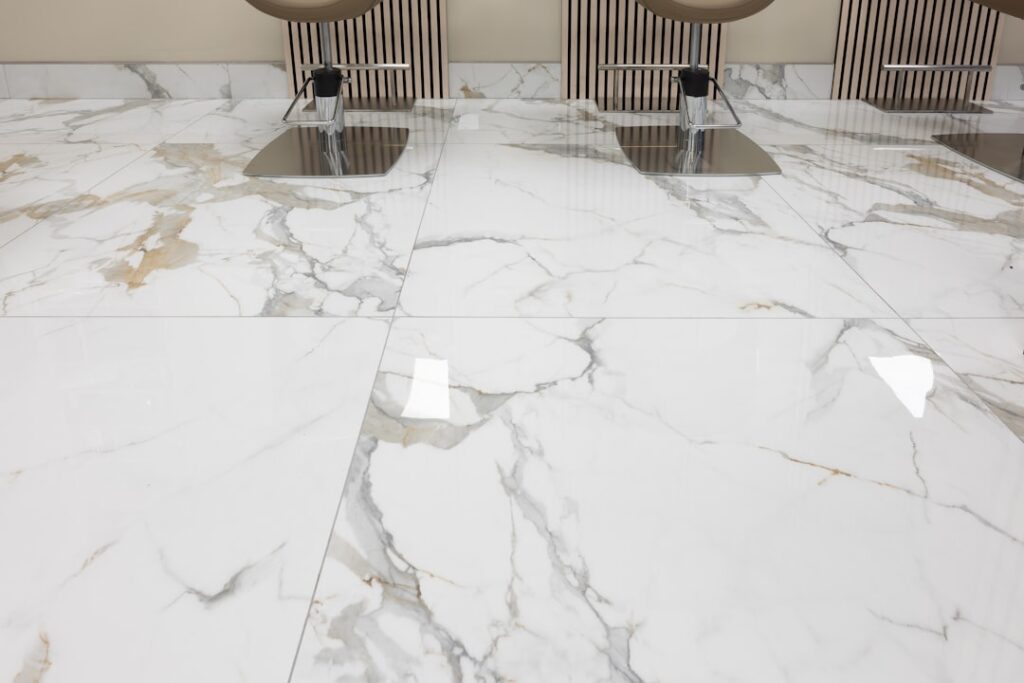
The big visual difference is the background. Carrara has a soft gray background with feathery gray veins. Calacatta has a brighter white background with bolder, often gold-tinged veins. Statuario splits the difference but with the cleanest white. As background gets whiter and veining gets bolder, the price climbs steeply.
What Drives the Price Within Each Type
Quarry source matters. Italian Carrara from the original Cararra mountains carries a premium over Turkish or Chinese Carrara look-alikes that share the same trade name. Slab thickness — 2cm (3/4 inch) versus 3cm (1-1/4 inch) — adds 20 to 35 percent to the cost for the thicker option, though 3cm is what most American kitchens use today.
Slab grade is a fabricator term. Grade A slabs have minimal natural fissures and consistent veining. Grade B accepts more variation. Grade C may have repaired cracks or visible inclusions. Always inspect actual slabs at the stoneyard before ordering — never buy from a small sample tile.
Installation Costs Broken Down
For a typical 40 square foot kitchen (perimeter cabinets plus a small island) using mid-grade Carrara, expect this breakdown:
- Slab material: $1,800 to $3,200 for a single slab covering 40 sq ft.
- Templating and measuring: $200 to $400, usually included.
- Fabrication (cutting, polishing edges): $800 to $1,400.
- Edge profile: $10 to $40 per linear foot extra for beyond a basic eased edge.
- Sink cutouts: $150 to $300 per cutout.
- Cooktop cutouts: $150 to $250.
- Installation: $400 to $800.
- Sealing: $100 to $250 initial seal.
Total typical mid-grade Carrara kitchen: $3,600 to $6,600 installed and sealed.
Edge Profile Choices
The eased edge (a slight softening of the 90-degree corner) is the most popular modern choice and usually included in the base price. A bullnose, ogee, or mitered edge adds visual weight and cost.
Mitered edges create the look of a 3-inch or 4-inch thick countertop by mitering two slab pieces together at the front edge. They run $30 to $60 per linear foot extra and add a dramatic high-end look without the structural concerns of solid thick stone.
Marble Versus Marble-Look Alternatives
Quartz countertops with marble-look patterns (Caesarstone Calacatta Nuvo, Cambria Brittanicca, Silestone Eternal Calacatta) run $60 to $120 per square foot installed. They mimic the look of Calacatta without staining, etching, or sealing. The veins are printed and consistent — beautiful but recognizable on close inspection.
Porcelain slabs from manufacturers like Neolith and Dekton ($80 to $180 per square foot) offer marble looks with even better durability than quartz. Both alternatives ship at 40 to 60 percent below the cost of premium real marble for the highest-end looks.
Ongoing Costs You Should Plan For
Marble requires sealing once or twice a year for the first three years, then every two to three years after. A bottle of Miracle Sealants 511 Impregnator covers 1,000 square feet and costs $35. DIY sealing takes 30 minutes per application.
Etching is the bigger lifetime cost. Acidic spills — lemon juice, wine, tomato sauce, vinegar — eat through the seal and dull the surface within minutes if not wiped. Restoration costs $200 to $600 per service call from a stone restoration professional. Plan on one professional honing service every 5 to 10 years to refresh the surface.
Honed Versus Polished Finish
Polished marble is the glossy mirror finish most people picture. Honed marble has a matte satin finish achieved by stopping the polishing process partway through. Honed costs the same as polished or slightly less.
The practical difference is etch visibility. Polished marble shows every etched spot as a dull patch against the gloss — etches look obvious. Honed marble is uniformly matte, so etches blend in and are nearly invisible. For working kitchens, I recommend honed almost every time. For powder rooms and bars that see less use, polished still works beautifully.
How to Save Money Without Cheating the Project
Buy domestic when possible — Danby Vermont marble is harder than Carrara, hides etching better, and competes on price. Choose a single-slab layout to avoid expensive seams. Specify a Grade B slab in a busy-veined variety where natural fissures hide easily. Pick an eased edge, not a fancy profile.
Use marble strategically — a marble island with quartz perimeter counters delivers the visual impact at half the cost of all-marble. Many of my favorite kitchens combine materials this way.
Resale Value Question
Real marble carries a luxury association that quartz cannot quite match in higher-end markets. Appraisers in the $1M+ home category often value marble countertops at full replacement cost in pricing exercises. Below $750K markets, the practical durability of quartz tends to win on resale.
The honest cost of marble countertops includes not just the install but the lifetime relationship — sealing, etching, and the gradual patina that develops. For owners who appreciate that aging process, marble pays back every year. For owners who want pristine surfaces forever, quartz remains the smarter purchase.