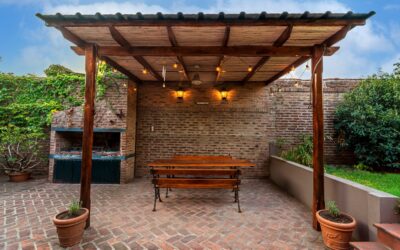
The first quote homeowners get for a backyard pergola is almost always a shock. A structure that looks deceptively simple, just four posts and a roof grid, can run anywhere from $2,500 for a basic kit to $20,000 for a custom motorized aluminum unit with louvered roof. The cost to build a pergola depends on five major variables: size, material, roof style, foundation, and whether you are doing the labor yourself. Once you understand how each one moves the price, you can build a realistic budget and avoid the most expensive mistakes most homeowners make.
Part of our Decks & Outdoor guide — explore the full guide →
Average Cost Ranges in 2026
Across the US in 2026, the typical homeowner pays between $4,500 and $10,000 for a professionally built pergola. The breakdown by size:
- 10×10 feet: $3,500 to $6,500 installed
- 12×12 feet: $4,500 to $8,500 installed
- 12×16 feet: $6,000 to $11,000 installed
- 16×20 feet: $9,000 to $16,000 installed
- 20×24 feet or larger: $13,000 to $25,000 installed
DIY builds cut roughly 35 to 50 percent off the labor portion, but only if you are comfortable setting concrete footings, plumbing 4-by-4 or 6-by-6 posts, and laying out a level rafter grid. Skilled homeowners save $2,000 to $5,000 on a mid-size build.
Material Cost Breakdown
Material is the biggest single driver of cost. The four common options:
- Pressure-treated pine: $1,200 to $2,500 in materials for a 12×12. Cheapest entry point but warps and twists over 5 to 10 years
- Cedar: $2,800 to $5,000 in materials for the same size. Naturally rot-resistant, ages to silver-gray, holds up 25 to 30 years
- Vinyl/composite (Trex, Azek): $4,000 to $7,500 in materials. Zero maintenance, fade-resistant, but lacks the warmth of real wood
- Aluminum (Struxure, Renson): $7,000 to $18,000 in materials. Premium look, motorized louver options, lifetime durability
For most homeowners with a moderate budget, cedar offers the best balance of price, longevity, and aesthetics. Pressure-treated pine should be reserved for tight budgets where future replacement is acceptable.
Roof Style Affects Price Significantly
The “roof” of a pergola is its defining feature, and the style choice can swing the cost to build a pergola by thousands:
Open lattice (traditional): the cheapest, just rafters and slats with no actual rain protection. Typical cost premium: baseline.
Adjustable louver roof: rotating slats that close for rain and open for sun. Adds $3,000 to $8,000 to a basic build.
Polycarbonate or glass panels: permanent rain protection, brighter than solid roofing. Adds $1,500 to $4,000.
Solid metal roof: turns the pergola into more of a covered patio. Adds $2,000 to $5,000.
Retractable canopy: fabric on a track that pulls open and closed. Adds $1,000 to $3,000.
Labor and Installation Costs
Professional installation typically runs $40 to $100 per hour for a two-person crew, with a typical 12×12 wood pergola taking 24 to 36 labor hours. That is $1,500 to $3,500 in labor before materials. Add another $400 to $800 if footings need to be excavated rather than mounted on existing concrete.
Aluminum kit installations are faster, typically 12 to 20 hours, but require specialized installers approved by the manufacturer. Expect $2,000 to $4,000 in installation alone for premium aluminum systems.
Foundation and Mounting Costs
The often-overlooked cost line is what is under the pergola. Mounting options:
- Existing concrete patio: use surface-mount post bases ($30 to $80 each), $200 to $400 total
- Concrete footings: dig 4 holes 36+ inches deep, set Sonotube forms, pour concrete with anchor bolts. $400 to $900
- Helical screw piers: drilled metal anchors, no concrete. $500 to $1,200 installed
- Deck-mounted: uses through-bolted brackets to existing deck framing. $150 to $300
Skipping proper foundation work is the single biggest mistake DIYers make. A pergola that wiggles in a 30 mph wind will tear up its connections within 2 years.
Permits and Inspection
Most municipalities require a building permit for any permanent pergola larger than 10 feet on a side or attached to a house. Permit fees range from $80 to $400. An attached pergola usually requires an engineered ledger connection, adding $150 to $400 in engineering fees plus stricter inspection.
Skipping the permit can cause problems at sale time when buyers’ inspectors flag unpermitted structures. Pull the permit, pass inspection, and you have a clean asset that adds to home value.
Add-On Costs Most Homeowners Forget
The build itself is just the start. Common add-ons that show up after the structure is up:
- Outdoor electrical for lights and ceiling fans: $400 to $1,200
- Ceiling fan rated for damp locations: $150 to $500 plus installation
- String lights or integrated LED: $100 to $400
- Climbing plants and trellises: $200 to $600
- Outdoor curtains for privacy and sun: $200 to $600
- Stain or sealer (every 2 to 3 years on wood): $80 to $250 in materials
- Patio paver expansion under the pergola: $1,500 to $5,000
DIY vs Hiring a Pro
A first-time DIYer building a 12×12 cedar pergola can finish the job for $3,000 to $4,500 in materials over two long weekends. Hiring out the same project runs $7,000 to $9,000. The trade-off is real: DIYers save thousands but absorb the risk of crooked posts, racked frames, or a footing that fails after the first wet winter. If you have built decks or framed walls, a pergola is well within reach. If your last DIY project was assembling IKEA furniture, hire it out.
Bottom Line
For most homeowners, $5,000 to $9,000 buys a beautiful cedar pergola that lasts decades. Aluminum louvered systems are worth the premium if you want true rain protection and zero maintenance. Set realistic expectations, choose materials that match your climate and aging preferences, and the cost to build a pergola becomes a one-time investment that adds usable outdoor living space for the next 25 years.