A traditional open-slat pergola is beautiful, and utterly useless the moment it starts to rain. If you want to actually sit under your pergola during a summer shower or keep patio furniture dry, you need to close in that roof. Waterproof pergola covers turn an open, sun-dappled frame into a genuine all-weather outdoor room, shedding rain, blocking UV, and often adding years of usable season to your patio. The options range from a few hundred dollars for a fabric canopy to five figures for a motorized louvered roof, so the right choice depends on how much protection, and budget, you are after.
Part of our Roofing guide — explore the full guide →
- Why Standard Pergolas Aren't Waterproof
- Polycarbonate Roof Panels
- Louvered (Adjustable) Roof Systems
- Retractable Canopies and Fabric Covers
- Metal and Insulated Roof Panels
- Comparing the Options at a Glance
- Don't Forget Drainage and Slope
- Which Should You Choose?
- DIY vs. Professional Installation
- Maintenance and Longevity
Why Standard Pergolas Aren’t Waterproof
A classic pergola is built with spaced rafters and cross beams specifically to filter sunlight, not to block it. Those gaps between the slats are the whole point of the design, and they are also why rain pours straight through. To make a pergola waterproof, you either add a solid or sealed roofing material on top, install a movable system that closes when needed, or stretch a waterproof membrane across the frame. Each approach handles water differently, and each has tradeoffs in cost, appearance, and flexibility.
Polycarbonate Roof Panels
Rigid polycarbonate panels are one of the most popular and cost-effective ways to waterproof a pergola. These are the same durable, lightweight plastic sheets used in greenhouses and patio covers, and they come clear, tinted, or opal to control light.
They mount on top of the rafters, often on furring strips that create a slight slope so water runs off. Polycarbonate blocks nearly all UV, stands up to hail and snow, and lasts 10 to 20 years. Expect $10 to $25 per sq ft installed, or less if you DIY with kit panels. The main downside is noise, rain drumming on the panels can be loud, and clear panels can let a lot of heat build up unless you choose a tinted or reflective grade.
Louvered (Adjustable) Roof Systems
For the best of both worlds, sun when you want it and a sealed roof when you do not, a louvered roof is the premium answer. These aluminum systems have rotating slats you adjust by hand crank or motor. Open, they act like a normal pergola; closed, the overlapping louvers seal into a watertight roof that channels rain into integrated gutters and downspouts in the posts.
- Waterproofing: Fully waterproof when closed, with built-in drainage.
- Flexibility: Dial in exactly the amount of sun and ventilation you want.
- Cost: The most expensive option, typically $100 to $250 per sq ft installed, so a 12×14 setup can run $15,000 to $40,000.
- Best for: Homeowners building a true outdoor living room and willing to invest in it.
Motorized versions often add rain and wind sensors that close the roof automatically, plus integrated LED lighting and heaters.
Retractable Canopies and Fabric Covers
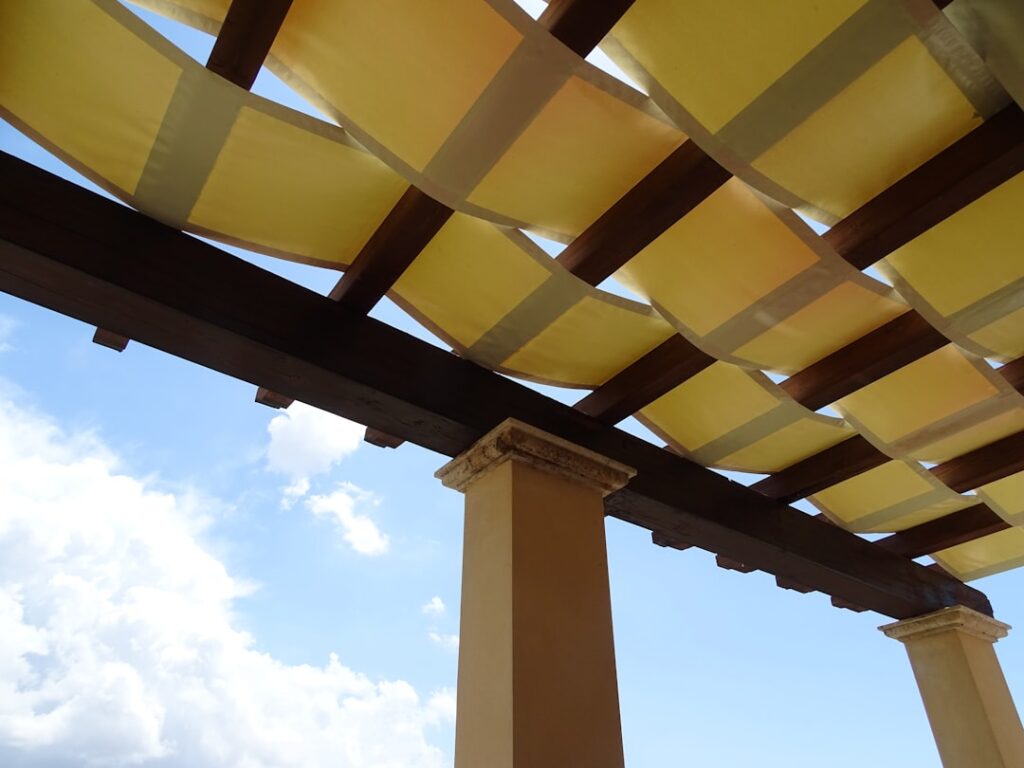
A retractable canopy is a waterproof or water-resistant fabric panel that slides along tracks mounted to the pergola rafters. Pull it closed for shade and rain protection, open it to enjoy the sky. It is a mid-range option, roughly $500 to $3,000 depending on size and whether it is manual or motorized.
The fabric matters. Fully waterproof canopies use PVC-coated or vinyl fabrics, while many “shade” canopies are only water-resistant and will eventually let heavy rain seep through. If keeping dry is the goal, confirm the fabric is rated waterproof, not just water-repellent. Fabric covers generally need replacing every 5 to 10 years, and they should be retracted in high winds and before heavy snow.
Metal and Insulated Roof Panels
For maximum durability and weather protection, some homeowners cap the pergola with solid aluminum or insulated (foam-core) roof panels, essentially turning it into a patio-cover roof. Insulated panels keep the space noticeably cooler than clear polycarbonate and dampen rain noise. They are fully waterproof and low-maintenance, but they permanently block the light, so you lose the open, airy feel a pergola is known for. Cost runs $15 to $35 per sq ft installed. This is a good choice if you want a solid roof and never plan to want the sun coming through.
Comparing the Options at a Glance
Here is how the main choices stack up so you can match one to your priorities and budget.
- Fabric/retractable canopy: $500-$3,000. Flexible and affordable, but shorter lifespan; confirm it is truly waterproof.
- Polycarbonate panels: $10-$25/sq ft. Durable, DIY-friendly, and cost-effective; can be noisy and hot if clear.
- Metal/insulated panels: $15-$35/sq ft. Toughest and coolest underneath, but blocks all light.
- Louvered aluminum roof: $100-$250/sq ft. Total control and premium looks; the highest price.
Don’t Forget Drainage and Slope
Waterproofing the top is only half the job. Water has to go somewhere, or it will pool and eventually leak or sag. Any solid cover needs a slope, aim for at least a 1/4 inch of fall per foot, so rain runs off toward a gutter or a designated edge rather than sitting on the roof. Louvered systems have this engineered in with post-integrated downspouts. For DIY polycarbonate or panel jobs, plan the slope and add a gutter along the low edge to keep runoff from dumping right in front of your seating area or against the house.
Which Should You Choose?
Match the cover to how you use the space. If you want an occasional shade fix on a budget and do not mind retracting it in storms, a waterproof retractable canopy is the sweet spot. If you want a permanent, durable dry roof at a reasonable price and are handy, polycarbonate panels are hard to beat. If this is your primary outdoor living room and you want to switch between full sun and a sealed roof at the touch of a button, a motorized louvered system justifies its cost.
Whatever route you pick, remember that waterproof pergola covers are what separate a pretty garden structure from an outdoor room you can actually live in through rain and blazing sun alike. Confirm true waterproofing on any fabric, build in slope and drainage on any solid panel, and you will get a patio that stays usable no matter what the forecast says.
One consideration worth weighing before you commit is how much light you are willing to give up. A fully solid roof, whether metal or opaque polycarbonate, keeps you the driest but casts the space into permanent shade, which can make an adjacent room darker too. If you want protection without losing the bright, open feel that draws people to a pergola in the first place, clear or opal polycarbonate and adjustable louvered systems are the better fit. Think through the tradeoff between total dryness and natural light, and you will land on a cover that keeps the rain out without turning your sunny patio into a cave.
DIY vs. Professional Installation
How you install a waterproof cover depends heavily on which type you choose. Polycarbonate panels are the most DIY-friendly permanent option; a handy homeowner can mount furring strips, set the panels with the proper gaskets and screws, and add a gutter over a weekend, saving the $1,000 to $3,000 a contractor would charge. The keys are cutting the panels cleanly, using the manufacturer’s sealing tape on the ends, and building in slope so water sheds properly.
Retractable fabric canopies and slide-on-wire systems are also within reach for confident DIYers, though getting the cable tension and tracks right takes patience. Louvered aluminum roofs and motorized systems, on the other hand, are best left to professionals. They involve heavy components, precise leveling, structural reinforcement of the posts and footings, and often electrical work for the motor and sensors. A botched louvered install can leak or bind, so the labor cost buys real peace of mind. Before any permanent cover, confirm your existing pergola can carry the added weight and wind load; some lightweight garden pergolas need reinforcement before you can safely cap them.
Maintenance and Longevity
A waterproof cover only stays waterproof if you keep it maintained. For polycarbonate and metal panels, hose them off a couple of times a year and clear leaves and debris from the surface and any gutter so water keeps draining freely; check the sealing gaskets and screws annually and reseal any that have loosened. Clogged gutters are the most common cause of leaks and overflow, so make gutter cleaning a seasonal habit.
Fabric covers demand a bit more attention. Rinse them periodically, treat mildew promptly, and retract or remove them ahead of heavy storms and winter snow to extend their life, most quality fabrics last 5 to 10 years, longer if stored over winter. Louvered roofs are the lowest-maintenance of all: an occasional wipe-down of the slats, a check of the drainage channels, and lubrication of the moving parts per the manufacturer’s schedule. Whichever waterproof pergola cover you choose, a little routine care keeps it shedding water and looking sharp for many seasons, protecting both your patio and the investment you made in it.