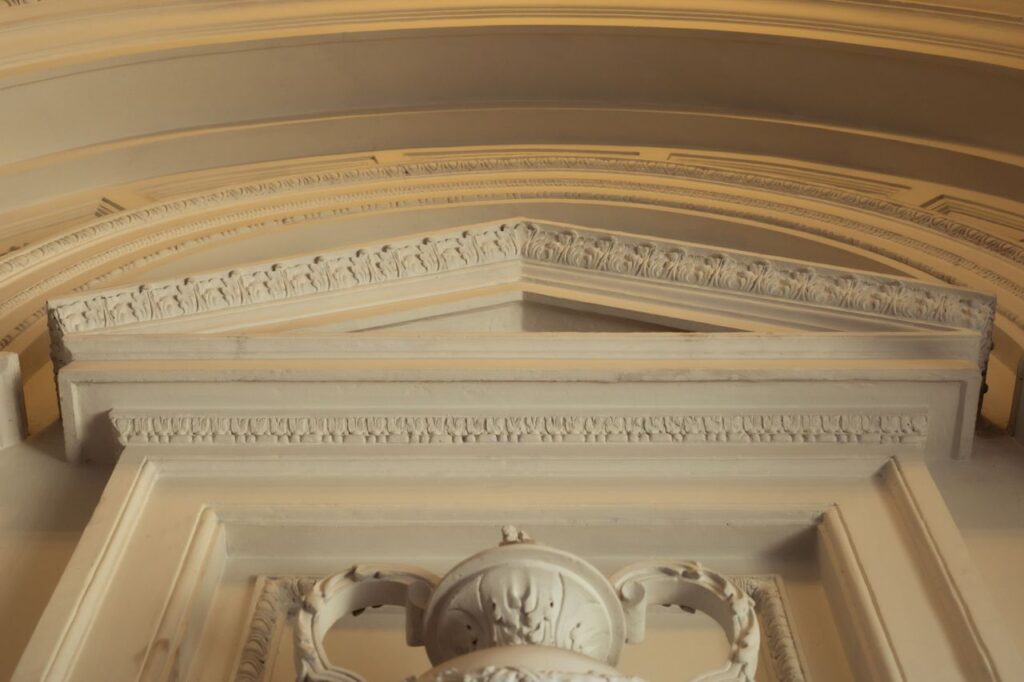
Crown molding is one of the highest-impact upgrades per dollar in home improvement, adding architectural polish that makes rooms feel finished and even more valuable to buyers. Yet the cost to install crown molding catches many homeowners off guard, because the labor to cut and fit those angled corners often exceeds the price of the material itself. This guide breaks down real per-foot pricing, material choices, labor rates, and room-by-room estimates so you can budget accurately and decide whether to hire a pro or tackle it yourself.
Average Cost Per Linear Foot
Crown molding is priced by the linear foot, combining material and labor. On average, homeowners pay between $4 and $15 per linear foot installed, with most projects landing around $7 to $10 per foot for standard materials and moderate ceiling heights.
That range breaks down roughly as follows: material runs $1 to $8 per foot depending on the type, and professional labor adds $2 to $8 per foot. High ceilings, ornate profiles, and premium hardwoods push the total toward the upper end, while simple polystyrene in a standard-height room sits at the bottom.
Material Costs by Type
The material you choose has a big effect on both price and installation difficulty. Here’s how the common options compare:
- Polystyrene foam: $1 to $3 per foot. The cheapest and lightest, it glues up with adhesive and is the most DIY-friendly, though it dents easily.
- MDF (medium-density fiberboard): $1.50 to $4 per foot. Smooth, paint-ready, and stable, MDF is the most popular choice for painted trim.
- Polyurethane: $3 to $8 per foot. Lightweight, moisture-resistant, and available in ornate profiles, ideal for bathrooms and intricate designs.
- Solid wood (pine, poplar): $2 to $6 per foot. Paintable and stainable, but heavier and more prone to gaps as it expands and contracts.
- Hardwood (oak, maple, cherry): $5 to $12 per foot. Premium stained looks, but the priciest and most demanding to install.
Labor Costs Explained
Labor is where crown molding gets expensive, and for good reason. Cutting crown accurately requires compound miter cuts, coped inside corners, and precise fitting, skills that take years to master. A carpenter or trim specialist typically charges $35 to $90 per hour, or quotes the job at $2 to $8 per linear foot.
Several factors drive labor up:
- Ceiling height: Rooms above 9 feet require scaffolding or extra ladder work, adding time and cost.
- Number of corners: Each inside and outside corner is a separate cut. A room with many corners or a tray ceiling costs more per foot than a simple rectangular room.
- Molding size and profile: Large, multi-piece built-up crown takes far longer than a simple single-piece run.
- Wall and ceiling condition: Wavy walls and out-of-square corners require extra scribing and caulking.
Room-by-Room Cost Estimates
To make budgeting concrete, here are typical installed costs by room, assuming standard 8-to-9-foot ceilings and mid-grade MDF or wood molding at about $8 per linear foot installed:
- Small bedroom or office (12×12): roughly 48 linear feet, or $380 to $500
- Average living room (15×20): roughly 70 linear feet, or $550 to $800
- Dining room (14×16): roughly 60 linear feet, or $480 to $700
- Whole main floor: 250 to 400 linear feet, or $2,000 to $4,000
These figures assume painted molding. Stained hardwood in a large room with high ceilings can easily double the per-room cost.
Additional Costs to Budget For
The molding and its installation aren’t the only line items. Plan for these extras:
- Painting or staining: $1 to $3 per linear foot if you hire it out, or the cost of paint and time if you DIY.
- Caulk and filler: Essential for a seamless look, a modest $20 to $40 in supplies.
- Old molding removal: $1 to $2 per foot if you’re replacing existing trim.
- Corner blocks: Optional decorative pieces that simplify corners but add $5 to $20 each.
DIY vs. Hiring a Pro
Installing crown molding yourself can cut costs by 50 to 70 percent, since you eliminate the labor charge entirely. On a $2,000 professional job, DIY might cost $600 to $900 in materials and tool rental. The savings are real, but so is the difficulty.
Crown molding is widely considered one of the trickiest trim jobs for beginners. The compound angles confuse first-timers, and coping inside corners has a real learning curve. If you’re handy, patient, and willing to practice cuts on scrap, DIY is achievable, especially with lightweight polystyrene or polyurethane that’s forgiving to work with. But if your home has tall ceilings, ornate profiles, or you want a flawless stained hardwood result, the cost of hiring a skilled carpenter is money well spent.
How to Save on Crown Molding
- Choose paint-grade material. MDF and polystyrene cost far less than hardwood and look great painted.
- Do the painting yourself. Prime and paint the molding before installation, then just touch up the nail holes and seams.
- Bundle rooms. Hiring a carpenter for the whole house at once lowers the per-foot rate compared to one room at a time.
- Keep the profile simple. Single-piece crown installs much faster than built-up multi-piece designs.
- Get multiple quotes. Trim labor rates vary widely; three estimates protect you from overpaying.
Is Crown Molding Worth the Cost?
Beyond the visual upgrade, crown molding is one of the finishing touches real estate agents consistently cite as adding perceived value and helping homes sell. For a few hundred dollars per room, it elevates a space from builder-basic to custom-feeling. Whether you hire a pro for a flawless finish or save money doing it yourself, understanding the true cost to install crown molding, material plus the substantial labor of those angled cuts, lets you budget confidently and avoid surprises once the project is underway.
Factors That Change Your Quote
Two rooms of the same size can carry very different crown molding quotes, and understanding why helps you evaluate estimates. Ceiling height is a major driver: anything above 9 feet requires scaffolding or extended ladder work, adding both time and a safety premium. The number of corners matters just as much, since each inside corner must be coped and each outside corner mitered, and a room with bays, tray ceilings, or multiple offsets multiplies those cuts.
Material and profile size also shift the price. A large, built-up crown assembled from three separate pieces takes far longer to install than a simple single-piece molding, sometimes doubling the labor. Finally, the condition of your walls and ceilings plays a role; wavy walls and out-of-square corners force the installer to scribe, shim, and caulk more, all of which adds billable hours.
Frequently Asked Questions
How much does it cost to install crown molding in one room?
An average 12×12 to 15×20 room costs roughly $380 to $800 installed, depending on ceiling height, material, and corner count. Small offices land near the bottom of that range, while large living rooms with high ceilings reach the top. Stained hardwood pushes costs higher than painted MDF.
Is crown molding hard to install yourself?
Crown molding is one of the trickier trim projects for beginners because of its compound miter cuts and coped inside corners. It’s doable for a patient DIYer willing to practice on scrap, especially with forgiving lightweight polystyrene or polyurethane. Tall ceilings, ornate profiles, and stained hardwood are best left to a skilled carpenter.
What is the cheapest crown molding material?
Polystyrene foam is the least expensive at $1 to $3 per foot, and it glues up without nails, making it the most DIY-friendly option. MDF is the next step up and the most popular paint-grade choice, offering a smoother, more durable finish for a modest price increase.
Does crown molding add value to a home?
Yes. Real estate agents consistently cite crown molding as a finishing touch that raises a home’s perceived value and helps it show better. For a few hundred dollars per room, it elevates a space from builder-basic to custom-feeling, making it one of the better returns among cosmetic upgrades.