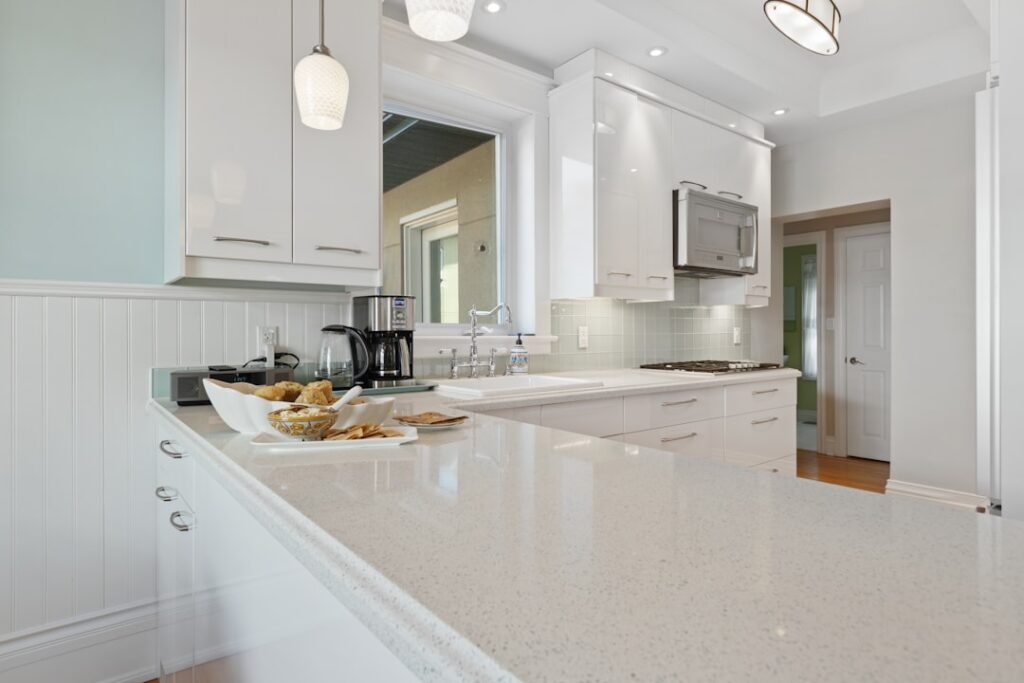
Replacing countertops means demolition, plumbing disconnects, and often a few days without a working kitchen. A counter overlay sidesteps most of that by applying a thin new surface directly over your existing counters, leaving the cabinets and base untouched. It can transform dated laminate or worn tile into something fresh without the cost and chaos of a full tear-out. But overlays aren’t a miracle fix for every situation, and knowing where they shine versus where they fall short will save you regret.
What a Counter Overlay Actually Is
An overlay is a resurfacing layer bonded on top of your current countertop. Instead of ripping out the old slab, installers prep the existing surface and apply a new finish over it, usually adding somewhere between an eighth of an inch and three-quarters of an inch of thickness. The original counter stays in place and acts as the structural base. Done well, the result looks and functions like a new countertop while skipping the most disruptive parts of replacement.
Common Types of Overlays
Several materials work as overlays, each with its own look, durability, and difficulty level.
Concrete Overlay
A troweled-on concrete overlay creates a modern, seamless surface with a stone-like feel. It’s typically applied in multiple thin coats, then sanded and sealed. Concrete is durable and highly customizable for color and texture, but it requires skill to get smooth and must be sealed regularly to resist stains.
Epoxy Overlay
Epoxy resin pours into a glossy, hard coating that can mimic the look of marble or quartz with swirled pigments. It produces a high-shine, fully waterproof surface and is popular with DIYers because of dramatic before-and-after results. The trade-offs are that epoxy can scratch, may yellow over time with heavy sun exposure, and is unforgiving of dust or mistakes during the pour.
Laminate Over Laminate
New laminate sheets can be glued over old laminate counters with contact cement. It’s the most budget-friendly overlay and offers endless patterns, but the seams and edges require careful work, and it won’t add the premium feel of stone-look finishes.
Stone and Tile Overlays
Some systems use thin natural stone or porcelain panels installed over existing counters. These deliver a genuine stone surface but add the most thickness and weight, and they require professional installation.
Surface Prep Is Everything
Whatever material you choose, adhesion makes or breaks the job. The existing counter must be clean, dry, and deglossed so the new layer can bond. That usually means a thorough degreasing, sanding or scuff-sanding the surface, and sometimes a bonding primer. Loose laminate, cracked tile, or water-damaged substrate must be repaired first, because an overlay only performs as well as what’s underneath it. Skipping prep is the number one reason overlays peel, bubble, or delaminate down the road.
- Remove sink and faucet hardware where possible, or mask carefully.
- Degrease with a strong cleaner, then rinse and dry completely.
- Scuff-sand to dull the existing finish.
- Repair chips, gaps, and damage before applying any coating.
- Apply the manufacturer’s recommended primer or bonding agent.
Counter Overlay vs Full Replacement
The honest comparison comes down to cost, durability, and your starting point. An overlay generally costs less and installs faster, often in a weekend for DIY kits or a day or two for pros. Replacement costs more and takes longer but gives you a genuine new slab with full thickness and manufacturer warranties.
Overlays make the most sense when your existing counters are structurally sound, your cabinets are in good shape, and you mainly want a cosmetic upgrade. Replacement is the smarter call when the base is damaged, when you want to change the counter’s shape or add an undermount sink, or when you’re after the long-term value of solid quartz or granite.
Honest Pros and Cons
Here’s the balanced picture so you can decide with eyes open.
Pros: Lower cost than replacement, faster installation, less mess and downtime, no demolition, and a wide range of looks. You keep your existing cabinets and plumbing layout intact.
Cons: Durability depends heavily on prep and product quality. Overlays can chip, scratch, or peel if the surface wasn’t bonded properly. Some finishes need regular resealing. DIY epoxy and concrete have a learning curve and unforgiving working times. And an overlay can’t fix a failing substrate or change your counter’s dimensions.
Maintenance and Longevity
A well-installed overlay can last many years, but expect to baby it more than a solid stone counter. Use cutting boards, set down trivets for hot pans, and clean with non-abrasive products. Concrete and some other finishes need periodic resealing to stay stain-resistant. With reasonable care, a quality counter overlay holds up well; with hard use and skipped maintenance, it shows wear faster than quartz or granite.
DIY vs Hiring a Pro
Whether you tackle an overlay yourself depends on the material and your tolerance for working time pressure. Laminate-over-laminate and many epoxy kits are marketed to DIYers, and motivated homeowners get good results, but each has pitfalls. Epoxy in particular has an unforgiving pot life; once mixed, you have a limited window to pour and spread before it sets, and dust, bugs, or bubbles trapped during curing leave permanent flaws. Concrete overlays require trowel skill to avoid lap marks and a smooth, level surface.
Hiring a professional costs more but buys consistency, especially for seamless concrete or stone-panel systems and for kitchens where a flawed finish would be glaringly visible. If you do go DIY, practice on a hidden section or a scrap board first, work in a dust-free space, and follow the product’s temperature and humidity requirements exactly. Rushing the prep or the cure is the most common reason DIY overlays disappoint.
Realistic Cost Expectations
Overlays span a wide price range depending on material and whether you DIY. Laminate-over-laminate is the cheapest route, often just the cost of the sheet goods and contact cement. DIY epoxy kits typically run modestly more, while professional concrete or stone-panel overlays cost considerably more per square foot but still usually land below a full quartz or granite replacement. The honest takeaway is that overlays save money compared to replacement, but a premium professional overlay can approach the cost of some entry-level slab options, so get quotes for both before deciding.
Is an Overlay Right for You?
If your counters are sound, your budget is tight, and you want a refreshed kitchen without a renovation, an overlay is a sensible, lower-cost path. If the underlying counter is damaged, or you want the longevity and resale appeal of a true stone slab, put your money toward replacement instead. Match the method to your real goals and condition, and you’ll get a result that looks good and lasts as long as you reasonably expect it to.