Kitchen countertop resurfacing is the art of making tired, dated, or scratched counters look new without ripping them out, and for a lot of kitchens it’s the smartest money you can spend. I’ve resurfaced laminate counters that homeowners were certain needed a full $4,000 replacement, and for a few hundred dollars in materials plus a weekend, they got a finish that fooled their guests. This guide covers the real options, what they cost, which surfaces they work on, and where the honest limitations are, so you go in with clear expectations instead of a Pinterest fantasy.
Part of our Countertops guide — explore the full guide →
What Resurfacing Actually Means
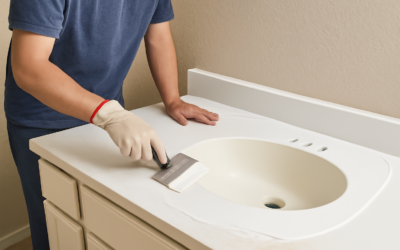
Resurfacing means bonding a new decorative layer over your existing countertop rather than removing it. The old counter stays in place as the substrate, and you apply epoxy, a mineral coating, a concrete overlay, new laminate, or tile directly on top. Because you skip demolition, disposal, and often the plumbing disconnect, you save both money and time. Done right, the result can mimic granite, marble, or stone with surprising fidelity.
The catch is that resurfacing is a coating, not a slab, so it will never be quite as bulletproof as a fresh piece of quartz. Understanding that tradeoff up front is the difference between being thrilled and being disappointed. If your counters are structurally sound and you mainly hate how they look, resurfacing is ideal. If the substrate is water-swollen, delaminating, or crumbling, no coating will save it and you should replace.
DIY Epoxy and Coating Kits
The most popular DIY route is an all-in-one kit. Rust-Oleum Countertop Transformations runs roughly $250 to $350 and uses a base coat, decorative chips you broadcast on, and a clear protective topcoat to build a speckled stone look. Giani makes brush-and-sponge mineral paint kits in the $70 to $100 range that layer colors to mimic granite, finished with an acrylic or epoxy topcoat. For a true poured, glossy stone-slab appearance, dedicated countertop epoxy kits like Stone Coat or Leggari run $150 to $400 depending on square footage.
These kits cover a typical 35 to 55 square feet of kitchen counter. The Giani-style systems are the most forgiving for a first-timer, while poured epoxy gives the most dramatic depth but is far less forgiving of dust, bubbles, and drips. Budget a full weekend, expect strong fumes, and ventilate aggressively. Most homeowners land in the $200 to $600 range for a DIY resurfacing including sandpaper, tape, brushes, and drop cloths.
Concrete Overlay, Refacing, and Tile-Over
Beyond epoxy, you have three other resurfacing paths. A concrete or micro-cement overlay troweled 1/8 to 1/4 inch thick over your existing top gives an industrial, seamless look and can be tinted any color, then sealed. Feather-finish concrete products cost $60 to $150 in material but demand more skill to trowel smooth. The result is durable and repairable but shows a matte, slightly imperfect surface some people love and others don’t.
Laminate refacing means gluing a fresh sheet of high-pressure laminate over the old one with contact cement, ideal when the substrate is solid but the pattern is dated. A 4-by-8 sheet of Wilsonart or Formica runs $40 to $120. Tile-over sets ceramic or porcelain tile directly onto a scuffed laminate or existing tile counter using a quality thinset. Tile is heat-proof and cheap per square foot, but you’re left with grout lines to keep clean. Each method suits a different priority: seamless look, exact pattern match, or heat resistance.
What Surfaces You Can Resurface
Most resurfacing systems are engineered for laminate, and that’s where they shine because laminate is smooth, stable, and easy to scuff-sand for adhesion. Existing ceramic tile counters can be resurfaced, but you’ll want to fill the grout lines flush first or they’ll telegraph through the coating. Solid surface material like Corian takes coatings well once sanded. Cultured marble and older solid-surface vanities also accept epoxy nicely.
Natural stone is trickier. You can coat granite, but its density and any sealer make adhesion less reliable, so it’s rarely worth it since granite already looks good. The one surface to avoid coating is anything with active water damage or a swollen particleboard core, because the coating will crack and lift as the substrate keeps moving. Test a hidden corner for adhesion if you have any doubt.
Prep, Cure Time, and Durability
Prep makes or breaks the job. Every system starts with a thorough degreasing, because kitchen counters carry invisible cooking oils that wreck adhesion. Scrub with a strong cleaner, rinse, then scuff-sand with 120 to 220 grit so the coating has tooth to grip. Fill chips and seams, tape off backsplashes and cabinets, and remove or mask the sink. Skipping the cleaning step is the number one reason coatings peel.
Cure time matters more than people expect. Most kits are dry to the touch in a few hours, light-duty in 24 to 48 hours, but not fully cured and water-resistant for 5 to 7 days, and epoxy can take up to two weeks to reach full hardness. Do not set anything heavy or wet on a fresh surface, and no cutting directly on it ever. With reasonable care, a quality resurfacing lasts 5 to 10 years before it needs a refresh, and you can always recoat rather than replace.
Temperature and humidity during the cure make a real difference. Coatings level and harden best between 65 and 85 degrees with low humidity, so avoid resurfacing during a cold snap or a muggy heat wave if your kitchen isn’t climate controlled. Keep pets and kids out of the room while it cures, because a single paw print or fingerprint in a leveling epoxy is permanent and means sanding it back and recoating. Patience during those first two weeks is what buys you years of good service afterward.
Resurfacing Versus Full Replacement
The math usually favors resurfacing when your budget is tight and your counters are sound. A DIY kit at $200 to $600, or a professional resurfacing at $1,000 to $2,500, undercuts new quartz or granite that typically runs $2,500 to $6,000 installed for an average kitchen. If you plan to sell soon, a crisp resurfaced counter can boost buyer appeal for very little outlay.
Replacement wins when you want genuine stone durability, an undermount sink, or a specific slab you fell in love with, or when the existing counter is failing structurally. There’s no shame in either choice. Be honest about how long they’ll stay and how hard they cook. A busy family that sears steaks nightly may outrun a coating, while a couple refreshing a rental gets years of good looks for a fraction of the price.
Factor in the hidden costs of replacement too. A new slab often triggers a plumbing disconnect and reconnect, a possible new sink and faucet, backsplash repair where the old counter met the wall, and disposal of the old material. Those add-ons routinely tack $400 to $1,000 onto a replacement quote, which widens the gap in favor of resurfacing. A coating leaves your sink, plumbing, and backsplash untouched, so the number on the estimate is much closer to the number you actually pay.
Setting Realistic Expectations
Good kitchen countertop resurfacing looks fantastic from standing height and holds up to normal daily use, but up close you may spot a brushstroke, a tiny bubble, or a slightly different feel than solid stone. That’s normal. Treat the finish with cutting boards and trivets, wipe up standing water, and avoid harsh abrasives, and it rewards you with years of service. Approach it as a smart cosmetic upgrade rather than a stone-slab clone, and kitchen countertop resurfacing will feel like one of the best returns in your whole kitchen.