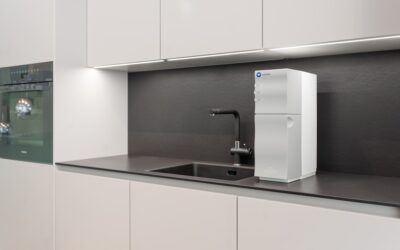
If you rent, lack space under the sink, or just want cleaner water without a plumber, a countertop system is the easiest way to get it. Countertop water filtration sits right on your counter and removes contaminants without permanent installation, making it a favorite for apartments, older homes, and anyone who wants filtered water fast. But the category covers everything from a simple gravity dispenser to a full reverse osmosis unit, and they differ enormously in what they remove and what they cost. This guide sorts out the types so you can choose wisely.
Part of our Countertops guide — explore the full guide →
- Why Choose a Countertop System
- Type 1: Gravity Dispensers
- Type 2: Faucet-Connected Countertop Units
- Type 3: Countertop Reverse Osmosis
- What These Systems Remove
- Filter Life and Replacement Costs
- Cost Overview
- Caring for Your System and Counter
- Choosing the Right System
- Countertop vs. Under-Sink and Whole-House Systems
- Does It Affect Your Countertop Surface?
- Frequently Asked Questions
Why Choose a Countertop System
Countertop filters hit a sweet spot between the low capacity of a pitcher and the complexity of an under-sink system. They filter more water at once than a pitcher, require little or no installation, and stay accessible for easy filter changes. For renters especially, they deliver serious filtration without drilling holes or modifying plumbing you cannot alter.
The trade-off is counter space, since the unit sits out in the open. But for many households, having filtered water on demand without a plumbing project is well worth the footprint.
Type 1: Gravity Dispensers
Gravity-fed countertop filters use no plumbing connection at all. You pour water into an upper chamber, and it filters down through the cartridge into a lower reservoir with a spigot. These systems, often holding a couple of gallons, are popular for their portability and off-grid usefulness.
They excel at removing chlorine, sediment, and many contaminants depending on the filter media, and some high-end gravity units filter a wide range of impurities. The downsides are the counter footprint, the need to refill manually, and slower filtering compared to pressurized systems. They are ideal for renters, travel, and emergency preparedness.
Type 2: Faucet-Connected Countertop Units
These sit on the counter and connect via a small hose to your existing faucet through a diverter valve. Flip the diverter and water runs through the filter and out a dedicated spout on the unit. They filter on demand under your home’s water pressure, so there is no waiting or refilling.
Installation is tool-free and reversible, you screw a diverter onto the faucet aerator, making them renter-friendly. They handle chlorine, sediment, and often lead and other contaminants depending on the cartridge. The main limitations are that they only fit standard threaded faucets (not all pull-down sprayers) and the diverter and hose add clutter around the sink.
Type 3: Countertop Reverse Osmosis
For the most thorough filtration without going under the sink, countertop reverse osmosis (RO) units are the top tier. Modern tankless countertop RO systems are compact, plug into an outlet, and either connect to the faucet or use a fill tank. RO pushes water through a semipermeable membrane that removes the widest range of contaminants:
- Dissolved solids, salts, and minerals
- Lead, arsenic, fluoride, and other heavy metals
- Chlorine, chloramine, and taste and odor issues
- Nitrates and many other dissolved impurities
The trade-offs are a higher price, the use of some water as waste in the filtering process (newer models are far more efficient), and a larger countertop footprint. If you want near-bottled-water purity, countertop RO delivers it.
What These Systems Remove
Not all filters remove the same contaminants, and matching the filter to your water is the whole point. Basic carbon filters excel at chlorine, taste, and odor. Better multi-stage units add lead, cysts, and heavy metals. Reverse osmosis removes the broadest spectrum, including dissolved solids that carbon cannot touch.
Before buying, get a water quality report, your municipal supplier publishes an annual one, or test well water, so you know what you actually need to remove. Look for systems certified by NSF/ANSI standards for the specific contaminants you care about, which verifies the manufacturer’s claims independently.
Filter Life and Replacement Costs
The purchase price is only part of the cost, replacement filters are the ongoing expense. Filter life varies widely:
- Gravity and faucet carbon filters: typically last 2 to 6 months or a few hundred gallons.
- Multi-stage cartridges: often 3 to 12 months depending on use and water quality.
- RO membranes: last 1 to 3 years, with pre- and post-filters changed more often.
Factor annual filter costs into your decision. A cheap system with expensive short-life filters can cost more over three years than a pricier unit with long-life cartridges.
Cost Overview
Countertop filtration spans a wide price range. Simple faucet-connected units and basic gravity dispensers start around $30 to $80. Better multi-stage gravity systems run $100 to $300. Countertop reverse osmosis units typically cost $150 to $500 or more depending on features and capacity. Add annual filter replacements, which range from about $30 to $150 per year depending on the system.
Compared with buying bottled water, most countertop systems pay for themselves within months while cutting plastic waste dramatically.
Caring for Your System and Counter
Whatever system you choose, maintenance keeps it working and protects your counter. Change filters on schedule, since an exhausted filter stops removing contaminants and can harbor bacteria. Clean the reservoir and spigot periodically to prevent buildup.
Because the unit sits on your counter, place it on a spot that can handle occasional drips, and wipe up spills promptly, especially on porous natural stone that can stain or etch. A small tray under the unit protects the surface and catches condensation.
Choosing the Right System
Match the system to your needs and water. Renters and travelers do well with gravity or faucet-connected units. Households wanting maximum purity should look at countertop RO. Always check what contaminants your water contains, pick a system certified to remove them, and weigh the ongoing filter cost, not just the sticker price.
A good countertop water filtration system gives you cleaner, better-tasting water without plumbing work or permanent installation. Whether you go simple with a gravity dispenser or thorough with reverse osmosis, choosing based on your actual water quality and total cost of ownership ensures you get real value and genuinely cleaner water for years.
Countertop vs. Under-Sink and Whole-House Systems
It helps to know where countertop units fit against the alternatives. Under-sink systems tuck the filter out of sight and dispense through a dedicated faucet, but they require drilling and permanent plumbing, which rules them out for many renters. Whole-house systems treat every tap in the home and suit specific problems like sediment or hardness across all fixtures, at a much higher cost and with professional installation.
Countertop systems trade the hidden convenience of under-sink units for portability, low cost, and zero permanent modification. If you rent, move often, or just want filtered drinking water without a project, the countertop route is usually the right call. If you own your home and want filtration out of sight, an under-sink unit may be worth the install.
Does It Affect Your Countertop Surface?
Since the unit lives on your counter, the surface underneath deserves a thought. Natural stone like marble and some granites is porous and can stain or etch from standing water and mineral drips, so wipe up spills promptly and consider a small tray. Quartz and solid surface are non-porous and shrug off water, making them ideal spots for a filtration unit. Laminate handles water fine but can swell at seams if water pools for long periods, so keep the area dry.
Wherever you place it, leave a little clearance around the unit for airflow and easy filter changes, and keep it away from the edge where it could be knocked off.
Frequently Asked Questions
Do countertop filters remove lead? Many do, but not all. Check that the specific model is certified to reduce lead, since basic carbon-only filters may not.
How do I know what my water needs? Read your municipal water quality report, or test well water, then choose a system certified to remove the contaminants you actually have.
Are they cheaper than bottled water? Yes, over time. Most countertop systems pay for themselves within months compared with buying bottled water, while cutting plastic waste.