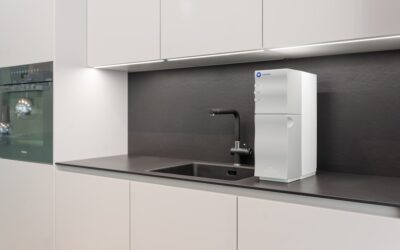
Here is the surprise most shoppers run into: the pitcher on the kitchen counter and the carbon filter in the refrigerator door remove almost no fluoride. Standard activated carbon is built for chlorine, taste, and odor, and fluoride ions slip right through. Finding a water filtration system that removes fluoride means looking at a narrower set of technologies, mainly reverse osmosis, bone char, and activated alumina. Each has different costs, installation needs, and maintenance habits, and choosing wrong can leave you paying for filters that do not do the job you bought them for.
- How a Water Filtration System That Removes Fluoride Works
- Reverse Osmosis: The Most Common Choice
- Activated Alumina and Bone Char Filters
- Whole-House Fluoride Filtration: Is It Worth It?
- Cost Comparison of Fluoride Filtration Options
- Installing an Under-Sink RO System
- Maintaining Your System for Consistent Fluoride Reduction
- Test Your Water Before and After
- Frequently Asked Questions
How a Water Filtration System That Removes Fluoride Works
Fluoride is a small, negatively charged ion dissolved in water. Community water systems in the US that fluoridate typically target 0.7 milligrams per liter (mg/L), while some private wells carry naturally higher levels, occasionally above the EPA’s enforceable limit of 4.0 mg/L. Because it is dissolved rather than suspended, a filter must either block it physically at the molecular level or attract and hold it chemically.
Three approaches do this reliably:
- Reverse osmosis (RO): Pushes water through a semi-permeable membrane with pores around 0.0001 micron. Well-maintained systems typically reduce fluoride by 85 to 95 percent.
- Activated alumina: A porous aluminum oxide media that adsorbs fluoride. It works best in slightly acidic water (pH 5.5 to 6.5) and with slow flow rates.
- Bone char: Carbonized animal bone that contains hydroxyapatite, which binds fluoride. Common in gravity filters and some under-sink cartridges.
Distillation also removes fluoride almost completely, but countertop distillers are slow, making roughly 1 gallon every 4 to 6 hours, and use a fair amount of electricity.
Reverse Osmosis: The Most Common Choice
An under-sink RO system is the go-to option for drinking and cooking water. A typical four- or five-stage unit includes a sediment prefilter, one or two carbon blocks to protect the membrane from chlorine, the RO membrane itself, and a carbon polishing filter. Water collects in a 3- to 4-gallon pressurized tank and feeds a dedicated faucet mounted on the sink deck.
Look for certification to NSF/ANSI Standard 58, which covers RO performance, and check the performance data sheet for fluoride reduction specifically. Popular models such as the APEC ROES-50, iSpring RCC7, and Waterdrop tankless units run $180 to $600. Tankless RO designs save cabinet space and often waste less water, around 1 gallon of drain water per 2 to 3 gallons of filtered water, compared with 3 or 4 to 1 on older tank systems.
Because RO strips minerals along with fluoride, some people add a remineralization stage that reintroduces calcium and magnesium. It improves taste and raises pH slightly, and it costs about $30 to $60 extra.
Activated Alumina and Bone Char Filters
These adsorption media make sense where you cannot install RO, such as rentals, or when you prefer a gravity or countertop setup that needs no plumbing. Countertop gravity units like the Berkey with PF-2 fluoride elements, or ProOne systems, use this approach, as do some inline cartridges.
The catch is capacity. Adsorption media eventually fills up, and once it does, fluoride passes straight through without any change in taste or appearance. Most fluoride cartridges are rated for 500 to 1,000 gallons at municipal fluoride levels, and much less on high-fluoride well water. Replace on schedule, not when the water “tastes off,” because you will never taste the difference.
Flow rate matters too. Activated alumina needs contact time, so these filters are slower than carbon-only cartridges. Expect a gravity unit to filter a few gallons per hour.
Whole-House Fluoride Filtration: Is It Worth It?
Whole-house systems that reduce fluoride exist, usually large activated alumina tanks installed where the main water line enters the home. They cost $1,500 to $4,000 installed and often need a pH adjustment stage and a backwash control valve. Media replacement runs several hundred dollars every one to three years depending on usage.
For most households, point-of-use filtration at the kitchen sink handles the water you actually drink and cook with. Skin absorption of fluoride from showering is minimal. Whole-house fluoride removal makes the most sense on private wells with naturally high fluoride, where the goal is reducing exposure for the whole family, or when paired with other treatment for iron, arsenic, or hardness.
Cost Comparison of Fluoride Filtration Options
| System Type | Upfront Cost | Annual Filter Cost |
|---|---|---|
| Under-sink reverse osmosis | $180 – $600 | $60 – $150 |
| Countertop RO (no plumbing) | $300 – $550 | $80 – $160 |
| Gravity with fluoride elements | $250 – $450 | $50 – $120 |
| Countertop distiller | $150 – $400 | $40 – $100 plus electricity |
| Whole-house activated alumina | $1,500 – $4,000 | $200 – $500 |
Membrane replacement on RO units typically happens every 2 to 3 years at $40 to $90. Prefilters get changed every 6 to 12 months. Plumber installation for an under-sink unit, if you do not DIY it, runs $150 to $350.
Installing an Under-Sink RO System
Most homeowners with basic plumbing skills can install an under-sink RO system in 2 to 3 hours. You will need an adjustable wrench, a drill with a step bit or diamond hole saw if the sink lacks a spare faucet hole, and a bucket and towels.
- Shut off the cold water supply at the angle stop under the sink and open the faucet to relieve pressure.
- Install the feed valve between the angle stop and the cold supply line. Most kits include a 3/8-inch compression tee.
- Mount the drain saddle on the sink drain above the P-trap, and drill a 1/4-inch hole through the pipe wall.
- Drill the faucet hole if needed. Quartz and granite require a diamond core bit and water cooling; stainless sinks accept a step bit.
- Mount the filter housing and tank, connect the color-coded tubing, and push fittings until they seat fully.
- Flush the system according to the manual, usually by filling and draining the tank two or three times, then check every connection for drips over the next 24 hours.
Place a small leak detector alarm on the cabinet floor. A $15 sensor can save your cabinet base and flooring from a slow drip at a push fitting. If your home has old galvanized pipes, a shutoff that will not close fully, or no accessible drain, bring in a licensed plumber rather than forcing fittings onto corroded lines.
Maintaining Your System for Consistent Fluoride Reduction
Filtration performance is only as good as the maintenance schedule behind it. RO membranes foul gradually from hardness minerals, iron, and bacteria, and a clogged prefilter starves the membrane of pressure. Mark filter change dates on the housing with a paint pen, or set phone reminders, so changes do not slide by months.
Water pressure is the hidden variable. Reverse osmosis membranes are rated at around 50 to 60 psi, and output quality drops when household pressure falls below about 40 psi. If your gauge reads low, which is common on private wells, a small booster pump rated for RO use ($80 to $180) restores rejection rates and shortens tank fill time.
Hard water shortens membrane life too. At hardness above roughly 10 grains per gallon, consider a water softener or an antiscalant cartridge upstream of the RO unit. Sanitize the system once a year when you change filters by running a small amount of unscented household bleach or a manufacturer-approved sanitizer through the empty housings, then flushing thoroughly.
A TDS (total dissolved solids) meter costs about $15 and gives a quick health check. It does not measure fluoride directly, but if the TDS of filtered water climbs to more than 10 to 15 percent of your tap water reading, the membrane is losing effectiveness and fluoride reduction is falling with it.
Test Your Water Before and After
Start with data. If you are on municipal water, your utility publishes an annual Consumer Confidence Report listing average fluoride levels. Private well owners should send a sample to a state-certified lab; a basic panel that includes fluoride costs $30 to $100, and many county extension offices can point you to one.
After installing any system, retest. Handheld fluoride meters and test strips give a rough reading, but a lab result is the only reliable confirmation. Retest once a year, or whenever you replace cartridges, to confirm the water filtration system that removes fluoride is still performing as rated.
If you have children, talk with your dentist or pediatrician about fluoride removal. Many dentists recommend fluoride toothpaste or supplements when a household drinks mostly RO or distilled water.
Frequently Asked Questions
Does a Brita or refrigerator filter remove fluoride?
No. Standard activated carbon pitchers and refrigerator filters remove chlorine and some organics, but they do not meaningfully reduce fluoride.
How much fluoride does reverse osmosis remove?
A properly maintained RO system typically reduces fluoride by 85 to 95 percent. Performance drops as the membrane ages or if water pressure is below about 40 psi.
Can I install a fluoride filter in a rental?
Yes. Countertop RO units and gravity filters with fluoride elements need no permanent plumbing changes, so they work well for renters.
How often should fluoride filter cartridges be replaced?
Follow the gallon rating, often 500 to 1,000 gallons for adsorption cartridges and every 6 to 12 months for RO prefilters. Exhausted media gives no warning.