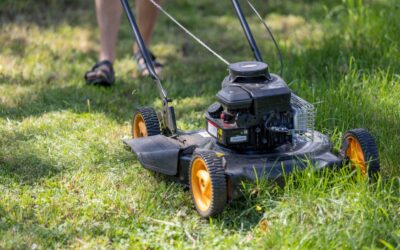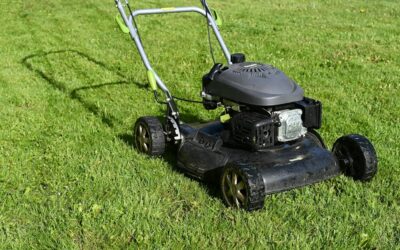
Push a heavy mower up a sloped backyard once in July heat and you’ll understand why the drive wheel was invented. A Craftsman self propelled lawn mower takes the shove out of the chore — the engine turns the wheels, and you just steer. Craftsman has been building this style of walk-behind for decades, and today’s lineup spans $300 gas models to battery units pushing $600. Picking the right one comes down to your lawn size, whether you want to bag or mulch, and how much you care about pull-starting versus pressing a button.
- Gas or Battery: The First Real Decision
- Understanding the Self-Propel Drive
- Cutting Options: Bag, Mulch, or Discharge
- What to Expect on Price and Value
- Keeping It Running
- Common Problems and Quick Fixes
- Deck Size, Cutting Height, and Wheel Setup
- Getting the Most From Every Season
- Is It the Right Mower for You
Gas or Battery: The First Real Decision
Craftsman sells both, and neither is objectively better — it depends on your yard. Gas models like the M220 and M250 run a 149cc or 163cc Briggs & Stratton engine, cover any size lot without a recharge, and cost less up front. Battery models such as the CMCMW220P2 run on a 20V or 60V system, start silently with a button, and skip oil changes entirely, but taper off after about 45 minutes of runtime per charge.
- Gas M220 — 149cc engine, 21-inch deck, around $329. Best for lots up to half an acre.
- Gas M250 — 163cc high-wheel, 21-inch deck, roughly $429. More torque for tall or thick grass.
- Battery V60 — 60V brushless, 21-inch deck, near $499 with battery and charger. Quiet and low-maintenance.
If your lawn tops three-quarters of an acre, lean gas. Under a quarter acre with easy access to an outlet, the battery version pays you back in silence and zero fuel runs.
Understanding the Self-Propel Drive
Not all drive systems feel the same. Craftsman offers front-wheel drive on its lighter models and rear-wheel drive on the premium ones. Front-wheel drive is nimble — tip the mower back to pivot around a flower bed and it turns easily. Rear-wheel drive grips better on hills and stays planted when the bag fills with heavy clippings. For flat yards, front-wheel is fine and cheaper. For any real slope, rear-wheel drive earns the extra money.
Most models feature a variable-speed control, usually a squeeze bar or a thumb lever, that lets you match walking pace from a stroll up to about 3.5 mph. Set it slow for detailed trimming and fast for open stretches.
Cutting Options: Bag, Mulch, or Discharge
Craftsman self-propelled mowers are almost all 3-in-1 machines, meaning one deck handles three jobs. You rear-bag clippings for a manicured look, mulch them back into the lawn to feed the soil, or side-discharge for fast cuts on overgrown grass. Swapping modes takes a mulch plug and a chute, both usually included.
Mulching is the smart default for lawn health — the fine clippings break down in a week or two and return nitrogen to the roots, cutting your fertilizer needs. Bag only when the grass is so long the clippings would smother the lawn, or when you’re chopping fall leaves.
What to Expect on Price and Value
Craftsman lives in the value tier, undercutting Honda and Toro by $100 to $200 for a comparable deck size. You give up a little in engine refinement and long-term parts availability, but for the average homeowner mowing 20 to 30 times a season, the machines hold up well. Look for sales around Memorial Day and Father’s Day, when big-box retailers routinely discount them 15 to 20 percent.
Keeping It Running
A little maintenance stretches these mowers well past their warranty. For gas models, change the oil every 25 to 50 hours with SAE 30 or 10W-30, and replace the spark plug once a season. Clean the air filter every few mows. The self-propel cable stretches over time — if the wheels stop pulling with full force, adjust the cable tension at the handle before assuming the transmission failed.
Blade and Deck Care
- Sharpen the blade twice a season and balance it so vibration stays low.
- Scrape caked grass off the underside of the deck after wet mows to prevent rust and clumping.
- Check that the drive wheels spin freely; grass packed in the axle gears kills the self-propel feature.
- For battery units, store the pack indoors between 50°F and 77°F to preserve cell life.
Common Problems and Quick Fixes
The two complaints you’ll see most are hard starting on gas models and weak propulsion. Hard starts usually trace to stale fuel — drain the tank each fall and use fresh gas with stabilizer. Weak propulsion is almost always that stretched drive cable or a worn drive belt, both cheap fixes. If the mower bogs down in tall grass, raise the cutting height a notch and slow your walking speed; you can always take a second lower pass.
Deck Size, Cutting Height, and Wheel Setup
Craftsman self-propelled mowers almost all use a 21-inch deck, the practical sweet spot for a walk-behind — wide enough to finish a lawn quickly, narrow enough to steer around beds and trees. Cutting height typically adjusts across six positions from about 1.25 inches up to 3.75 inches with a single spring-loaded lever on each corner or a central lever on newer units. Set it high, around 3 inches, for cool-season grasses like fescue and bluegrass; mowing too short stresses the lawn and invites weeds. Drop it lower only for the first spring cut or for warm-season Bermuda.
Wheel size matters more than it looks. High-wheel models put larger 11-inch rear wheels on the mower, which roll over uneven, bumpy, or hilly ground far more smoothly than the standard 8-inch wheels. If your yard has roots, ruts, or slopes, the high-wheel version is worth the small upcharge for how much less it fights you.
Getting the Most From Every Season
A few habits keep a Craftsman cutting cleanly year after year. Mow when the grass is dry — wet clippings clump, clog the deck, and leave an uneven cut. Never remove more than one-third of the blade height in a single pass; scalping the lawn shocks the roots and leaves brown patches. Alternate your mowing direction each week so the grass doesn’t lean permanently and the wheels don’t carve ruts in the same lines. A sharp blade cutting dry grass at the right height does more for your lawn’s appearance than any fertilizer, and it’s entirely free once you own the mower.
Keep the fuel system healthy on gas units by treating the carburetor as the weak point it is. If the mower sits more than a couple weeks between uses in season, a small dose of fuel stabilizer prevents the varnish that clogs the tiny jets. Should it ever start hard and run rough after a long idle spell, a $10 carburetor cleaner spray sprayed into the intake often clears it without a teardown.
For gas models, fresh fuel is the biggest single factor in reliability. Gasoline older than 30 days starts breaking down, and ethanol blends draw in moisture that gums the carburetor. Buy fuel in small amounts, add a stabilizer if it’ll sit, and run the tank dry before winter storage. Do that and the mower fires on the first or second pull every spring instead of demanding a carburetor cleaning.
Is It the Right Mower for You
For a typical suburban lot with a few gentle slopes, a rear-wheel-drive gas M250 hits the mark — strong, affordable, and ready for any grass height. If your yard is small and flat and you’re tired of yanking a starter cord, the 60V battery model is a joy to live with. A Craftsman self propelled lawn mower gives you dependable, no-drama cutting at a price that leaves room in the budget for the rest of the yard. Match the drive type to your terrain, keep the blade sharp, and it will handle a decade of Saturdays without complaint.