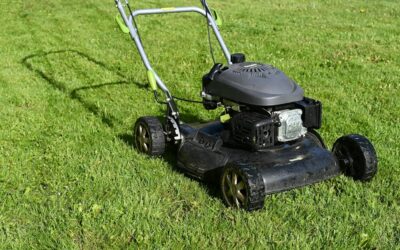
DeWalt built its name on jobsite drills and saws, so plenty of homeowners are surprised to learn the yellow-and-black brand also makes a serious cordless mower. The DeWalt self propelled lawn mower, sold as the DCMWSP244 and its variants, runs on two 20V MAX batteries wired in series to deliver 40 volts of cutting power to a 21.5-inch steel deck. For anyone already invested in DeWalt’s 20V tool ecosystem, it turns a shelf of batteries into a mower that starts with a button and never needs gas, oil, or a pull cord. This guide breaks down the specs, real-world run time, cut quality, and whether it deserves a spot in your garage.
Key Specs at a Glance
The flagship DCMWSP244 is a true self-propelled machine, not a push mower with a battery. It pairs a rear-wheel drive system with variable speed control and a brushless motor that adjusts power to load.
- Deck size: 21.5 inches, fabricated steel
- Power: Two 20V MAX batteries (10Ah each in the top kit) for 40V output
- Drive: Rear-wheel self-propelled, variable speed to about 3 mph
- Cutting heights: 7 positions, roughly 1.5 to 4 inches, single-lever adjust
- Modes: 3-in-1 — bag, mulch, or side discharge
- Run time: Up to roughly 60 minutes with dual 10Ah packs on normal grass
The mower accepts any DeWalt 20V MAX batteries, so if you already own 6Ah or 8Ah packs from other tools, you can run it on those — just expect shorter run time than the 10Ah kit provides.
Real-World Run Time and Coverage
Battery marketing numbers assume ideal conditions, so temper expectations. With two fresh 10Ah packs, the DCMWSP244 handles roughly a third of an acre of dry, moderate grass on a single charge — about 45 to 60 minutes of continuous cutting. Tall, wet, or thick grass drops that meaningfully because the brushless motor draws more current to maintain blade speed.
A smart move is buying a second set of batteries so you can swap and keep mowing while the first pair charges. DeWalt’s fast charger refills a 10Ah pack in roughly 90 minutes. For lawns under a quarter acre, a single dual-battery charge is usually plenty with margin to spare.
Cut Quality and the Self-Propel System
The steel deck and high-lift blade produce a clean, even cut that rivals gas mowers, and the brushless motor’s ability to ramp power on demand means it doesn’t bog down in a thick patch the way cheaper cordless mowers do. Bagging performance is strong thanks to good deck airflow, and the mulching mode chops clippings fine enough to disappear into an average lawn.
The self-propel drive is the feature that separates this from budget cordless mowers. A dial or bar controls ground speed independently of blade speed, so you set a comfortable walking pace and the rear wheels pull the mower along. On slopes and long runs, that saves real effort — you steer rather than shove. The variable speed is genuinely useful for matching your stride instead of chasing a fixed pace.
Battery Ecosystem: The Real Selling Point
The strongest argument for a DeWalt self propelled lawn mower is if you already own DeWalt 20V MAX tools. Every battery you have works in the mower, and the mower’s high-capacity packs work in your drills, saws, and blowers. That shared ecosystem spreads the cost of expensive batteries across your whole tool collection.
If you own no DeWalt tools, the calculus changes. The bare tool is affordable, but the 10Ah batteries are pricey bought alone, and a standalone dedicated mower brand like EGO or Ryobi may offer comparable performance for less upfront. Buy the DeWalt because you are in the platform, not to enter it for a single tool.
Maintenance: What You Do and Don’t Do
Cordless mowers eliminate most gas-engine chores, but they aren’t maintenance-free. What they demand is different and much lighter.
- No more: oil changes, spark plugs, air filters, fuel stabilizer, or carburetor cleaning
- Still needed: Sharpen or replace the blade each season for a clean cut
- Deck cleaning: Scrape dried clippings off the underside — pull both batteries first
- Battery care: Store packs at room temperature, avoid leaving them fully drained over winter
Blade changes follow the same routine as any mower: remove the batteries, wedge the blade, and torque the bolt to spec. Never work under the deck with batteries installed — the button start makes accidental spin-up a real hazard.
How It Compares to Gas
Against a comparable gas self-propelled mower, the DeWalt wins decisively on convenience — instant button start, no fumes, dramatically less noise, and zero fuel or tune-up costs. For a suburban lawn under a third of an acre, it does everything a gas mower does with none of the seasonal hassle.
Gas still holds an edge for large properties and marathon mowing sessions where you’d need three or four battery swaps to match a single tank. If you mow half an acre of thick grass weekly, gas or a dedicated high-capacity cordless platform may serve you better. For the typical homeowner, though, the tradeoff strongly favors battery.
Pricing and Kit Options
DeWalt sells the self-propelled mower in a few configurations, and the price swing between them is large. The bare tool, with no batteries or charger, typically lists around $400 to $450 and only makes sense if you already own two high-capacity 20V MAX packs. The top kit, bundling two 10Ah batteries and the fast charger, usually runs $600 to $750. Mid kits with 8Ah packs sit in between. Because the two 10Ah batteries alone cost $250 to $350 if bought separately, the full kit is the better value for anyone not already deep in the platform.
Watch for seasonal promotions in spring and around holiday tool sales, when DeWalt frequently throws in a free battery or drops the kit price. If you plan to buy a second pair of packs for swap-and-continue mowing anyway, pricing out a bare-tool-plus-batteries combination against the full kit can occasionally save money depending on the deal.
Handling, Weight, and Storage
At roughly 60 to 65 pounds with both batteries installed, the DCMWSP244 is comparable to a gas self-propelled mower in heft, though the weight sits differently without a fuel tank sloshing on top. The self-propel drive does the pushing, so the weight rarely bothers you while mowing; it matters more when muscling the mower up a garage step or onto a truck. The single-lever height adjustment moves all four wheels at once through seven positions from about 1.5 to 4 inches.
The handle folds for storage, and because there is no gas or oil, you can stand the mower vertically against a wall to save floor space without worrying about fluids leaking — something you can never safely do with a gas mower. Pull both batteries and store them indoors at room temperature; leaving them in an unheated garage through a hard winter shortens their life. That vertical-storage flexibility is a quiet advantage in a cramped suburban garage.
Common Owner Questions
A few practical points come up repeatedly from new owners, and knowing them upfront sets expectations correctly.
- Can it run on one battery? No — it needs both 20V packs installed in series to make its 40V output; a single battery will not power it.
- Does it cut wet grass? It can, but wet grass clumps and drains the battery faster; bagging works better than mulching when damp.
- What about tall or overgrown lawns? Raise the deck and take two passes at descending heights rather than bogging the motor in one deep cut.
- Is there an LED runtime gauge? Yes, an onboard fuel-style indicator shows remaining charge so you are not caught out mid-lawn.
- Are the batteries cross-compatible? Any DeWalt 20V MAX pack fits, and the mower’s 10Ah packs run every other 20V MAX tool you own.
Understanding that the mower is a two-battery, 40V machine rather than a single-pack tool prevents the most common source of buyer confusion and helps you plan how many packs to keep charged.
Is It Worth Buying?
For an existing DeWalt 20V MAX owner with a small-to-medium lawn, the DCMWSP244 is an easy recommendation — it delivers gas-class cut quality, a genuinely helpful self-propel drive, and it feeds off batteries you already own. The push-button start alone converts skeptics after one season.
Weigh the battery cost carefully if you’re starting from zero, and buy a spare pair of packs if your lawn runs close to the single-charge limit. Sharpen the blade every spring, keep the deck clean, and store the batteries properly, and a DeWalt self propelled lawn mower will give you many quiet, gas-free mowing seasons.