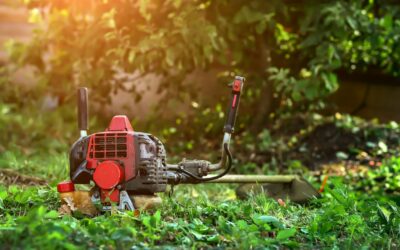
A good Craftsman string trimmer handles the work a mower cannot reach: fence lines, tree bases, bed edges and the tall grass along the ditch. Craftsman has built trimmers under the WeedWacker name for decades, and today the lineup splits cleanly into gas two-cycle and four-cycle models plus the V20 and V60 battery platforms. Picking between them comes down to yard size, how much trimming you do, and whether you want to bother with gas and oil.
Here is how they actually stack up and which one belongs in your garage.
- The V20 Battery Line for Small and Mid Yards
- Stepping Up to V60 for Bigger Properties
- Gas WeedWacker Models for Heavy Duty
- Reloading the Head Without the Headache
- Line Size Is the Detail Most People Ignore
- Batteries, Runtime and Charging Realities
- Maintenance That Keeps a Trimmer Running
- Straight Shaft vs. Curved Shaft
- Attachment Systems Extend the Investment
- Which Craftsman Trimmer Should You Buy
The V20 Battery Line for Small and Mid Yards
The V20 platform is Craftsman’s 20-volt cordless system, and it shares batteries with their drills, blowers and hedge trimmers. That interchangeability is the real selling point. A V20 string trimmer with a 13- or 14-inch cutting swath runs about $100 to $150 as a kit with a 2.0 or 4.0 Ah battery and charger.
For a quarter-acre lot, a single 4.0 Ah pack gives you 25 to 40 minutes of runtime, which is plenty. Features to look for include:
- Bump-feed or push-button line advance rather than fumbling with the head.
- Variable-speed trigger so you can throttle down for delicate edging and save battery.
- A straight shaft for reach under shrubs, or a curved shaft for lighter, more nimble handling.
Stepping Up to V60 for Bigger Properties
When a quarter-acre becomes a full acre with heavy growth, the 60-volt V60 line delivers gas-like torque without the fumes. A V60 Craftsman string trimmer typically pushes a 15-inch swath, accepts thicker line, and lists around $180 to $250 with a battery. The higher voltage matters most in thick weeds and wet grass where a 20-volt tool bogs down.
Brushless motors on the V60 models run cooler and last longer than the brushed motors on entry tools, and many accept a bump head that holds more line so you refill less often. If you already own V60 batteries for a mower or blower, the bare-tool price near $130 makes this an easy add.
Gas WeedWacker Models for Heavy Duty
Gas still wins for all-day commercial-style work and remote areas with no charging. Craftsman’s gas trimmers use a 25cc to 30cc engine, either a two-cycle that runs a 40:1 gas-oil mix or a four-cycle that takes straight gas and separate oil. Prices run roughly $130 to $200.
The advantages are non-stop runtime and the ability to swing an attachment-capable powerhead. Many gas WeedWacker units accept edger, pole-saw and cultivator attachments on the same shaft, turning one purchase into a small tool system. The trade-offs are weight (usually 11 to 14 pounds), pull-starting, noise, and the ongoing chore of mixing fuel and cleaning the air filter.
Reloading the Head Without the Headache
Most warranty-desk complaints about any string trimmer come down to line jamming or welding inside the head, not the motor. Craftsman uses two common head styles: a traditional bump-feed spool and a quick-load head that lets you thread pre-cut lengths without opening the housing. If you fight the spool constantly, here is the routine that prevents most jams:
- Wind the line tightly and evenly in the direction stamped on the spool; loose overlapping wraps are what cause the line to weld together under heat.
- Leave the correct length of tail, usually about six inches, sticking out each eyelet before you seat the cap.
- Store spare line in a bucket of water for a day before use; nylon that has dried out gets brittle and snaps far more often.
The pre-wound spools Craftsman sells run about $8 to $12 and save the winding chore entirely, which is worth it if you only trim a few times a month.
Line Size Is the Detail Most People Ignore
The diameter of trimmer line dictates how the tool cuts, and matching it to the job saves you constant breakage:
- 0.065 inch: light residential grass and edging, common on V20 tools.
- 0.080 inch: the everyday all-rounder for most homeowners.
- 0.095 inch: thick weeds, saplings and heavier growth on V60 and gas units.
- 0.105 inch and up: commercial gas trimmers only.
Always run the maximum line diameter your trimmer head is rated for, and choose a twisted or serrated line profile for cleaner cuts and less welding of the line inside the head. Round line is cheapest but breaks faster in tough growth.
Batteries, Runtime and Charging Realities
With any cordless Craftsman string trimmer, the battery is the tool. A 20-volt 2.0 Ah pack is fine for a quick edge but runs dry in 15 to 20 minutes of steady trimming, while a 4.0 Ah pack roughly doubles that. On the V60 side, a 2.5 Ah 60-volt battery holds far more usable energy and drives the higher-torque motor through thick growth without sagging.
Two practical points save frustration. First, buy a second battery from the start; charging times run 45 to 90 minutes on a standard charger, so a spare keeps you cutting instead of waiting. Second, lithium packs lose runtime in the cold, so on a 40-degree morning expect noticeably shorter cuts and store the batteries indoors, never in an unheated shed over winter. Treated well, these packs hold up for several hundred charge cycles, which for a homeowner is many years of use.
Maintenance That Keeps a Trimmer Running
Gas and battery trimmers ask for different upkeep, and skipping it is what sends tools to the curb early:
- Gas: run the tank dry or add fuel stabilizer at the end of the season, clean the foam air filter every few uses, and replace the spark plug yearly. Stale ethanol fuel gumming the carburetor is the single most common gas-trimmer failure.
- Battery: keep the terminals clean and dry, and never store a fully drained pack; leave it around half charged for long storage.
- Both: clear grass wrap from around the head and driveshaft after each use, and inspect the eyelets on the head, which wear into sharp grooves that cut line prematurely.
Straight Shaft vs. Curved Shaft
This choice comes up on every platform. Curved-shaft trimmers are lighter, sit closer to your body, and feel natural for quick lawn touch-ups. Straight-shaft trimmers put the head farther out, reach under decks and fences better, and are the only style that accepts most powerhead attachments. For anyone taller than average or clearing rough ground, the straight shaft is the more comfortable long-term pick even though it weighs a little more.
Attachment Systems Extend the Investment
One reason to lean toward a straight-shaft gas or V60 Craftsman is the attachment-capable powerhead. On these split-boom or universal-coupler models, the trimmer head unclips and you slide on an edger, a pole saw, a hedge-trimmer, a brush cutter or a bristle sweeper. Each attachment runs $40 to $90, far cheaper than buying separate dedicated tools, and they all store on a single hook in the garage.
For a typical homeowner, the edger and pole-saw attachments are the two that get real use. A stick edger cuts a crisp trench along the driveway that a spinning trimmer line never matches, and a pole saw handles limbs up to about six inches without a ladder. If you expect to buy any of those tools eventually, starting with an attachment-capable trimmer is the smarter long-term spend.
Which Craftsman Trimmer Should You Buy
Here is how to choose, based on the yard in front of you:
- Small lot, want simplicity and already own V20 tools: get the V20 kit near $120.
- Half-acre to an acre with real weeds: the V60 at $180 to $250 is the sweet spot for most buyers.
- Large or rural property, or you want one shaft to run edger and pole-saw attachments: choose a gas WeedWacker at $130 to $200.
Whichever you pick, buy a spare battery for cordless models or keep pre-mixed fuel on hand for gas, load the correct line size, and store the tool out of direct sun so the head and battery last. A well-matched Craftsman string trimmer will handle every edge and fence line on a typical property for years, and the platform battery sharing means your next tool costs less because you already own the power.