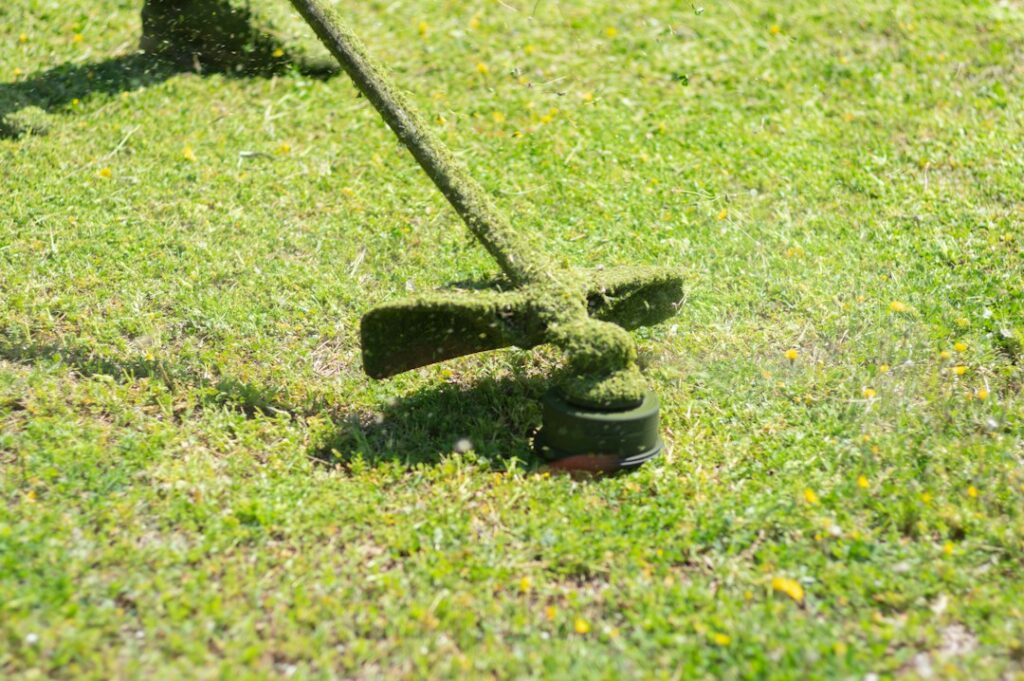
Here is the answer to the most common yard-tool confusion: in the string trimmer vs weed wacker debate, there is no real difference. They’re the same tool. “Weed Eater” and “Weed Wacker” are brand names that became generic, the way people say Kleenex for tissue. So when you’re comparing string trimmer vs weed wacker, you’re really just comparing two names for the machine that spins a nylon line to cut grass and weeds your mower can’t reach.
That said, the tool itself comes in several very different flavors, and that’s where the real decision lives. Here’s how to sort it out.
- Why the Names Are the Same Tool
- The Comparison That Actually Matters: Power Source
- Line vs. Blade Cutting Heads
- Straight Shaft vs. Curved Shaft
- Use Cases: Matching Tool to Job
- Feed Systems and Maintenance
- Safety and Technique
- Pros and Cons at a Glance
- Attachment Systems Extend the Tool
- Which Should You Buy? The Verdict
Why the Names Are the Same Tool
The industry term is “string trimmer” or “line trimmer.” George Ballas invented the concept in the early 1970s and sold it under the brand “Weed Eater.” A competing brand, Weed Wacker, caught on regionally. Both names stuck so hard that today most Americans use them interchangeably for any handheld grass trimmer.
Elsewhere you’ll hear “whipper snipper” (Australia) or “strimmer” (UK). All of them describe a shaft with a spinning head that whips a length of monofilament line fast enough to slice through soft vegetation. Bottom line: don’t let a salesperson upsell you on a “professional string trimmer” over a “weed wacker” as if they’re separate categories. They aren’t.
The Comparison That Actually Matters: Power Source
The real fork in the road is how the tool is powered. This affects price, weight, runtime, and maintenance far more than the name on the box.
- Gas: A 2-cycle or 4-cycle engine, usually 25cc to 30cc. Most power, fully cordless freedom, best for thick brush and large properties. Downsides: heavier at 10 to 14 pounds, loud, needs fuel mixing and tune-ups. Price: $130 to $350.
- Battery: A 20V to 80V lithium pack. Quiet, instant start, no fuel or maintenance. Modern 40V and up models rival light gas units. Runtime is the limit, typically 20 to 45 minutes per charge. Price: $100 to $300 with battery.
- Corded electric: Plugs into a wall outlet. Lightest at 5 to 8 pounds and cheapest, but the cord tethers you to about 100 feet. Best for small yards near the house. Price: $40 to $90.
Line vs. Blade Cutting Heads
Whatever you call the tool, most run a nylon line, but some accept blades. Here’s the difference:
- Nylon line: Standard for grass, weeds, and edging. Line diameters run from 0.065 inch for light residential work to 0.095 or 0.105 inch for tougher growth. Line is safe near fences and trees because it just frays if it hits something hard.
- Plastic or metal blades: Some brush cutters swap the line head for a blade to chew through saplings, woody weeds, and heavy brush. More aggressive, but dangerous kickback risk and not for casual trimming near obstacles.
For 95 percent of homeowners, a line head is all you’ll ever need. Only reach for blades if you’re clearing overgrown lots.
Straight Shaft vs. Curved Shaft
One more real distinction that has nothing to do with the name. Curved-shaft trimmers are lighter and better balanced for short users and simple lawn trimming. Straight-shaft models reach farther under bushes and fences, handle brush-cutter attachments, and are the pro standard for durability. If you’re tall or plan to attach an edger or brush blade later, buy straight shaft.
Use Cases: Matching Tool to Job
Here’s how to choose based on the yard:
- Small city lot, light grass: A corded electric or 20V battery trimmer at $50 to $130. Light, cheap, plenty.
- Quarter to half acre, some weeds: A 40V to 60V battery trimmer, $150 to $250. Buy a spare battery.
- Large property or heavy brush: A 28cc-plus gas straight-shaft, $200 to $350, ideally one that accepts a brush-cutter blade.
- Edging and detail work only: Any lightweight trimmer; look for a rotating head that flips to a vertical edging position.
Feed Systems and Maintenance
One overlooked difference between models, regardless of what you call them, is how the tool feeds fresh cutting line. This affects your day-to-day frustration level more than almost any spec:
- Bump feed: You tap the head on the ground and it releases more line. Cheap and reliable, but you have to remember to do it and it jams if wound wrong.
- Automatic feed: The head senses when line wears short and pays out more on its own. Convenient, though it can waste line.
- Fixed-line (pre-cut): You load short pre-cut strips of heavy line. Common on high-end trimmers; tough and jam-free, but you reload more often.
For upkeep, battery and corded units are nearly maintenance-free beyond winding new line. Gas trimmers need clean fuel, a fresh spark plug each season, and a clean air filter. If you run a 2-cycle gas model, mix the oil and fuel exactly to the ratio on the cap, usually 40:1 or 50:1, or you’ll cook the engine.
Safety and Technique
Whatever the tool is called, it flings debris fast enough to cause injury. Always wear safety glasses and closed-toe boots, and consider ear protection with a gas unit that can hit 95 decibels. Keep bystanders at least 50 feet away.
For a clean cut, hold the head parallel to the ground and let the tip of the line do the work; burying the whole head in tall grass just bogs the motor and burns line. Flip the head vertical to edge along walkways, and work in short passes rather than swinging wildly. Keep the line away from tree trunks, because repeated whipping girdles the bark and can kill a young tree over a season.
Pros and Cons at a Glance
Since the naming is a wash, judge on power source:
- Gas pros: Most power, no runtime limit, handles brush. Cons: Heavy, loud, fuel and maintenance.
- Battery pros: Quiet, low maintenance, instant start, light. Cons: Limited runtime, battery replacement every 3 to 5 years at $80 to $200.
- Corded pros: Cheapest, lightest, zero maintenance. Cons: Cord limits range, no good for big or remote yards.
Attachment Systems Extend the Tool
One reason a straight-shaft trimmer is the better buy, regardless of the name on the box, is the attachment ecosystem. Many gas and higher-end battery models use a split-boom design where the cutting head detaches and other tools slot on:
- Edger attachment: A steel blade for crisp, deep edges along driveways and walks.
- Pole saw: Reach up and trim tree limbs 10 to 12 feet overhead.
- Hedge trimmer: An articulating blade head for shaping shrubs.
- Cultivator or brush cutter: Till garden beds or chew through heavy brush.
Attachments run $40 to $120 each and share one powerhead, which is cheaper and lighter to store than buying four separate tools. If you can see yourself wanting an edger or pole saw down the road, buy into a split-boom system now. It’s the single best value move in this whole category.
Which Should You Buy? The Verdict
Stop worrying about “string trimmer” versus “weed wacker,” because you’re choosing between the exact same category of tool. Focus instead on power and shaft.
For most suburban homeowners in 2026, a 40V or 60V battery straight-shaft trimmer is the sweet spot. You get near-gas performance, no fumes or fuel mixing, quiet operation your neighbors will thank you for, and enough runtime for a typical yard on one or two batteries. Budget $150 to $250 and buy a name you recognize like EGO, Ryobi, DeWalt, or Milwaukee.
Choose gas only if you’re clearing acreage or heavy brush every week and want to run all day on a tank. Choose corded only if your lawn is small and hugs the house. Whatever the box calls it, buy the power source and shaft style that fit your yard and your body, and you’ll have made the right call the first time out.